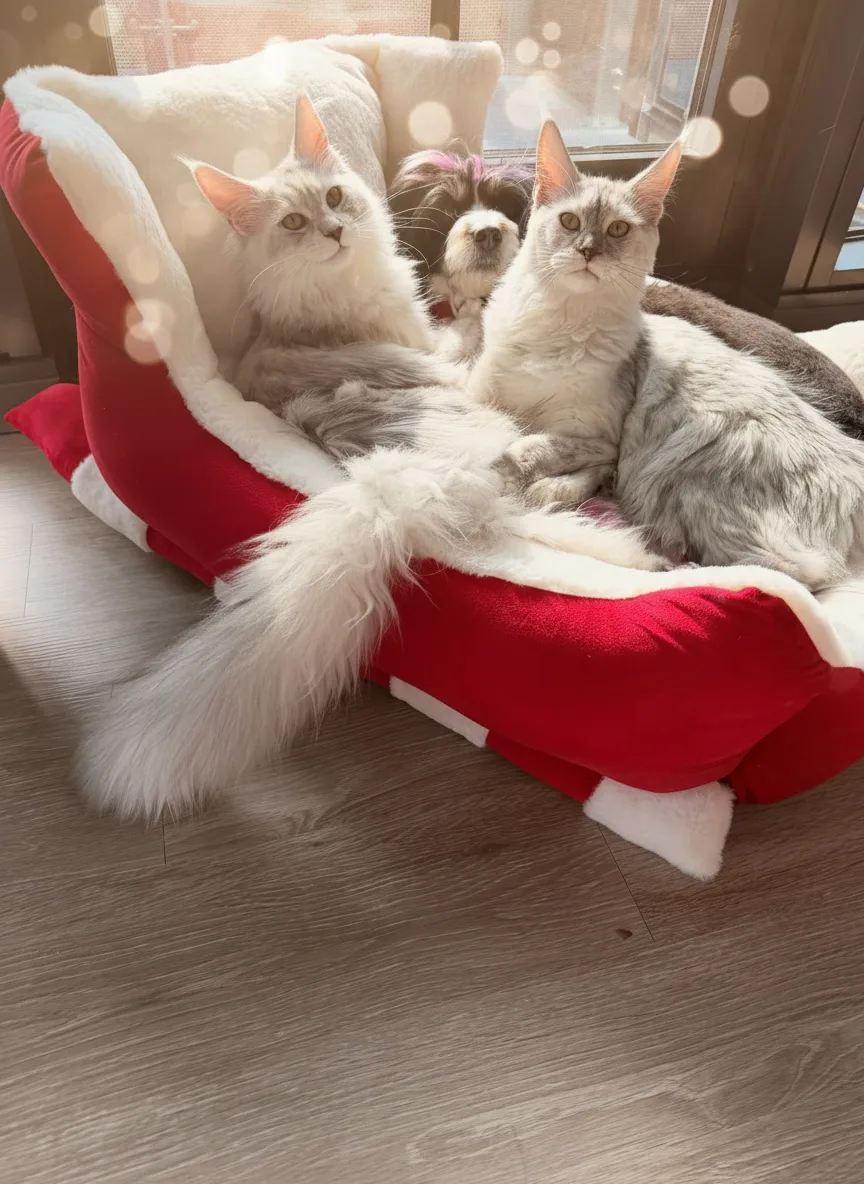
When I say I'm "selling years, not kittens," I mean it. The kitten phase is 12 months. The life you build together is 12-15 years or more. Knowing how to care for a senior Maine Coon is part of the commitment you're making when you bring one home — and it's a commitment I take seriously enough to stay in touch with every family, even a decade after placement.
When Is a Maine Coon "Senior"?
Maine Coons mature slowly — they don't reach full size until 3-5 years old. They're generally considered senior around age 10-11, though I've seen Chatlerie graduates still acting like kittens at 12. "Senior" doesn't mean "declining." Many Maine Coons remain active and playful well into their teens. The key is adapting your care to support them as their needs change, rather than waiting for problems to appear.
The AAFP defines life stages as: kitten (birth-1 year), young adult (1-6), mature adult (7-10), senior (11-14), and geriatric (15+). Most Maine Coons show their first age-related changes in the mature adult range — slightly less energy, a bit more time sleeping, maybe a little stiffness on cold mornings.
Nutrition Changes
Senior Maine Coons often need higher-protein, moderately lower-calorie diets. Their metabolism slows, but their muscle mass needs active maintenance — protein is how you preserve lean muscle in an aging cat. Joint-supporting supplements like glucosamine, chondroitin, and omega-3 fatty acids (from fish oil) become genuinely valuable rather than just "nice to have."
Kidney function monitoring becomes critical after age 10. Chronic kidney disease (CKD) is the most common age-related condition in cats, affecting up to 30-40% of cats over age 15. Early detection through bloodwork (SDMA testing catches it before traditional creatinine values change) makes a significant difference in management. Cats diagnosed with early CKD who switch to a renal-support diet can live comfortably for years with the condition.
Senior Nutrition Checklist
| Nutrient | Senior Need | Why |
|---|---|---|
| Protein | High (40%+ on dry matter basis) | Prevents muscle wasting; cats don't benefit from protein restriction unless advanced CKD |
| Phosphorus | Moderate to restricted | High phosphorus accelerates kidney disease progression |
| Omega-3 fatty acids | Supplement daily | Anti-inflammatory; supports joints, kidneys, and cognitive function |
| Water intake | Increase aggressively | Dehydration is the enemy of aging kidneys — fountains, wet food, water added to food |
| Calories | Slightly reduced | Metabolism slows; obesity adds joint stress on a 20-lb frame |
Mobility & Comfort
A 20+ pound cat with aging joints needs environmental accommodations. I've learned this from the graduated families who stay in touch — and from watching my own cats' parents age at their original catteries in Europe. Small changes make enormous differences:
🏠 Senior-Proofing Your Home
- Steps or ramps to favorite perches — window seats, beds, sofas
- Lower-entry litter boxes (cut down one side or use a shallow pan)
- Heated beds or self-warming pads for joint comfort
- Non-slip rugs on tile/hardwood floors where they walk frequently
- Food and water bowls at elevated height to reduce neck strain
- Multiple sleeping spots so they don't have to travel far from any room
You may notice your Maine Coon jumping less, choosing ground-level spots, or being slower to rise after a nap. These are normal aging changes — gradual and subtle. Sudden mobility loss, limping, or reluctance to move warrants an immediate vet visit. Saddle thrombus (a blood clot blocking blood flow to the hind legs) presents as sudden rear-leg paralysis and is a medical emergency.
Veterinary Care After Age 10
I recommend switching to twice-annual vet visits after age 10. The AAFP agrees. Cats age approximately 4 "cat years" per calendar year after age 6 — a lot can change in 6 months that wouldn't be caught on an annual visit.
Senior bloodwork panels should include:
- Complete blood count (CBC) — checks for anemia, infection, blood cell abnormalities
- Comprehensive metabolic panel — kidney values (BUN, creatinine, SDMA), liver enzymes, glucose, electrolytes
- Thyroid levels (T4) — hyperthyroidism is very common in older cats
- Urinalysis — kidney concentration ability, UTI detection
- Blood pressure — hypertension is common and damages kidneys and eyes
HCM screening should continue throughout life — heart disease can develop at any age, and the risk doesn't decrease because your cat made it past 5 without a diagnosis. Annual echocardiograms remain the standard.
Cognitive Changes
Feline cognitive dysfunction (FCD) — the cat equivalent of dementia — affects an estimated 28% of cats aged 11-14 and over 50% of cats over 15. Signs include: disorientation (getting lost in familiar rooms), vocalization at night (especially loud, purposeless yowling), litter box avoidance in previously reliable cats, changes in sleep-wake cycles, and decreased social interaction.
There's no cure, but management strategies help: maintaining consistent routines, providing nightlights for disoriented cats, continuing mental stimulation through play and puzzle feeders, and supplements like SAMe and omega-3s that may support brain function. Your vet may also recommend medication in severe cases.
The cats I produce are built for longevity — that's the whole point of health testing. But longevity requires partnership between the breeder who started it and the family who continues it. I'm still available for every family, even 10 years after placement.
Quality of Life: The Hardest Conversation
The hardest conversation is knowing when quality of life is declining. I don't shy away from this topic because I believe preparing families early makes the eventual decisions less agonizing — not painless, never painless, but less agonizing.
Signs that quality of life is declining: persistent appetite loss (not eating for 24+ hours), hiding and withdrawing from family interaction, inability to groom (matted coat in a previously fastidious cat), chronic pain that doesn't respond to medication, difficulty breathing, and loss of interest in activities they previously enjoyed.
Your vet is your most important partner in making compassionate end-of-life decisions. Not Google. Not Facebook groups. Not well-meaning friends who think you should "wait a little longer." Your vet sees the clinical picture you can't. Trust them.
📋 The Quality of Life Scale
Rate each on 0 (worst) to 10 (best). A total score below 35 suggests quality of life may be compromised:
- Hurt — pain control adequacy (0-10)
- Hunger — eating and nutrition (0-10)
- Hydration — fluid intake (0-10)
- Hygiene — ability to stay clean (0-10)
- Happiness — interest in life, responsiveness (0-10)
- Mobility — ability to move without assistance (0-10)
- More good days than bad — overall trend (0-10)