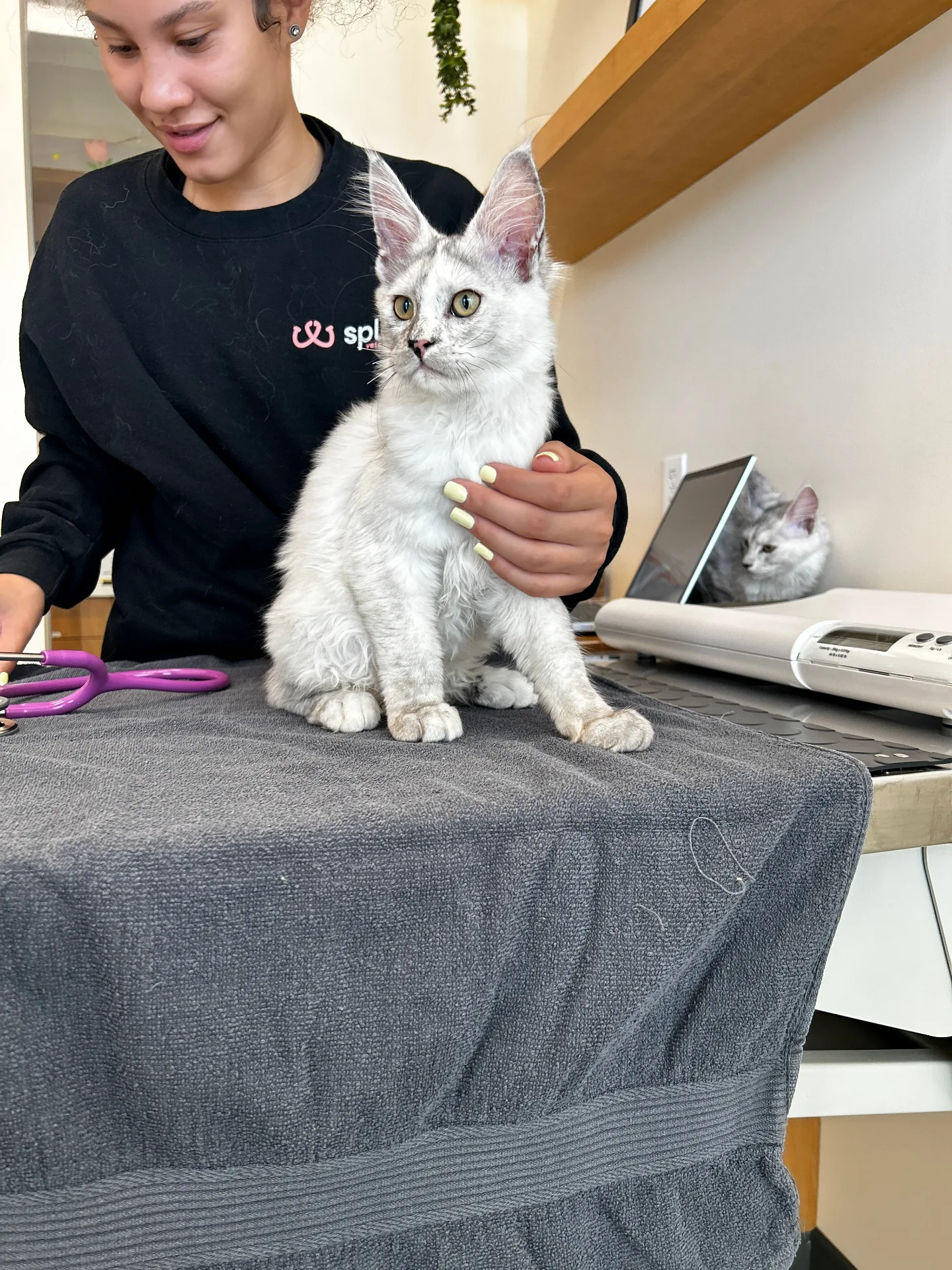
I run Wisdom Panel genetic testing and annual HCM echocardiograms on every one of my breeding cats — Euro, Coco, Libra, Angel, and Eddie. Our partnership with Sploot Veterinary Care means every Chatlerie family gets 15% off their first visit and access to the same vet network I trust. Maine Coons are generally healthy, long-lived cats — but knowing what to watch for means catching problems early, when treatment makes the biggest difference.
Hypertrophic Cardiomyopathy (HCM)
The #1 health concern. HCM causes thickening of the heart muscle, leading to reduced cardiac efficiency and potential heart failure. Approximately 33% of Maine Coons show some cardiac abnormality on echocardiographic screening. Annual echocardiograms by a board-certified cardiologist are the gold standard for detection.
Hip Dysplasia
More common in Maine Coons than any other cat breed, due to their large size and heavy bone structure. The hip joint develops abnormally, causing pain, reduced mobility, and arthritis over time. Studies suggest 18–24% of Maine Coons show radiographic evidence of hip dysplasia.
- Symptoms: reluctance to jump, stiff gait, difficulty with stairs
- Diagnosis: X-rays by a veterinarian
- Management: weight control, joint supplements, pain medication, surgery in severe cases
Spinal Muscular Atrophy (SMA)
A genetic condition causing progressive muscle weakness. Kittens with SMA develop normally at first, then show muscle wasting and weakness starting around 3–4 months. SMA is not painful and affected cats can live for years, but quality of life is significantly reduced.
SMA is testable via DNA screening. Responsible breeders never pair two carriers.
Polycystic Kidney Disease (PKD)
More commonly associated with Persians, but occasionally found in Maine Coons. Fluid-filled cysts develop in the kidneys, gradually reducing renal function. PKD is progressive and has no cure, but early detection allows for supportive management.
Dental Disease
Periodontal disease is common in all cats and Maine Coons are no exception. Regular dental checkups and professional cleanings (typically annually) help prevent painful infections and tooth loss.
Obesity
Maine Coons should be large and muscular — not fat. Their size makes it easy to overfeed, and obesity compounds other health risks (hip dysplasia, diabetes, heart strain). Monitor weight monthly and adjust portions accordingly.
Prevention Through Breeding
How Good Breeders Minimize Risk
- Annual HCM echocardiograms — remove affected cats from breeding
- Full genetic panel (Wisdom Panel) — test for SMA, PKD, PK-Def, MyBPC3
- Hip evaluation for heavy-boned breeding cats
- Diverse pedigree management — avoid inbreeding
- FeLV/FIV testing — all cats tested negative
The Bottom Line
Most Maine Coon health issues are manageable or preventable when caught early. Buy from a breeder who tests comprehensively, get pet insurance, and establish a relationship with a good vet. Prevention is always cheaper than treatment. Start your application →