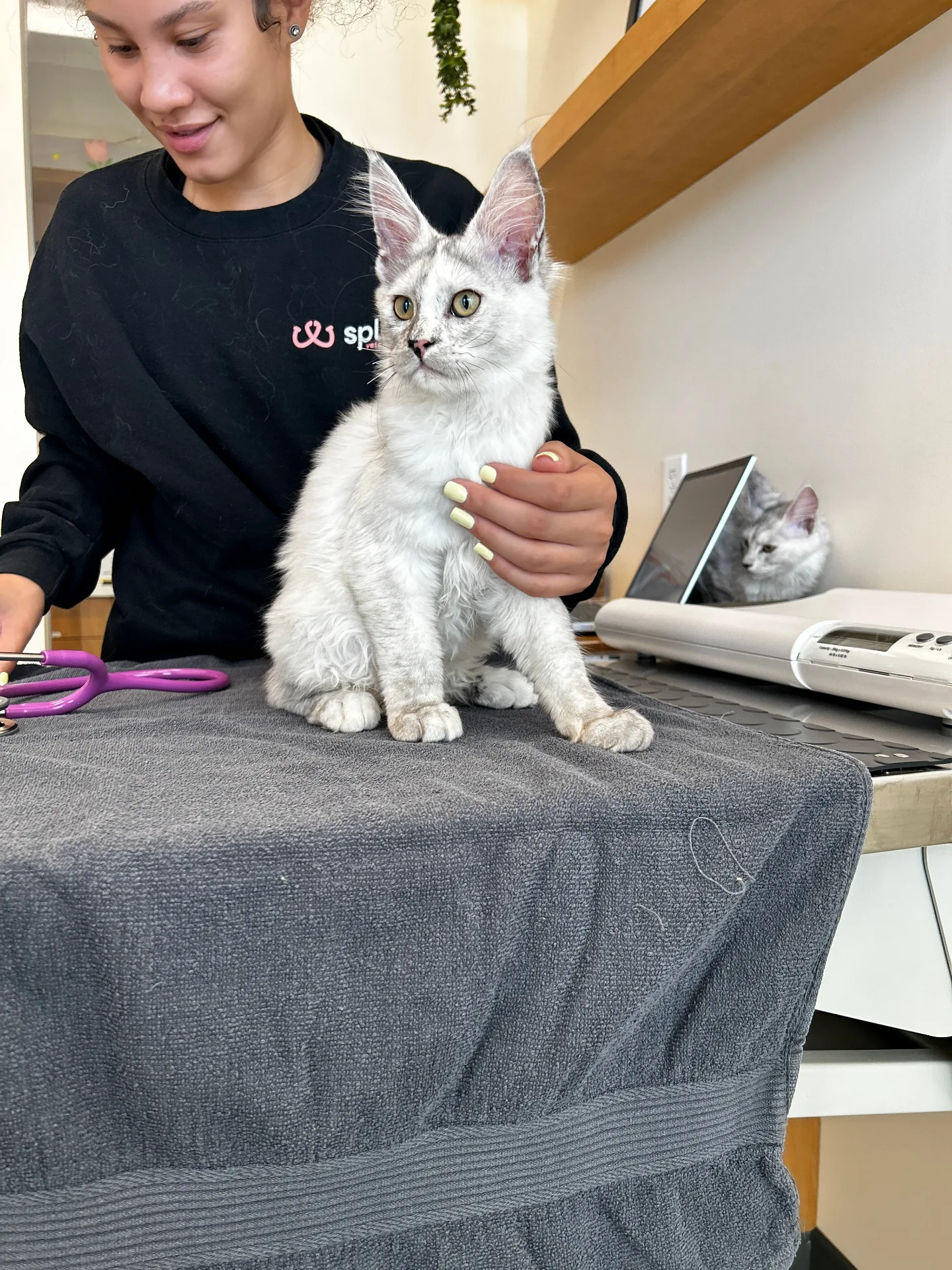
I echocardiogram Euro, Coco, Libra, Angel, and Eddie every year — no exceptions. It costs me thousands annually. Some breeders skip it and rely on a DNA test alone, but HCM is polygenic — no single gene test can rule it out. When I tell people "I'm not selling kittens, I'm selling years," this is what I mean. HCM is the #1 killer of Maine Coons, and it's the most preventable cause of heartbreak — if your breeder actually screens for it.
What Is HCM?
HCM is a condition where the walls of the heart — specifically the left ventricle — thicken abnormally. As the walls thicken, the chamber shrinks, reducing the heart's ability to pump blood efficiently. In severe cases, it leads to heart failure, blood clots, and sudden death.
The disease can develop at any age but most commonly appears between ages 2–6. Some cats show symptoms (lethargy, rapid breathing, reduced appetite). Many show none at all until a catastrophic event.
How Common Is It?
A landmark 2009 study by Paige et al. in the Journal of Veterinary Internal Medicine found that approximately 33.6% of apparently healthy Maine Coons showed some evidence of cardiac abnormality on echocardiogram. That's one in three cats — a staggering number.
How Screening Works
The gold standard is an echocardiogram — a cardiac ultrasound — performed by a board-certified veterinary cardiologist (DACVIM-Cardiology). The cardiologist measures the thickness of the heart walls and septum in real time, looking for even subtle thickening.
DNA Testing Is Not Enough
The MyBPC3 DNA test identifies one known mutation associated with HCM. But HCM in Maine Coons is polygenic — caused by multiple genes. A cat can test negative for MyBPC3 and still develop HCM. This is why annual echocardiograms, not just DNA testing, are the standard.
"DNA testing for MyBPC3 is a useful data point but cannot replace echocardiographic screening. Annual cardiac ultrasound remains the only reliable method." — Dr. Kathryn Meurs, DVM, PhD, DACVIM, NC State University
Symptoms to Watch For
Warning Signs
- Rapid or labored breathing at rest
- Lethargy or reduced activity level
- Loss of appetite or weight
- Open-mouth breathing (emergency)
- Hind-leg weakness or paralysis (blood clot — emergency)
- Heart murmur detected by vet (not all murmurs mean HCM, but all should be investigated)
Treatment Options
There is no cure for HCM. Treatment focuses on managing symptoms and slowing progression:
- Beta-blockers or calcium channel blockers to reduce heart rate
- ACE inhibitors in some cases
- Blood thinners (clopidogrel) to prevent clot formation
- Diuretics if fluid buildup occurs
- Regular monitoring echocardiograms every 6–12 months
Cats diagnosed early with mild HCM can live normal lifespans with appropriate management. Cats diagnosed late or with severe disease face a significantly reduced prognosis.
How Breeders Prevent HCM
Responsible breeders don't "cure" HCM — they breed away from it. By echocardiogramming every breeding cat annually and removing any cat that shows cardiac changes from the breeding program, the incidence of HCM in well-managed lines decreases over generations.
At Chatlerie, every breeding cat receives an annual echocardiogram by a board-certified cardiologist. Any cat showing any degree of cardiac thickening is permanently retired from breeding. This is the standard. It should be the minimum.
Your Best Defense
Buy from a breeder who echocardiograms annually. Ask for proof. Get pet insurance that covers cardiac conditions. Establish a relationship with a cardiologist early. HCM is not a death sentence — but only if you catch it. Start your application →