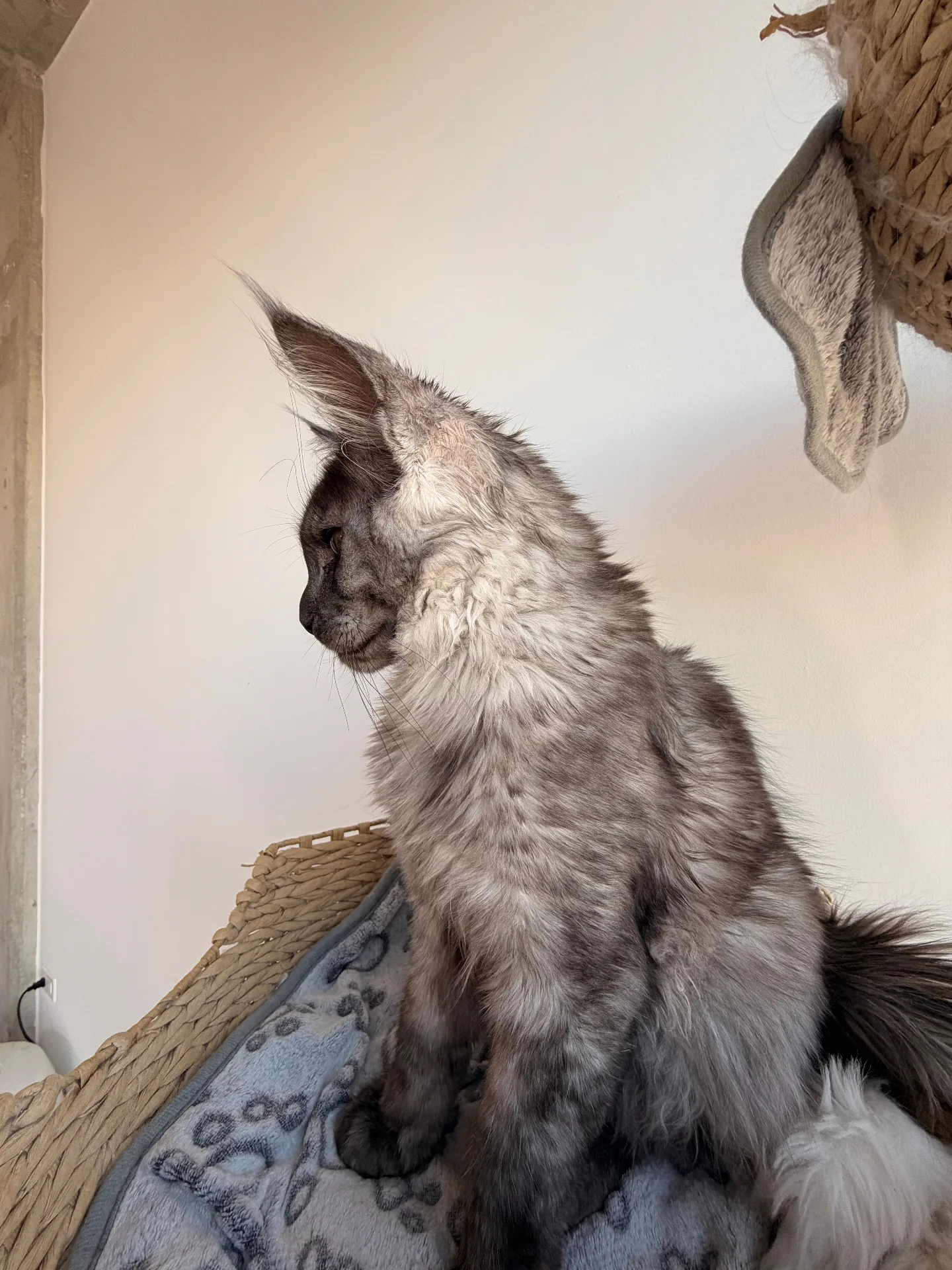
I feed five adult Maine Coons twice a day, plus measured kibble for grazing. Euro alone eats enough to fund a small grocery store. But size alone doesn't determine diet — these cats have specific nutritional needs driven by their slow growth rate (3–5 years to full maturity), dense muscle mass, and predisposition to certain health conditions. Here's what I've learned feeding this breed for years.
Nutritional Basics
Cats are obligate carnivores. Their diet must be protein-first, with animal protein as the primary ingredient. Maine Coons need higher caloric intake than average cats due to their size, but the quality of those calories matters enormously.
What to Look For in Cat Food
- Named animal protein first — chicken, turkey, salmon (not "meat by-products")
- Minimum 40% protein for adult Maine Coons
- Moderate fat (15–20%) for energy and coat health
- Low carbohydrates — cats don't process carbs efficiently
- Taurine — essential amino acid cats can't synthesize
- Omega-3 fatty acids — supports coat, joints, and cardiac health
Wet Food vs. Dry Food
| Factor | Wet Food | Dry Food (Kibble) |
|---|---|---|
| Hydration | High (70–80% water) | Low (10% water) |
| Protein quality | Generally higher | Variable — check labels |
| Dental health | No benefit | Minor abrasive benefit |
| Cost | Higher per serving | Lower per serving |
| Convenience | Refrigerate after opening | Easy to store and serve |
| Weight management | Better for weight control | Easy to overeat |
Our recommendation: a combination of both. High-quality wet food as the primary diet, with a measured portion of premium kibble available for grazing. This provides hydration, protein quality, and dental benefits.
Kitten Feeding (0–12 months)
Maine Coon kittens need kitten-specific food until at least 12 months — some breeders recommend kitten food until 18 months due to the breed's slow growth rate. Kitten food has higher protein, fat, and calorie density to support rapid growth.
At Chatlerie, all kittens go home with a starter kit including the exact food they've been eating. We provide a detailed feeding guide with portion sizes by age and weight.
Adult Feeding (1–10 years)
Transition to adult food gradually over 7–10 days. Adult Maine Coons typically eat 250–350 calories per day depending on size and activity level. Monitor weight monthly — Maine Coons should be large and muscular, not overweight.
Supplements Worth Considering
- Cat Nutrition by NuVet (our #1 recommendation) — a comprehensive daily supplement covering immune defense, skin & coat, digestion, cardiovascular health, and more. We recommend it to every Chatlerie family. Read our full NuVet guide →
- Omega-3 (fish oil) — coat health, anti-inflammatory, cardiac support
- Joint supplements (glucosamine) — important for large breeds prone to hip issues
- Probiotics — digestive health, especially during food transitions
- Lysine — immune support (consult your vet)
🛡️ Chatlerie Recommends: Cat Nutrition by NuVet
We highly recommend Cat Nutrition by NuVet for total body support — immune defense, skin & coat, digestion, cardiovascular health, and more. Less than $20/month.
Order at www.nuvet.com/878529 · Order Code: 878529
Foods to Avoid
🚩 Toxic or Harmful
- Onions, garlic, chives (toxic to cats)
- Chocolate and caffeine
- Grapes and raisins
- Raw eggs (salmonella risk)
- Milk (most cats are lactose intolerant)
- Dog food (lacks taurine — dangerous for cats long-term)
Chatlerie's Feeding Philosophy
We feed premium wet food twice daily plus measured kibble for grazing. Every kitten goes home with detailed feeding instructions and the exact food they've been eating. Nutrition isn't an afterthought — it's the foundation of a healthy 15+ year life. Start your application →