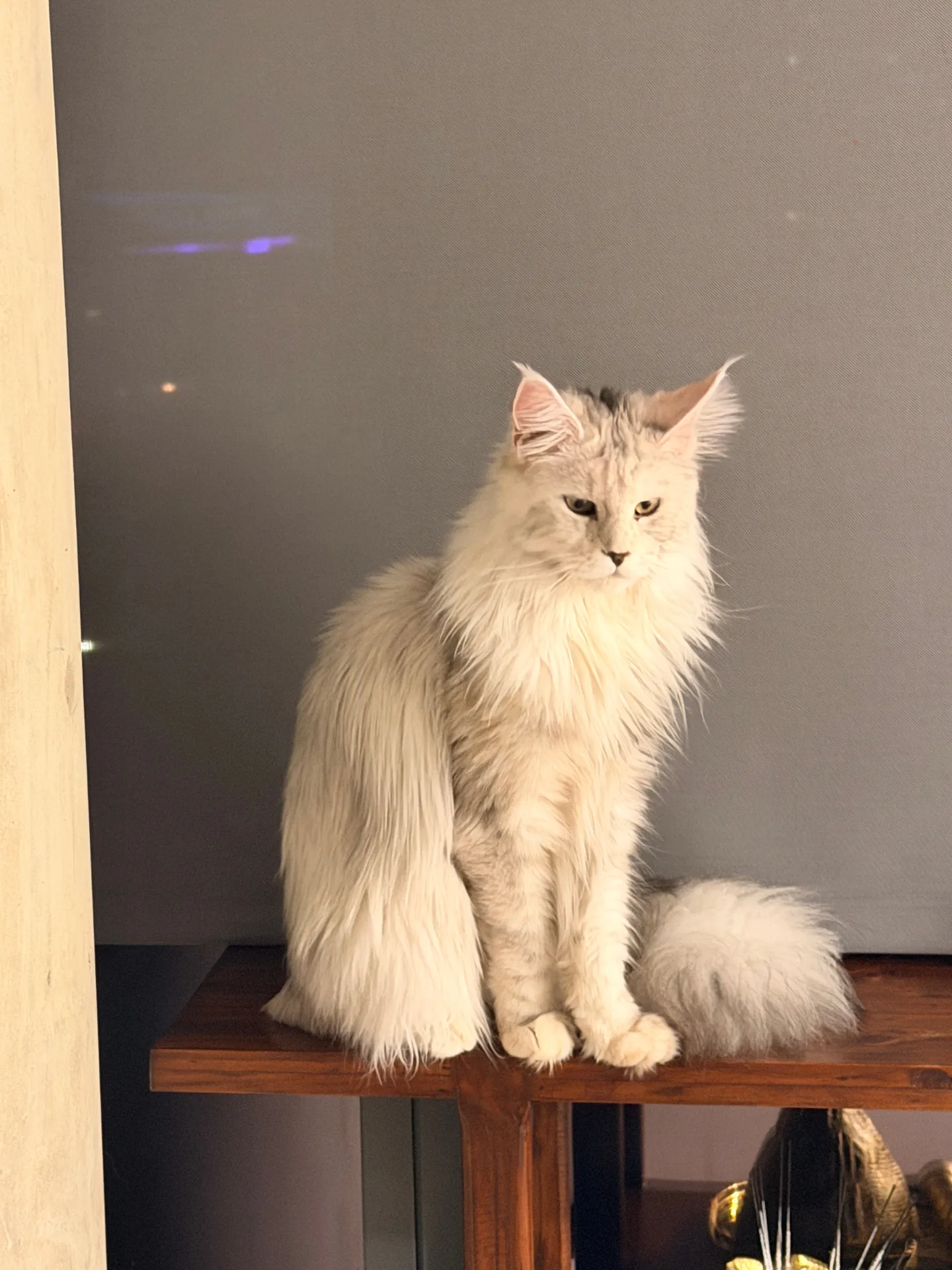
When Chatlerie families pick up their kitten at 12 weeks, they're holding a 3-to-5-pound ball of fluff. Two years later, they send me photos of a 20-pound majestic beast that barely fits on their lap. Euro wasn't fully filled out until he was almost four years old. That slow, dramatic transformation is one of the most magical things about this breed — and understanding the timeline prevents the "is my cat big enough?" anxiety I hear constantly.
Growth Timeline by Age
| Age | Male Weight | Female Weight | Milestones |
|---|---|---|---|
| Birth | 3–5 oz | 3–4 oz | Born with eyes closed, ears folded |
| 4 weeks | 1–1.5 lbs | 0.8–1.2 lbs | Walking, first teeth, eyes fully open |
| 8 weeks | 2–3 lbs | 1.5–2.5 lbs | Weaning, first vaccinations, personality emerging |
| 12 weeks (go-home) | 3–5 lbs | 2.5–4 lbs | Fully weaned, socialized, ready for new home |
| 6 months | 6–9 lbs | 5–7 lbs | Rapid growth phase, lanky "teenager" stage |
| 1 year | 10–15 lbs | 8–12 lbs | About 60–70% of adult size |
| 2 years | 14–22 lbs | 10–15 lbs | About 80–85% of adult size, filling out |
| 3 years | 18–25 lbs | 12–16 lbs | Near full size, mane developing fully |
| 4–5 years | 18–28 lbs | 12–18 lbs | Full maturity — peak size and coat |
The Awkward Phase
Between 6–18 months, Maine Coons go through what breeders call the "ugly duckling" or "awkward teenager" phase. They're all legs and ears. Their body is too long for their frame. Their coat is patchy. Their head looks small relative to their body.
This is completely normal. Don't panic. The kitten that looks gangly and disproportionate at 8 months will be jaw-droppingly beautiful at 3 years.
Every Maine Coon owner goes through a phase around month 8 where they think "Did I get a regular cat?" Trust the process. By year 3, they're stopping traffic.
When Does the Mane Come In?
The mane — that lion-like ruff around the neck and chest — doesn't fully develop until age 2–4. European bloodline males often have the most dramatic manes, but even they look relatively modest until around 18 months. Full chest ruff, belly fur, and tail plume continue filling in through year 3–4.
What Affects Growth
- Genetics — European bloodlines generally produce larger cats
- Nutrition — high-quality protein-rich diet supports healthy growth
- Neuter/spay timing — early spay/neuter may allow slightly more growth due to delayed growth plate closure
- Gender — males are consistently 30–50% larger than females
- Individual variation — siblings can differ significantly in adult size
Patience Pays Off
The slow growth is part of the magic. You get to watch your Maine Coon transform over 3–5 years from a cute kitten into a majestic giant. No other breed offers this kind of extended reveal. Start your application →