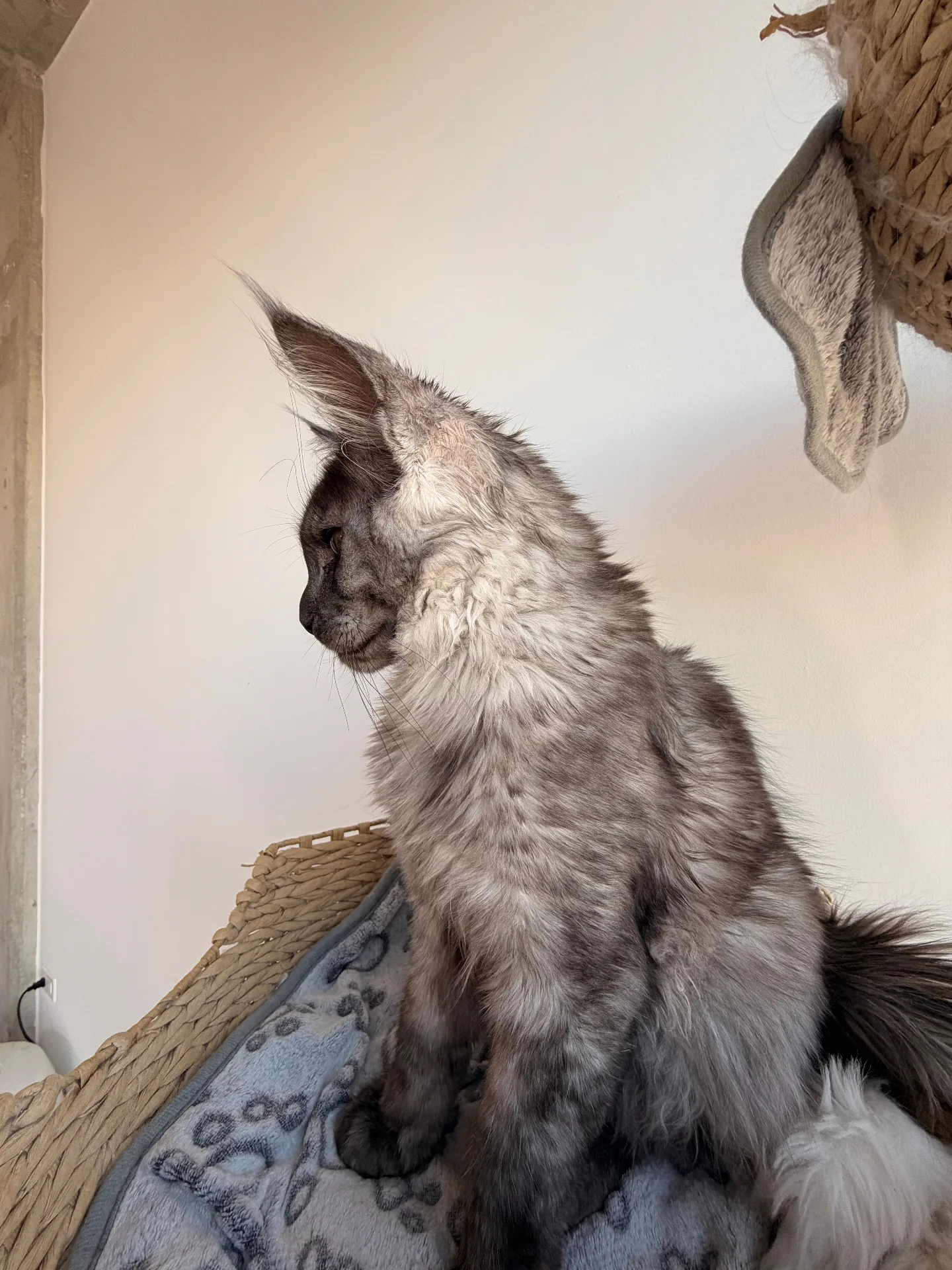
Those dramatic tufts of fur pointing up from the tips of a Maine Coon's ears are one of the breed's most recognizable features. They're called "lynx tips" because they resemble the ear tufts of wild lynx and bobcats — and they're one of the first things people notice about Euro's silhouette. But there's more to Maine Coon ears than meets the eye, and understanding them helps you appreciate what makes this breed so distinctive.
Ear Tufts vs Ear Furnishings: Know the Difference
People use "ear tufts" to describe two different things, but in breeding and show terminology, they're distinct features:
| Feature | Location | Function | Terminology |
|---|---|---|---|
| Lynx Tips | Points extending BEYOND ear tips | Aesthetic (possibly remnant of wild ancestry) | "Ear tufts" in casual use, "lynx tips" precisely |
| Ear Furnishings | Hair growing INSIDE the ear | Protects ear canal from debris, provides insulation | Sometimes called "inner tufts" |
Lynx Tips
Lynx tips are the dramatic, wild-looking tufts that give Maine Coons their characteristic silhouette. They're points of fur extending beyond the tips of the ears — when backlit, they create that distinctive pointed profile that photographs so well.
Not all Maine Coons have prominent lynx tips. They vary by genetics, lineage, and individual cat. Some cats have impressive 1-2" lynx tips; others have minimal or no visible tufts. Both can be purebred, registered Maine Coons. Lynx tips are desirable in the show ring but not required by the breed standard.
Ear Furnishings
Ear furnishings are the fur growing inside the ear, protecting the ear canal from debris and providing insulation. Maine Coons have exceptionally thick, luxurious ear furnishings — often flowing out of the ear in visible tufts that extend horizontally beyond the ear edge.
In the Maine Coon breed standard, furnishings are mentioned specifically: hair should extend beyond the outer ear edge. This is a functional adaptation from the breed's origins in cold New England climates, where ear protection mattered for survival.
What Determines Tuft Quality
Lynx tip length and fullness are largely genetic — it's one of the traits that can be selected for in breeding programs.
European vs American Type
European-type Maine Coons tend to have more dramatic lynx tips than American-type. This is one of the most visible differences between the two lines. European breeders have specifically selected for pronounced ear tufts as part of the "wild look" they cultivate, alongside higher cheekbones, more angular muzzles, and stronger brow ridges.
In my breeding program, I select for strong ear tufts because they contribute to that wild, natural look that defines the breed. Euro has excellent lynx tips — about an inch long — which he passes to his offspring. When I evaluate kittens for breeding potential, ear tuft development is one of many factors I consider.
Development Timeline
Kittens are born without visible lynx tips. The tufts develop gradually as the kitten grows:
- Birth to 8 weeks: No visible lynx tips
- 8-12 weeks: Slight fuzz may appear at ear tips
- 3-6 months: Tips becoming more noticeable
- 6-12 months: Continued development, approaching adult length
- 12-18 months: Full development (though coat continues maturing to 3-4 years)
If your kitten's ear tufts seem modest at 12 weeks, don't worry. They may develop impressive tufts as they mature. I've seen kittens with barely-there tufts at 4 months develop striking lynx tips by their first birthday.
The Wild Connection
The name "lynx tips" isn't arbitrary — these ear tufts genuinely resemble those found on wild lynx, bobcats, and caracals. But are Maine Coons actually related to these wild cats?
No. Despite the visual similarity, Maine Coons are fully domestic cats with no recent wild cat ancestry. The tufts are an example of convergent evolution or selective breeding that happened to produce a similar aesthetic feature.
Some theories suggest the tufts may have developed as an adaptation to Maine's harsh winters — possibly helping to funnel sound into the ears or providing additional insulation. But honestly, they may just be a trait that early breeders found attractive and selected for. Form doesn't always follow function in domestic breeding.
Natural Variations
Ear tufts vary significantly between individual Maine Coons:
| Variation | Description | Notes |
|---|---|---|
| Dramatic lynx tips | 1-2" of fur extending beyond ear tips | Highly prized in European lines, striking in photos |
| Moderate lynx tips | 0.5-1" of visible tufts | Most common in quality Maine Coons |
| Minimal lynx tips | Slight wisp, barely visible | Still purebred, may develop more with age |
| Heavy furnishings | Thick inner ear hair flowing outward | Separate from lynx tips, also desirable |
At TICA shows, I've seen Maine Coons with 2-inch lynx tips that look genuinely wild — like a miniature lynx in domestic cat form. It's one of those details that separates "nice Maine Coon" from "stunning Maine Coon." But a cat without dramatic tufts can still be a wonderful pet and even a quality breeding cat if other traits are strong.
Caring for Ear Tufts
Good news: ear tufts are essentially self-maintaining. You don't need to trim or style them.
Lynx Tips
Leave them alone. They don't need grooming, trimming, or any special care. They'll occasionally get ruffled during play or sleep but will naturally return to position.
Ear Furnishings
The inner ear furnishings occasionally need attention:
- Check weekly: During your regular grooming routine, look inside the ears
- Wax buildup: Long furnishings can trap ear wax. If you notice buildup, use a vet-approved ear cleaner and soft cotton ball
- Debris: Occasionally dust or litter particles get caught in the furnishings — gentle wiping resolves this
- Never insert anything: Clean only the visible outer ear, never insert anything into the ear canal
Signs of Ear Problems
While checking tufts and furnishings, watch for signs that might indicate ear health issues:
Contact Your Vet If You Notice:
- Excessive brown or black discharge
- Strong odor from the ears
- Redness or inflammation
- Frequent head shaking or ear scratching
- Head tilting
- Sensitivity when ears are touched
Maine Coons aren't especially prone to ear problems, but their heavy furnishings can occasionally trap moisture or debris. Regular checks catch issues early.
Selecting for Ear Tufts
If ear tufts are important to you when selecting a kitten, here's what to look for:
When Evaluating Parents
Look at the parents' ear tufts. While kittens won't show adult tuft length, strong parental tufts are a good predictor. Ask to see photos or meet the parents in person.
When Evaluating Kittens
At 12-14 weeks (typical placement age), you can see the beginning of tuft development:
- Check if there's any visible fuzz at the ear tips
- Look at ear furnishings — thick furnishings often correlate with good tuft development
- Compare siblings — some variation is normal even in the same litter
Remember: a kitten with modest tufts can develop impressive ones by adulthood. If you want guarantees, consider a slightly older kitten (5-6 months) where development is further along.
Euro's lynx tips are about an inch long — impressive but not the longest I've seen. At TICA shows, I've seen Maine Coons with 2-inch lynx tips that look genuinely wild. It's one of those details that separates "nice Maine Coon" from "stunning Maine Coon."
Key Takeaways
- Lynx tips (extending beyond ear tips) are different from ear furnishings (inside the ear)
- Both features are part of what makes Maine Coons distinctive
- European-type Maine Coons typically have more dramatic lynx tips
- Kittens develop tufts gradually, reaching full length by 12-18 months
- Lynx tips need no special care; ear furnishings occasionally need cleaning
- While desirable, prominent lynx tips aren't required for a cat to be a quality Maine Coon