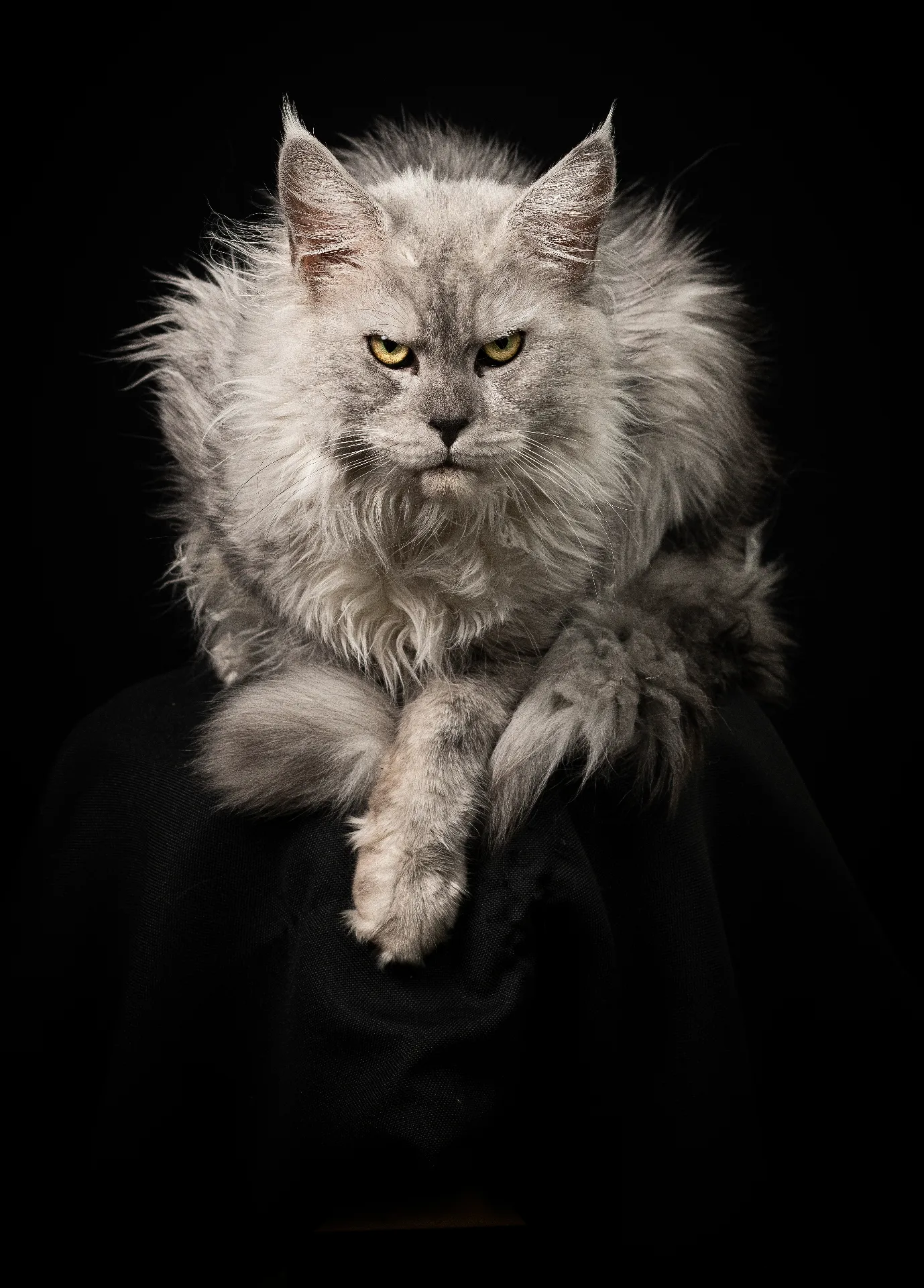
If you've spent any time researching Maine Coons, you've noticed that some look dramatically different from others. One kitten might have a soft, rounded face with gentle features. Another might look like a miniature lynx — square jaw, towering ears, wild expression, and a body built like a small panther. The difference isn't random. It's the distinction between American-standard and European-bloodline Maine Coons.
This guide breaks down every meaningful difference — appearance, size, temperament, health, and availability — so you can decide which type is right for your family.
A Brief History: How One Breed Became Two Types
The Maine Coon originated in New England — likely descended from longhaired cats brought by European sailors in the 1800s. For decades, the breed developed along a single American standard defined by CFA and TICA. These cats were large, friendly, and beautiful — but bred primarily for domestic companionship and the American show ring.
Starting in the 1990s, Scandinavian and Eastern European breeders began selecting for a more dramatic, wild phenotype. They wanted cats that looked closer to the Maine Coon's rumored wild ancestors — bigger bones, wider chests, more pronounced muzzles, and those iconic lynx-tipped ears. Over three decades of selective breeding, a visually distinct "European type" emerged.
Today, both types are registered as Maine Coons under TICA and FIFe. They share the same breed standard on paper — but in practice, the visual difference is striking.
Appearance: Side-by-Side Comparison
| Feature | American Standard | European Bloodline |
|---|---|---|
| Head Shape | Medium-wide, gently rounded contours | Broad, square muzzle, strong chin box |
| Ears | Tall, moderately tufted | Very tall, wide-set, dramatic lynx tips |
| Eyes | Large, slightly oval | Large, slightly almond-shaped, wild expression |
| Muzzle | Moderate, blends softly into face | Square, prominent, clearly defined |
| Mane/Ruff | Moderate chest ruff | Full lion-like mane, dramatic chest bib |
| Body | Large, muscular, rectangular | Very large, heavy-boned, broad chest |
| Tail | Long, flowing plume | Long, extremely thick, bushy |
| Coat Texture | Silky, semi-long | Dense, slightly coarser, water-resistant |
| Overall Impression | Elegant, refined domestic beauty | Wild, dramatic, show-stopping presence |
📸 Visual Test
If you see a Maine Coon photo and your first thought is "that looks like a wild cat," it's almost certainly European bloodline. If your first thought is "what a beautiful, elegant cat," it's likely American standard. Both are stunning — the difference is in the wow factor.
Size: How Big Do They Actually Get?
Size is one of the most common reasons families seek out European Maine Coons specifically. While both types are large cats by any standard, European bloodlines consistently produce bigger, heavier cats.
American males typically reach 13–18 lbs; European males 18–28 lbs. Females are proportionally smaller in both types. Individual variation exists within each type.
It's important to set realistic expectations: not every European Maine Coon will reach 25+ pounds. Genetics, diet, and neuter timing all affect final size. But on average, European bloodlines produce noticeably larger cats with heavier bone structure and broader chests.
Temperament: Is There a Personality Difference?
This is where many guides get it wrong. The temperament difference between European and American Maine Coons is minimal. Both types share the breed's signature traits: dog-like loyalty, gentle disposition, social intelligence, and remarkable adaptability.
That said, some breeders and owners report subtle tendencies:
| Trait | American Standard | European Bloodline |
|---|---|---|
| Energy Level | Moderate — playful but calm | Moderate-high — slightly more active |
| Vocalization | Moderate chirps and trills | Slightly more vocal in some lines |
| Independence | Follows owner but tolerates alone time | Tends to be slightly more attached |
| Dog Compatibility | Excellent | Excellent |
| Child Compatibility | Excellent | Excellent |
| Adaptability | Very high | Very high |
"The Maine Coon's temperament is remarkably consistent across both phenotypes. The breed's gentle, social nature is deeply embedded — it's not something that varies significantly between European and American lines." — Dr. Leslie Lyons, Professor of Comparative Medicine, University of Missouri
Bottom line: if you're choosing between European and American purely on temperament, there's no meaningful difference. Choose based on the look you prefer and the health practices of the specific breeder.
Health Considerations
Both types share the same genetic health risks — HCM, PKD, SMA, and hip dysplasia. The critical variable is not European vs. American — it's whether the breeder performs comprehensive health testing regardless of type.
One advantage of well-established European breeding programs is broader genetic diversity. European catteries have been more aggressive about outcrossing and maintaining diverse pedigrees, which can reduce the risk of inherited conditions. However, this benefit only applies to breeders who actively test — not to those who simply claim "European bloodlines" as a marketing term.
Health Testing — Required for Both Types
- Annual HCM echocardiogram — required for both types, no exceptions
- Full genetic panel (Wisdom Panel / Optimal Selection) — screens 45+ conditions
- FeLV/FIV testing on all breeding cats
- Hip evaluation for breeding cats in heavy-boned European lines
- Verified pedigree traceable to named European champions (for European claims)
Availability in Illinois
American-standard Maine Coons are relatively available in Illinois. Several TICA-registered catteries produce quality American-type kittens with proper health testing.
European-bloodline Maine Coons are significantly harder to find in Illinois. Most breeders working with European lines are concentrated in California, Florida, and the Northeast. In the Chicago area, Chatlerie Maine Coon is the only cattery specializing exclusively in European champion bloodlines — cats with traceable pedigrees from top Scandinavian and Eastern European breeding programs.
This scarcity is exactly why Illinois families who want the European look often end up shipping kittens cross-country — or worse, falling prey to scammers who use stolen European cat photos to sell kittens that don't exist. Having a local, verifiable, TICA-registered European-line cattery in Chicago eliminates both of those risks.
Which Type Is Right for Your Family?
Choose American Standard If…
- You want a beautiful, large, friendly cat without needing the dramatic wild look
- You prefer a slightly more refined, elegant appearance
- You have more options available locally and want a shorter waitlist
- Budget is a consideration (American-standard kittens are often $500–$1,000 less)
Choose European Bloodline If…
- You want the dramatic, wild, show-stopping Maine Coon look
- You're drawn to larger, heavier-boned cats with lion-like manes
- You want traceable champion pedigrees from established European programs
- You're willing to invest in the premium pricing that European bloodlines command
🐾 Chatlerie's Position
We breed exclusively European-bloodline Maine Coons because we believe every family deserves access to the most dramatic, carefully bred cats in the world — without having to ship a kitten across the country. Our breeding cats are imported from champion European lines, health-tested annually, and raised in our Chicago home.
Whatever type you choose, the most important factor is always the breeder — their health testing, their transparency, their contract, and their commitment to their cats' lifelong welfare. A well-bred American Maine Coon from a great breeder will always be a better choice than a poorly-bred "European" Maine Coon from a careless one.