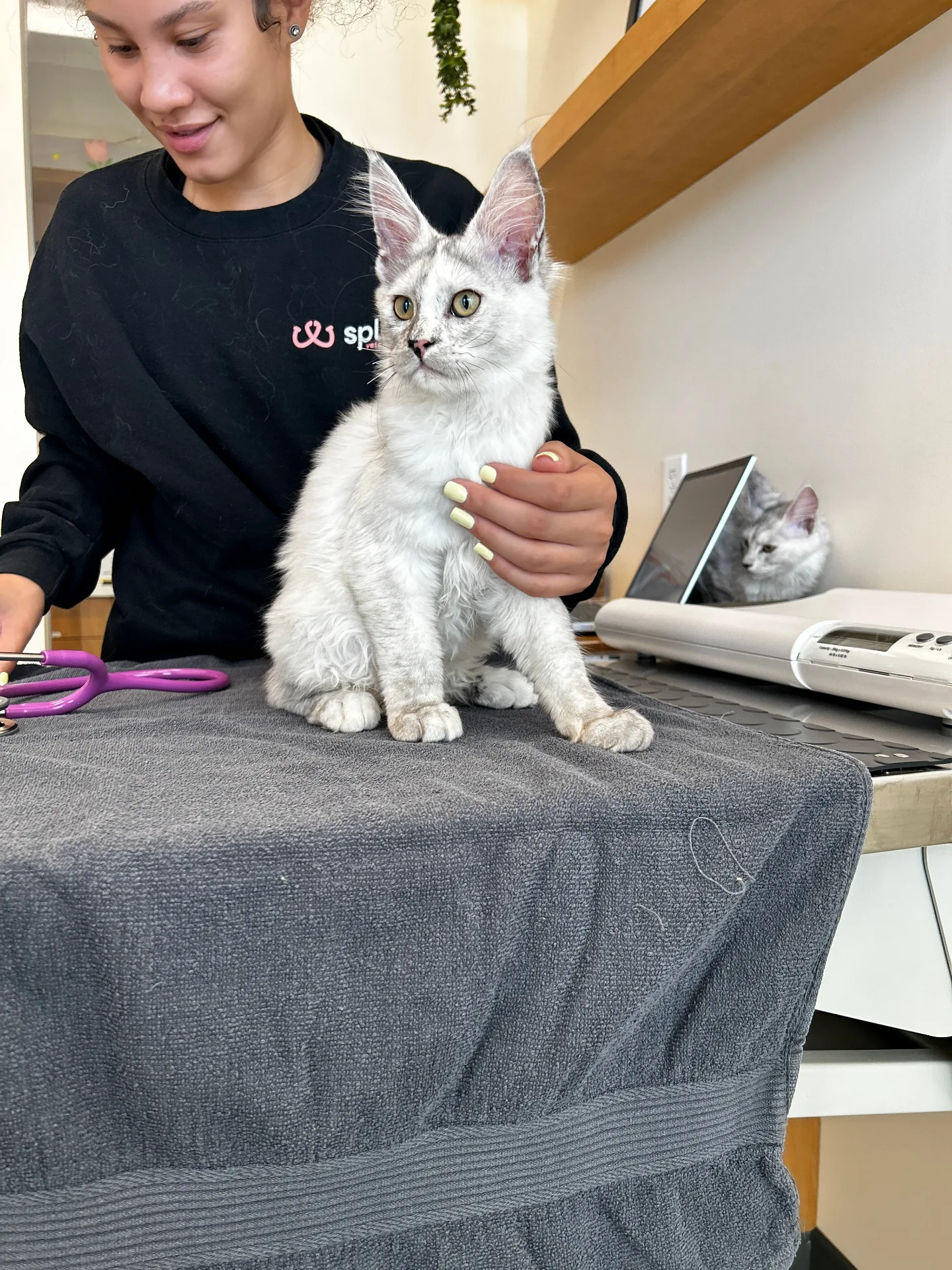
I'll be honest — dental care was one of the last things I thought about when I started breeding Maine Coons. I was focused on HCM screening, genetic testing, nutrition. Then my vet showed me what early-stage gingivitis looks like in a 2-year-old cat, and I realized I'd been ignoring one of the most common health issues in the breed.
Why Dental Health Matters for Maine Coons
Maine Coons aren't more prone to dental disease than other breeds, but their size means problems can hide longer. A 22-pound cat like Euro can eat through mild tooth pain that would stop a smaller cat from eating entirely. By the time you notice appetite changes, the issue has often progressed significantly.
The three most common dental problems in Maine Coons are gingivitis (inflamed gums), tooth resorption (where the body breaks down its own teeth), and periodontal disease. All three are largely preventable with consistent care — but "consistent" is the operative word. Dental health isn't something you fix once. It's a lifetime practice.
What most owners don't realize: dental disease doesn't just affect the mouth. Bacteria from infected gums can enter the bloodstream and damage the heart, kidneys, and liver. For a breed already predisposed to HCM, adding cardiac stress from untreated dental disease is an unnecessary risk.
The Three Big Dental Conditions
| Condition | What It Is | Symptoms | Treatment |
|---|---|---|---|
| Gingivitis | Inflammation of the gums, usually from plaque buildup | Red gum line, mild bleeding, bad breath | Professional cleaning, improved home care |
| Tooth Resorption | Body dissolves its own tooth structure — cause unknown | Drooling, pain, reluctance to chew | Extraction (the only treatment) |
| Periodontal Disease | Infection of structures supporting teeth | Loose teeth, pus, severe bad breath, facial swelling | Extraction, antibiotics, deep cleaning |
Tooth resorption is the one that frustrates me most because it's not preventable. It affects an estimated 20-60% of all cats, and there's nothing you can do to stop it — only catch it early through regular dental exams. Coco had a resorptive lesion identified at age 3 during a routine dental check. The tooth was extracted before it caused her pain. Without that exam, I might not have known until she stopped eating.
Home Dental Care That Actually Works
Let me save you the trial-and-error I went through. Here's what actually works with Maine Coons:
Brushing: Yes, you can brush a Maine Coon's teeth. They're patient enough for it — most of the time. I started with Euro as a kitten, and now he tolerates it like he tolerates everything: with mild annoyance and complete cooperation. Use enzymatic cat toothpaste (never human toothpaste — fluoride is toxic to cats) and a finger brush to start. Graduate to a soft-bristled cat toothbrush once they're comfortable.
Dental treats and water additives: These are supplements, not replacements. VOHC-approved dental treats (look for the Veterinary Oral Health Council seal) have demonstrated plaque reduction. Water additives containing chlorhexidine can help. But they won't prevent disease on their own. Think of them like mouthwash for humans — nice to have, not sufficient alone.
Raw bones: Some breeders swear by them. I'm cautious. Supervision is non-negotiable if you go this route, and never cooked bones — they splinter. Raw chicken necks are the most commonly recommended for cats, but I prefer to stick with brushing and professional cleanings.
Dental diets: Hill's t/d and Royal Canin Dental are formulated with larger kibble that provides mechanical cleaning action. They're not a substitute for brushing, but they help. I use dental kibble as a treat rotation for my breeding cats.
🪥 The Home Dental Care Hierarchy (Best to Good)
- Daily tooth brushing with enzymatic cat toothpaste
- Every-other-day brushing (if daily isn't realistic)
- VOHC-approved dental treats 3-4 times per week
- Water additive with chlorhexidine
- Dental diet kibble as treat rotation
- Nothing (this is where most cat owners are — and it's not enough)
Professional Cleanings
Your Maine Coon should have a dental exam at every annual vet visit. Professional cleanings under anesthesia are recommended when your vet sees tartar buildup or early gingivitis. Yes, anesthesia is involved, which makes some owners nervous — but modern veterinary anesthesia is very safe, especially with pre-anesthetic bloodwork.
I typically see my cats needing their first professional cleaning around age 3-4. After that, frequency depends on the individual cat. Some cats need annual cleanings; others go years between them. Euro has never needed a professional cleaning — his teeth are naturally clean (and yes, I brush). Libra needed her first at age 4.
What to Expect During a Professional Cleaning
Pre-anesthesia bloodwork: Standard. This checks kidney and liver function to ensure your cat can safely metabolize anesthesia. Non-negotiable — any vet who skips this isn't someone I'd trust.
The procedure: Scaling (ultrasonic removal of plaque and tartar above and below the gum line), polishing, full oral exam under anesthesia, and dental X-rays to check for resorptive lesions and bone loss invisible to the naked eye. The whole process takes 45-90 minutes.
Cost: $400-$1,200 depending on your region, the extent of cleaning needed, and whether extractions are required. Chicago-area costs are typically $600-$900 for a standard cleaning without extractions. Pet insurance often covers dental cleanings if they're treating disease (not routine wellness).
Warning Signs to Watch
🚨 See Your Vet Immediately If You Notice
- Bad breath (beyond normal "cat breath")
- Drooling or pawing at the mouth
- Dropping food while eating or chewing on one side
- Red, swollen, or bleeding gums
- Reluctance to eat hard food (switching to soft food only)
- Facial swelling — especially below the eye (tooth root abscess)
- Weight loss with no other explanation
- Chattering jaw when eating or yawning
Maine Coons are stoic. Euro could probably have a toothache and still demand breakfast on schedule. Don't wait for dramatic symptoms — if something seems off, schedule a dental exam. Early detection is the difference between a $600 cleaning and a $2,500 extraction surgery.
Starting Early: Kittens
Every Chatlerie kitten goes home with a care guide that includes dental recommendations. I start handling my kittens' mouths early — touching their gums, lifting their lips, rubbing a damp gauze pad along their gum line — so they're comfortable with it before they're ever asked to tolerate a toothbrush. It makes a massive difference in long-term compliance.
The families who follow through on this report that brushing is easy by 6 months old. The ones who skip it and try to start at 2 years old? They're fighting a battle they'll probably lose. Start early. It's one of those things you'll thank me for later.
The Cost of Prevention vs Treatment
| Approach | Annual Cost | 5-Year Total |
|---|---|---|
| Prevention (brushing + annual exam) | $50-$100 | $250-$500 |
| One professional cleaning every 2 years | $300-$450/yr avg | $1,500-$2,250 |
| Single tooth extraction (emergency) | $800-$2,500 per event | Unpredictable |
| Full-mouth extraction (severe disease) | $3,000-$6,000 one-time | $3,000-$6,000 |
Prevention isn't just better for your cat — it's dramatically cheaper. A $12 toothbrush and $8 tube of enzymatic toothpaste could save you thousands.
Dental disease is the most under-diagnosed health issue in cats. By age 3, over 70% of cats show some sign of dental disease. Maine Coons are no exception — and their stoic nature means they hide pain better than most.