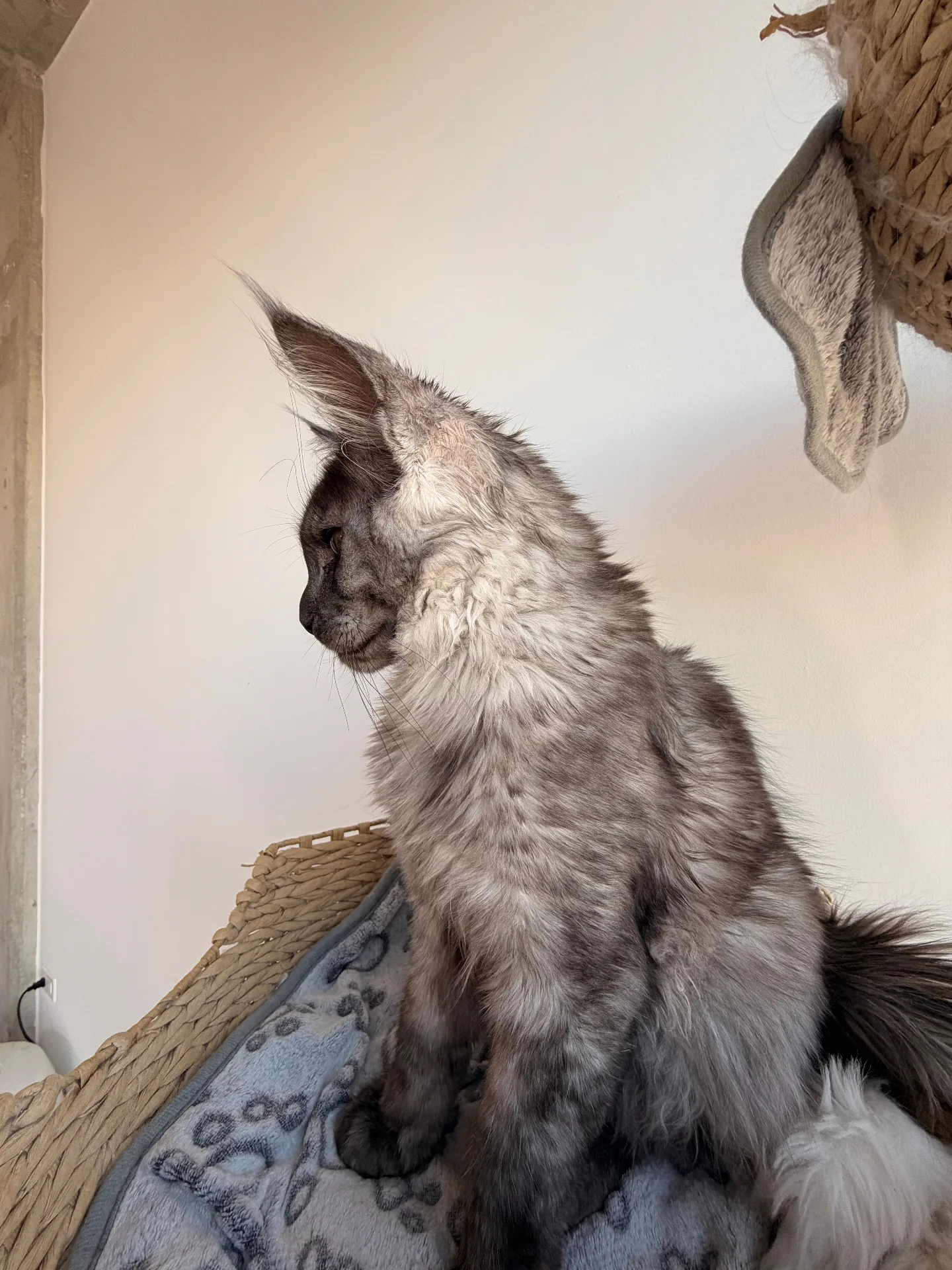
One of the most common questions I get from new families is "what shots does my kitten still need?" Every Chatlerie kitten goes home with a complete vaccination record — but I want you to understand what each vaccine does and why the timing matters, because an informed owner makes better healthcare decisions for the next 15 years.
Core Vaccines (Non-Negotiable)
These are required for every cat, indoor or outdoor, Maine Coon or otherwise. The American Association of Feline Practitioners (AAFP) classifies these as essential:
FVRCP (Feline Viral Rhinotracheitis, Calicivirus, Panleukopenia): This is the "distemper combo." It protects against three serious and potentially fatal viral diseases. Panleukopenia (feline parvovirus) has an 80-90% mortality rate in unvaccinated kittens — that's not a theoretical risk, it's a death sentence. Rhinotracheitis and calicivirus cause upper respiratory infections that can become chronic. Kittens get a series of shots starting at 6-8 weeks, with boosters every 3-4 weeks until 16 weeks old. After that, a booster at 1 year, then every 3 years.
Rabies: Required by law in Illinois and most states. Beyond the legal requirement, rabies is 100% fatal in cats and can be transmitted to humans. First dose at 12-16 weeks, booster at 1 year, then every 1-3 years depending on the vaccine type your vet uses. The PureVax (non-adjuvanted) rabies vaccine is what I recommend for cats — it carries a lower risk of injection-site reactions.
Non-Core Vaccines (Situation-Dependent)
FeLV (Feline Leukemia Virus): I recommend this for kittens, even indoor-only cats. Here's my reasoning: you don't know what the future holds. A door left open, a new cat introduced without proper testing, a temporary foster situation. The initial series is two doses, 3-4 weeks apart. Whether to continue boosting as an adult depends on your cat's lifestyle and risk factors. Indoor-only cats with no exposure to other cats may not need ongoing FeLV boosters — but that initial kitten series provides a safety net during their most vulnerable period.
FIV (Feline Immunodeficiency Virus): The FIV vaccine is no longer widely recommended. It interferes with diagnostic testing (vaccinated cats test positive, making it impossible to distinguish vaccination from true infection). Most vets no longer carry it.
Bordetella and Chlamydophila: These are rarely needed for pet Maine Coons in typical home environments. Your vet may recommend them in specific situations — multi-cat boarding facilities, shelter volunteering, or show cats who travel frequently.
The Complete Timeline
| Age | Vaccine | Notes |
|---|---|---|
| 6-8 weeks | FVRCP #1 | First dose of kitten series. Maternal antibodies may interfere — this is why we need multiple doses. |
| 10-12 weeks | FVRCP #2, FeLV #1 | Second round. This is typically where Chatlerie kittens are when families start inquiring about pickup. |
| 14-16 weeks | FVRCP #3, FeLV #2, Rabies | Final kitten series. Most kittens go home after this round. Your vet confirms completion. |
| 1 year (16 months) | FVRCP booster, Rabies booster | Critical booster — don't skip this one. It establishes long-term immunity. |
| Every 3 years | FVRCP, Rabies | Adult maintenance. AAFP guidelines support 3-year intervals for core vaccines in adult cats. |
What Chatlerie Kittens Receive
Before any kitten leaves my care, they've had their first two FVRCP vaccines, been dewormed on a veterinary-guided schedule (pyrantel at 2, 4, 6, and 8 weeks; fenbendazole as needed), had a comprehensive veterinary health exam, and started their FeLV series if age-appropriate. I include all documentation in the health packet — vaccine lot numbers, dates, manufacturer, and my vet's contact information — so there's zero guesswork for your vet.
📋 Your Chatlerie Health Packet Includes
- Complete vaccination record with lot numbers and dates
- Deworming schedule and products used
- Veterinary health exam certificate
- Genetic testing results for both parents
- HCM echocardiogram records for both parents
- My vet's contact information for any questions
- Recommended vaccination schedule going forward
Vaccine Reactions: What to Watch For
Most kittens handle vaccines with zero issues. Mild soreness at the injection site, slight lethargy for 12-24 hours, or mild appetite decrease are all normal and resolve on their own. I tell families: if your kitten is a little sleepy the evening after vaccines, that's expected. Give them a warm bed and their favorite food.
What's not normal: facial swelling, hives, vomiting, difficulty breathing, or collapse. These are signs of anaphylaxis and require immediate emergency veterinary care. They're extremely rare — I've never seen it in any of my kittens — but you should know what to look for.
⚠️ Injection-Site Sarcomas
Feline injection-site sarcomas (FISS) are rare tumors that can develop at vaccine injection sites, primarily associated with adjuvanted vaccines. This is why I recommend non-adjuvanted (PureVax) vaccines whenever available. Your vet should rotate injection sites and document locations. The risk is approximately 1 in 10,000-30,000 vaccinations — small, but worth minimizing through vaccine selection.
A Note on Over-Vaccination
I'm not anti-vaccine. I'm anti-unnecessary-vaccine. Some vets still recommend annual FVRCP boosters when the current AAFP and WSAVA guidelines support every 3 years for adult cats with a completed primary series. Have an honest conversation with your vet about your cat's specific risk profile. A strictly indoor Maine Coon with no exposure to other cats has different needs than a cat in a multi-pet household or one who attends cat shows.
Titer testing — measuring antibody levels in the blood — is an option for owners who want to verify immunity without revaccinating. It costs more than the vaccine itself ($150-$250), but it gives you data rather than guesswork. I support any family who chooses this approach.
Vaccination Myths I Hear Constantly
"Indoor cats don't need vaccines." Panleukopenia virus can be tracked in on shoes. Rabies-carrying bats can enter homes. Cats escape through doors. Indoor cats need core vaccines — period.
"My cat had a bad reaction, so no more vaccines ever." Report the reaction to your vet. They may pre-medicate with antihistamines, switch vaccine brands, or adjust the protocol. Skipping all vaccines is more dangerous than managing a known reaction.
"Natural immunity is better." Natural immunity to panleukopenia requires surviving panleukopenia. The survival rate in unvaccinated kittens is 10-20%. Vaccines are how we avoid that gamble.
Every Chatlerie kitten goes home with at least two rounds of FVRCP completed, age-appropriate deworming, and a detailed health packet so your vet knows exactly where to pick up. Your kitten's health isn't where I cut corners.