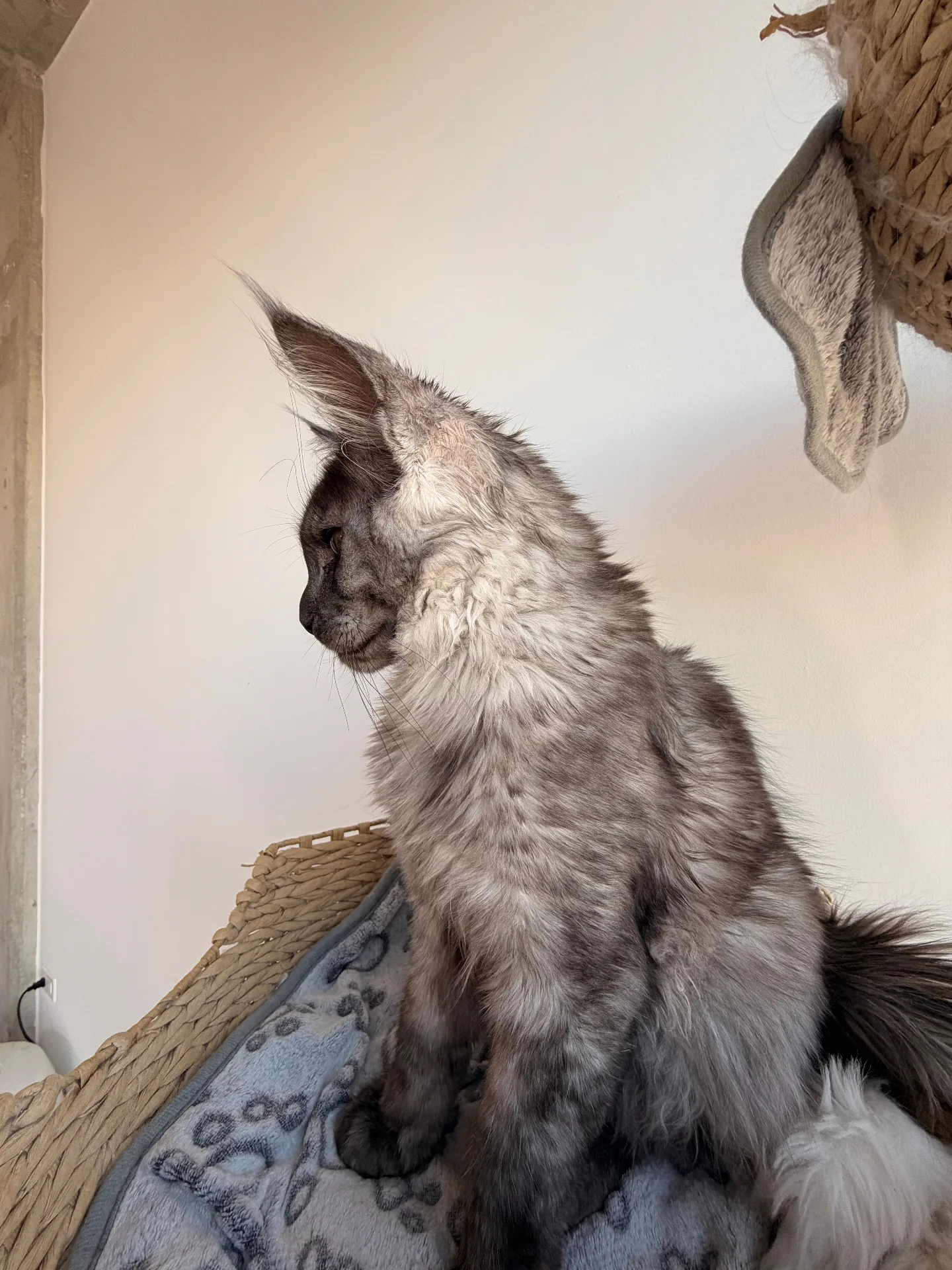
Every Chatlerie pet kitten goes home with a spay/neuter requirement in the contract. This isn't optional, and I'm not apologetic about it. Responsible breeding means controlling who breeds, and pet-quality kittens should never produce litters. Here's everything you need to know about the process, the timing, and why it matters.
When to Spay or Neuter
The traditional recommendation was 6 months. The current veterinary consensus — backed by the AAFP and ASPCA — has shifted toward early spay/neuter at 4-5 months, before the first heat cycle. For Maine Coons specifically, many breeders and vets recommend waiting until 5-6 months to allow a bit more growth — but not much longer.
Some breeders advocate waiting until 12+ months for "full development." I understand the logic, but the risks outweigh the benefits for pet cats. An intact male spraying your furniture at 8 months is not a theoretical problem — it's a Tuesday. Euro started showing pre-spray behaviors at 7 months, and I was very glad he was neutered before that behavior could establish. And an intact female in heat is genuinely miserable for everyone involved, including her — the yowling, the restlessness, the hormone-driven desperation to escape the house.
The Timing Debate: What the Science Says
| Timing | Pros | Cons |
|---|---|---|
| Early (4-5 months) | Prevents heat behaviors, reduces mammary cancer risk by 91%, simpler surgery on smaller cats | Some concern about growth plate closure in large breeds (minimal evidence in cats) |
| Standard (5-6 months) | Balance of early benefits with slightly more development, most breeders' recommendation | Some cats may show heat behaviors by 5-6 months |
| Late (12+ months) | Full skeletal development (relevant for dogs, less so for cats) | Risk of unwanted pregnancy, spraying, yowling, escape behavior, mammary cancer risk increases |
The delayed spay/neuter argument is stronger for large-breed dogs than cats. In felines, the orthopedic concerns that drive late neutering in dogs (ACL tears, hip dysplasia correlation) haven't been demonstrated with the same significance. My recommendation: 5-6 months for Maine Coons, aligned with both the AAFP guidelines and the practical reality of living with an intact cat.
Why Breeders Require It
I've spent years and thousands of dollars on health testing, genetic screening, importing champion bloodlines, and building a breeding program with intention. When a pet buyer breeds their kitten, they undermine all of that work. They produce kittens without health testing, without genetic screening, without any of the safeguards that responsible breeding requires. And those untested kittens end up on Craigslist labeled "purebred Maine Coon" — feeding the exact cycle I'm trying to break.
My contract requires spay/neuter by 6 months of age with proof submitted to me. This protects my bloodlines, protects the breed, and honestly — it protects you from the very real complications of living with an intact cat.
Breeding rights are available on a case-by-case basis for approved catteries only. If you're interested in starting a breeding program, that's a conversation I'm happy to have — but it comes with significant additional requirements, including mentorship, health testing commitments, and a higher price point that reflects breeding-quality genetics.
What to Expect: Surgery Day
Pre-surgery: Your vet will require fasting (typically 8-12 hours before). Pre-anesthetic bloodwork is standard and recommended — it checks kidney and liver function to ensure safe anesthesia processing. This is not optional in my book.
The procedure itself:
Neuter (males): A relatively quick procedure — 15-20 minutes. Two small incisions in the scrotum, testicles removed, incisions may not even need sutures. Most male cats are groggy for a few hours and back to normal by the next morning. Euro was demanding breakfast 8 hours post-surgery. Classic Euro.
Spay (females): Abdominal surgery — more involved, 30-45 minutes. The uterus and ovaries are removed through a small midline incision. Recovery takes longer because of the abdominal component. Libra was notably more subdued for about 3 days after her spay, which is normal.
Recovery: What to Expect
🏥 Post-Surgery Recovery Checklist
- E-collar (cone) for 10-14 days — yes, they hate it. Yes, it's necessary.
- Restrict jumping and vigorous play for 7-10 days
- Pain medication as prescribed (usually 3-5 days)
- Check incision daily for redness, swelling, or discharge
- Keep the incision dry — no baths
- Follow up with vet in 10-14 days for suture removal (if applicable)
- Keep them separate from rambunctious housemates temporarily
Most Maine Coons handle recovery with characteristic patience. The biggest challenge isn't the surgery — it's keeping a 15-pound cat from jumping onto the kitchen counter for 10 days. Coco managed to defeat her cone within 48 hours of surgery and had to be fitted with a surgical recovery suit instead. Plan for your cat's specific personality.
Cost Breakdown
| Procedure | Typical Cost (Chicago Area) | Notes |
|---|---|---|
| Neuter (male) | $200-$400 | Simpler procedure, shorter recovery |
| Spay (female) | $300-$600 | Abdominal surgery, slightly longer recovery |
| Pre-anesthetic bloodwork | $80-$150 | Non-negotiable. Ensures safe anesthesia. |
| Pain medication | $20-$50 | Usually included in surgery cost |
| E-collar | $10-$25 | Or surgical recovery suit ($25-$40) |
Low-cost spay/neuter clinics exist and can reduce costs to $50-$150. The quality of care at these clinics varies — ask about their anesthesia protocols and whether they include pre-surgical bloodwork. For a Maine Coon, I recommend your regular vet over a low-cost clinic if you can afford it.
Common Myths Debunked
"They'll get fat." Spaying/neutering changes metabolism slightly — about a 25-30% reduction in caloric needs. Adjust food portions accordingly. Obesity is a feeding problem, not a surgery problem. Every fat cat I've ever seen has an overfeeding owner, not a surgery-related condition.
"They need one heat cycle first." No. This is outdated advice from the 1980s. Early spaying actually reduces the risk of mammary cancer by 91% if done before the first heat. After the first heat, that protection drops to 86%. After the second heat, it drops further. There is zero medical benefit to letting your cat go through a heat cycle.
"It changes their personality." It reduces hormone-driven behaviors — spraying, yowling, aggression, roaming. Their core personality stays exactly the same. Euro is neutered and remains the most confident, curious, food-obsessed cat I've ever met. He didn't lose an ounce of personality. He just stopped trying to mark my furniture.
"Males don't need to be neutered if they're indoors." Indoor intact males spray. They spray on walls, furniture, laundry, and — if you're especially lucky — your laptop bag while you're sleeping. The urine of an intact male cat is one of the most potent and persistent odors on earth. Don't do this to yourself.
An intact male Maine Coon will spray. It's not a question of if — it's when. And once the behavior starts, neutering doesn't always stop it completely. Don't wait until your sofa smells like a warning sign.