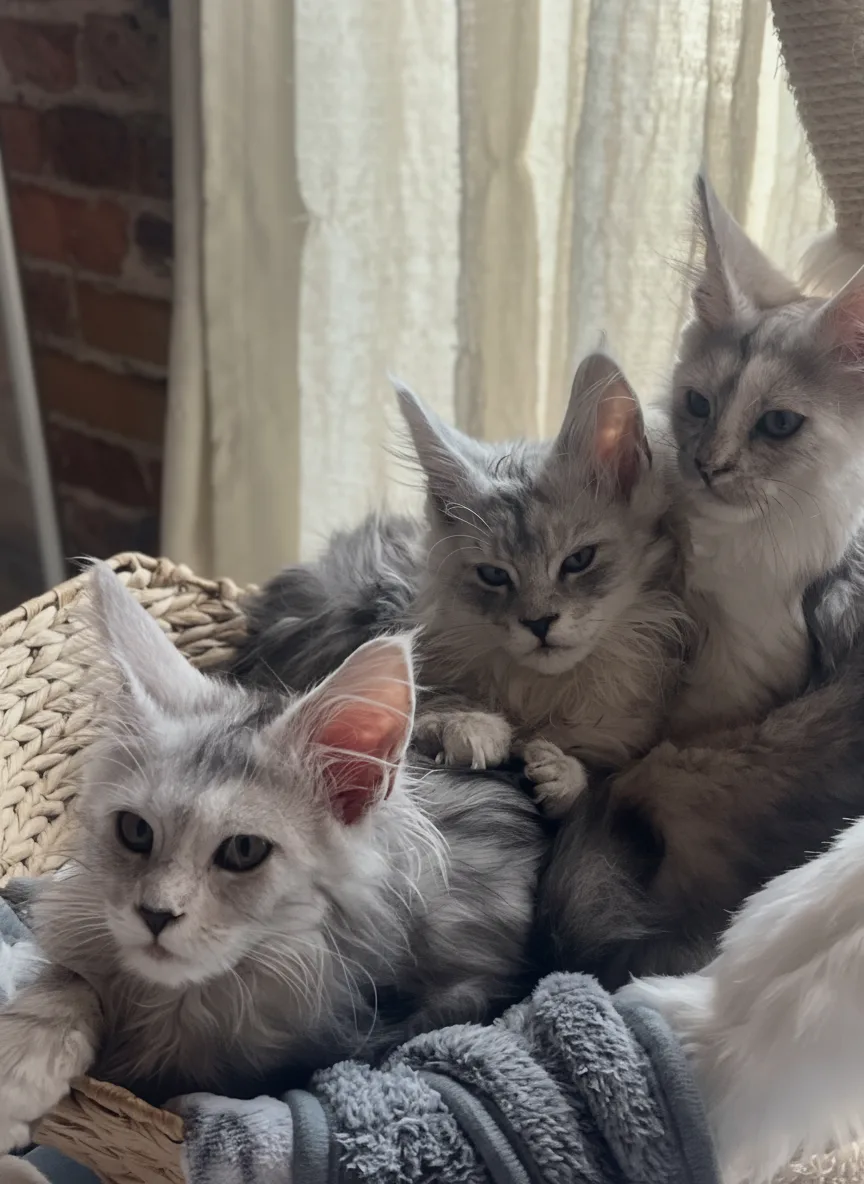
The confidence you see in a well-adjusted Maine Coon doesn't happen by accident. It's built, deliberately, during a critical socialization window between 2-7 weeks of age. What happens in my cattery during those weeks determines whether your kitten walks into your home curious and confident — or scared and reactive. This is why I'm meticulous about socialization, and why I encourage you to continue the work after your kitten comes home.
The Socialization Window: Science Behind the Magic
Kittens have a primary socialization period from roughly 2 to 7 weeks old. During this window, their brains are literally wired to accept new experiences as "normal." Sounds, textures, handling, other animals, different people — everything they encounter during this period gets filed as safe and unremarkable.
After 7 weeks, new experiences get filed differently — as potentially threatening until proven otherwise. You can still socialize older kittens and even adult cats, but it takes significantly more time, patience, and positive reinforcement. The early window is irreplaceable.
| Age | Developmental Stage | Socialization Priority |
|---|---|---|
| 0-2 weeks | Neonatal (eyes/ears closed) | Gentle handling, warmth, mother's care |
| 2-4 weeks | Transitional (senses opening) | Human handling, varied textures, gentle sounds |
| 4-7 weeks | Primary Socialization | Maximum exposure: people, sounds, surfaces, handling |
| 7-12 weeks | Secondary Socialization | Continued exposure, play skills, sibling interaction |
| 12-16 weeks | Juvenile Period | New home adjustment, continued positive experiences |
This timeline is why responsible breeders keep kittens until 12-16 weeks — not to be difficult, but because the secondary socialization period and sibling interaction are crucial for developing normal cat behavior. Kittens removed too early (before 8 weeks) often have lifelong behavioral issues.
What Happens at Chatlerie
Socialization isn't a checklist I complete once; it's the daily rhythm of how kittens are raised here. From the moment their eyes and ears open around 2 weeks, they begin experiencing the world.
Daily Handling (2+ weeks)
Every kitten is picked up, held, and gently manipulated daily. I touch their paws, look in their ears, open their mouths, turn them on their backs. This makes future grooming, nail trimming, and vet exams dramatically easier. A kitten who's been handled this way from birth doesn't flinch when the vet examines them.
I also handle them when they're sleepy, when they're active, and when they're eating — so they learn that human contact is normal in all states, not just during designated "handling time."
Sound Exposure (3+ weeks)
My kitten room isn't quiet. They hear:
- Vacuum cleaners running nearby
- Music (varied genres — classical, pop, even talk radio)
- Television sounds
- Doorbell recordings
- Clapping and sudden noises
- Kitchen sounds (pots, blenders, running water)
- Dog barking recordings
By 8 weeks, my kittens don't startle at sudden sounds. They look up, assess, and go back to what they were doing. That's the response I'm building.
People Exposure (4+ weeks)
Kittens need to meet different types of people to generalize "humans are safe." My kittens meet:
- Men and women
- Children (supervised — always)
- People with different voices and energy levels
- People wearing hats, glasses, or unusual clothing
- Visitors who come specifically for socialization sessions
A kitten who only meets one or two people during development may be shy around everyone else. Variety matters.
Texture & Environment Exposure (4+ weeks)
Kittens walk on:
- Carpet, tile, wood, linoleum
- Soft blankets and crinkly materials
- Cat trees and scratching surfaces
- Carrier floors and bedding
- Outdoor surfaces (supervised patio time)
They explore tunnels, climb cat trees, and navigate obstacle courses. Physical confidence builds mental confidence.
Grooming Exposure (6+ weeks)
Every kitten experiences:
- Brushing (even short sessions count)
- Nail trimming
- Bath introduction (at least one full bath before placement)
- Blow dryer sounds (even if not directly drying)
This is why Chatlerie kittens arrive "grooming-ready." They've already experienced everything you'll need to do with them.
Animal Exposure
My adult cats model confident behavior around kittens. Libra, especially, is extraordinarily patient — she lets kittens climb all over her, steal her food, and bat at her tail. Her calm response teaches them that other cats are friends, not threats.
Kittens who grow up with stable adult cats learn appropriate play behavior, proper use of claws, and how to read feline body language. Singletons (only kittens) without this exposure often have play aggression issues.
A kitten who has been properly socialized doesn't flinch when you drop a pan in the kitchen. They look up, assess, and go back to what they were doing. That's confidence — and it's built, not born.
Continuing at Home (12-16 weeks)
When your kitten arrives, the socialization work isn't done — it's handed off to you. The secondary socialization window stays open until about 16 weeks, and you can significantly shape your kitten's adult personality during this time.
Week 1-2: Foundation
- Let your kitten adjust to their new home (safe room setup)
- Maintain routines from the breeder (feeding schedule, litter type)
- Introduce household sounds at normal volume — don't tiptoe
- Daily handling: touch paws, ears, mouth
- Introduce primary family members
Week 3-4: Expansion
- Introduce extended family and friends who visit regularly
- Introduce other household pets (supervised, gradual)
- Begin grooming routine (brush daily, even briefly)
- Carrier training: leave carrier open as a bed/hideaway
- Explore new rooms of the house
Ongoing: One New Experience Daily
During weeks 12-16, aim for one new positive experience per day. This doesn't have to be dramatic:
- A visitor they haven't met
- A new toy or texture
- A new room to explore
- Sounds from a construction/sound effect video
- A short car ride
- Harness introduction
Always end on a positive note with treats and play. The goal isn't to overwhelm — it's to expand their comfort zone gradually.
Can You Fix Poor Socialization?
What if your Maine Coon didn't have ideal early socialization? Maybe you rescued an older kitten or adopted from a less hands-on breeder. You can absolutely improve their confidence — it just takes more time and patience.
Counter-Conditioning Approach
- Identify triggers: What makes your cat fearful? Strangers? Sounds? Handling?
- Start below threshold: Expose to the trigger at a distance/intensity that doesn't cause fear
- Pair with positive: Deliver treats, play, or petting during exposure
- Gradually increase: Slowly move closer or increase intensity as the cat remains calm
- Be patient: This process takes weeks to months, not days
Example: If your cat fears the vacuum, start by showing them the turned-off vacuum from across the room while giving treats. Over days/weeks, move closer, eventually turning it on in another room while treating, and so on.
When to Seek Help
Some cats have fear or anxiety that requires professional help. If your cat:
- Hides constantly and won't emerge even for food
- Shows aggression when frightened
- Isn't improving despite consistent counter-conditioning
- Has other behavioral issues (inappropriate elimination, excessive vocalization)
Consider consulting a veterinary behaviorist. Medication combined with behavior modification can be life-changing for severely anxious cats.
Signs of Good Socialization
How do you know if socialization is working? Look for these markers:
Well-Socialized Kitten Signs
- Approaches new people with curiosity rather than hiding
- Recovers quickly after a startle (looks, assesses, moves on)
- Allows handling of paws, ears, mouth without extreme struggle
- Plays appropriately with humans (no excessive biting/scratching)
- Explores new environments rather than hiding
- Tolerates carrier and car rides without prolonged distress
- Accepts grooming without aggression
- Interacts confidently with other household pets
Common Socialization Mistakes
⚠️ What NOT to Do
Flooding: Overwhelming a kitten with too much, too fast. This creates fear, not confidence. Progress gradually.
Forcing interaction: Holding a scared kitten while a stranger pets them. The kitten learns strangers = trapped and scared.
Punishing fear: Scolding a cat for hiding or hissing. Fear responses need reassurance, not punishment.
Inconsistency: Socializing intensively for a week, then stopping. Consistency beats intensity.
Assuming the breeder did it all: Early socialization is crucial, but you must continue the work at home.
Key Takeaways
- The primary socialization window (2-7 weeks) is critical and irreplaceable
- Responsible breeders actively socialize — ask what they do
- Continue socialization at home through 16 weeks
- One new positive experience per day builds lifelong confidence
- Poorly socialized cats can improve with patient counter-conditioning
- Well-socialized Maine Coons are calm, confident, and adaptable