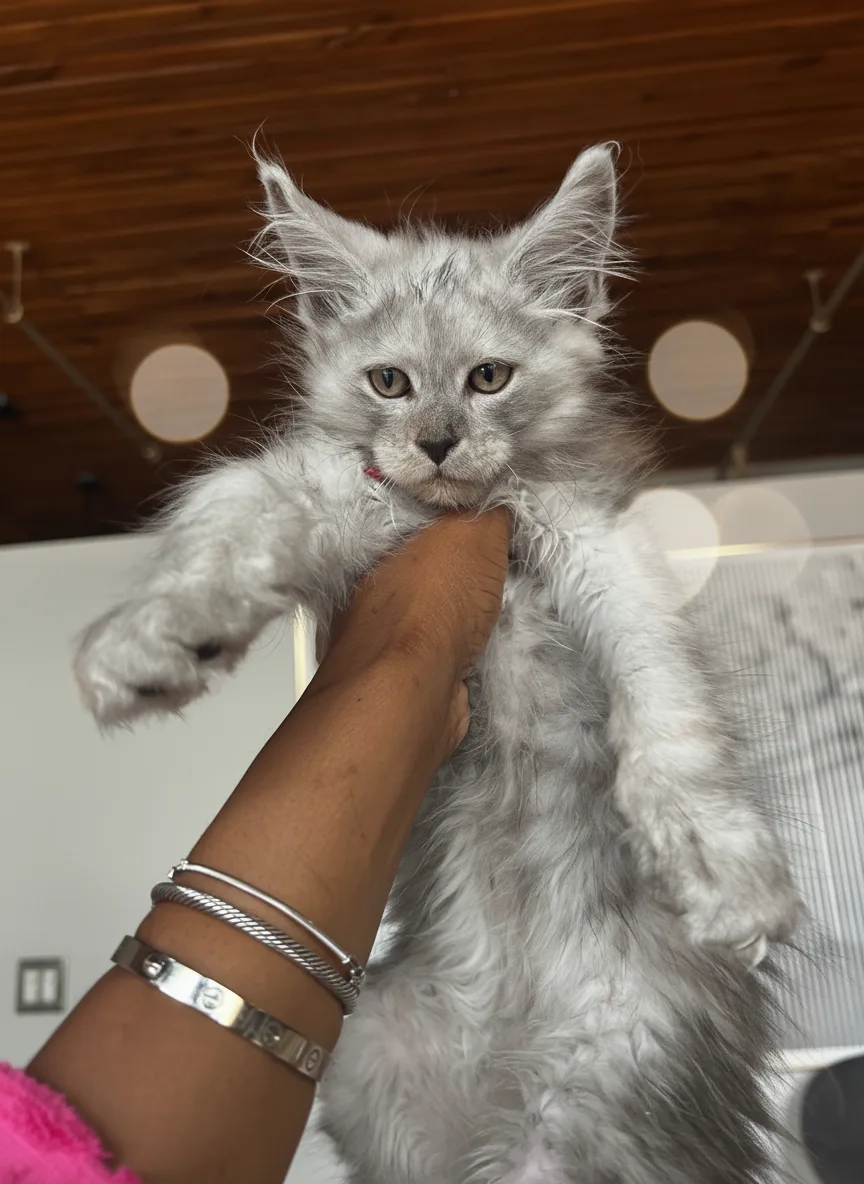
Every single Chatlerie kitten leaves my home with a handwritten note from me, a blanket that smells like their mother, and a care guide I've refined over dozens of placements. But even with all of that preparation, the first 30 days are the make-or-break period. I tell every family the same thing at pickup: "Go slow. Slower than you think. Your kitten just left the only home they've ever known." This guide is exactly what I walk through with families on go-home day — the protocol that consistently produces confident, bonded kittens within weeks.
Days 1–3: The Sacred Slow Start
Arrival day is not the day to introduce your kitten to your entire home. It is the day to give them one quiet room, an open carrier door, and your patience. The safe room is not a cage — it is the single most effective tool for accelerating adjustment.
Day One Protocol
- Carry the carrier directly to the safe room without opening it in transit
- Set the carrier on the floor, open the door, and leave the room
- Return in 30–60 minutes to check food and water, but do not force interaction
- Do not invite family, friends, or neighbors over today
- Do not let other pets near the safe room door (they can hear and smell each other through it; that's enough for day one)
- Keep household noise levels lower than usual for the first evening
What Normal Day-One Behavior Looks Like
| Behavior | What It Means | What to Do |
|---|---|---|
| Staying in the carrier for 1–2 hours | Normal stress response. They're processing the new scent environment. | Nothing. Leave them. They'll come out when ready. |
| Hiding behind furniture | Normal. Finding a secondary safe spot. | Do not pull them out. Sit in the room quietly and let them observe you. |
| Not eating on arrival day | Normal for many kittens. Stress suppresses appetite. | Leave food available. They'll eat when the edge of the stress passes. |
| Vocalizing (crying) | Separation anxiety from mother/siblings. | Ticking clock near bed, dim nightlight, don't rush to the room every cry. |
| Using the litter box within 2 hours | Excellent sign of adjustment. | Celebrate quietly. |
| Coming to you for attention within 4–6 hours | Typical for Chatlerie kittens with their social temperament. | Accept the overture. Gentle petting, calm voice, short session. |
The most common day-one mistake: Allowing other pets or young children into the safe room before the kitten has voluntarily emerged, eaten, and used the litter box. If any of those three things haven't happened, the kitten is not ready for additional stimulation. Wait.
Days 4–7: Building the Foundation
By day three to four, most Chatlerie kittens are eating confidently, playing actively in the safe room, and initiating contact with their primary people. This is your signal to begin expanding — slowly.
- Begin supervised exploration: Open the safe room door and let your kitten choose when to venture out. Don't carry them into the living room. Let them lead.
- Begin your grooming ritual: Start the weekly brushing habit now, while they're young and the positive association is easy to establish. Keep sessions to 3–5 minutes and end with play.
- Schedule your first vet visit: Within 72 hours of pickup is standard practice and required under our health guarantee. Call to book if you haven't already.
- Begin nail trim habituation: Touch their paws daily. Press the pad gently to extend the claw without trimming. Get them used to the sensation before you use the clippers.
The First Vet Visit
Your kitten's first vet visit should happen within 72 hours of coming home. Bring the full health documentation packet we provide at pickup. Your vet will complete a physical exam, confirm vaccination status, and schedule the next appointment. This visit establishes your baseline with the practice and gives you a professional second opinion on your kitten's health at the moment they enter your care.
What to Tell Your Vet at the First Visit
- The kitten is European Maine Coon from health-tested bloodlines (TICA registered)
- HCM cardiology reports for both parents are in the packet you've brought
- You want the first HCM echo scheduled for age 1
- Ask about their Maine Coon experience and referral pathway for a cardiologist
- Confirm when the next FVRCP vaccine is due based on our documentation
Days 8–14: Expansion and Routine
By the end of the first week, most kittens are exploring beyond the safe room with confidence. Your job now is establishing the routines that will govern the next 15 years: feeding schedule, play sessions, grooming day, and the expectation that humans are reliable, predictable, and worth seeking out.
Establishing the Feeding Schedule
At 12 weeks, kittens need 3–4 meals per day. Set fixed meal times and remove uneaten food after 20 minutes. This establishes hunger cycles, prevents obesity, and gives you a daily health indicator — a kitten who skips a meal is telling you something. Feed at the same times every day. Maine Coons are highly routine-oriented and will begin anticipating meals on a tight schedule within days.
Daily Play Sessions
Two 15-minute wand toy sessions per day — morning and evening — are the single most effective thing you can do for your kitten's physical health, mental health, and bond with you. The key is mimicking real prey: irregular movement, pauses, "escapes," and always ending with the kitten making the catch. Never end a play session with the toy still active — it's the equivalent of a hunter always being denied their prey and creates frustration.
Days 15–21: Socialization Window
This period is ideal for controlled exposure to the things that will be normal parts of your kitten's life: visitors, sounds, new environments within the home, and any other pets using the two-week protocol.
The Illinois Noise Environment
Illinois homes have seasonal soundscapes that can startle a young kitten: furnaces cycling on, central air, lawnmowers in summer, snow blowers in winter, thunderstorms. Begin gentle desensitization by not reacting to these sounds yourself when they occur. A Maine Coon who watches their human ignore a furnace starting up learns that it's safe far faster than one whose human goes to "check" every time there's a new noise.
Days 22–30: The New Normal
By the end of the first month, your kitten should be fully integrated into your home's daily rhythm. Here's the 30-day checkpoint:
| Milestone | Expected by Day 30 | Not Yet There? Consider: |
|---|---|---|
| Eating all meals consistently | ✓ Should be established | Vet check if appetite remains inconsistent |
| Using litter box reliably | ✓ Should be well-established | Check litter box cleanliness; box accessibility; vet check if straining |
| Playing actively daily | ✓ Should be enthusiastic | Evaluate for illness or environment stress if still low energy |
| Sleeping in open spaces (not just hiding) | ✓ Confidence indicator | Normal if still using safe room; concern if still hiding exclusively |
| Seeking contact with primary person | ✓ Maine Coon baseline | Some kittens bond more slowly; not a concern unless completely avoidant |
| Tolerating basic grooming | ✓ With treats and patience | Continue desensitization; 3-minute sessions minimum 3× per week |
What the First Month Is Really Building
The first 30 days are not just about practical adjustment. They're about the establishment of a relationship — a pattern of interaction, reliability, and trust that your Maine Coon will carry for their entire life. The routines you create now will be the anchor of your life together.
The feeding schedule they learn in week two will govern their morning behavior for the next 15 years. The grooming ritual established in week one will determine whether grooming is a battle or a bonding session for the next decade. The play sessions that begin now will be the emotional core of your daily relationship until the end.
The first month is short. The relationship it builds is not.
We have never met a Maine Coon who didn't become extraordinary, given time and the right start. Give your kitten the first 30 days they deserve, and they will give you everything else.
Questions about your kitten's first weeks home? We're a phone call away. Always.
Contact The Chatlerie →