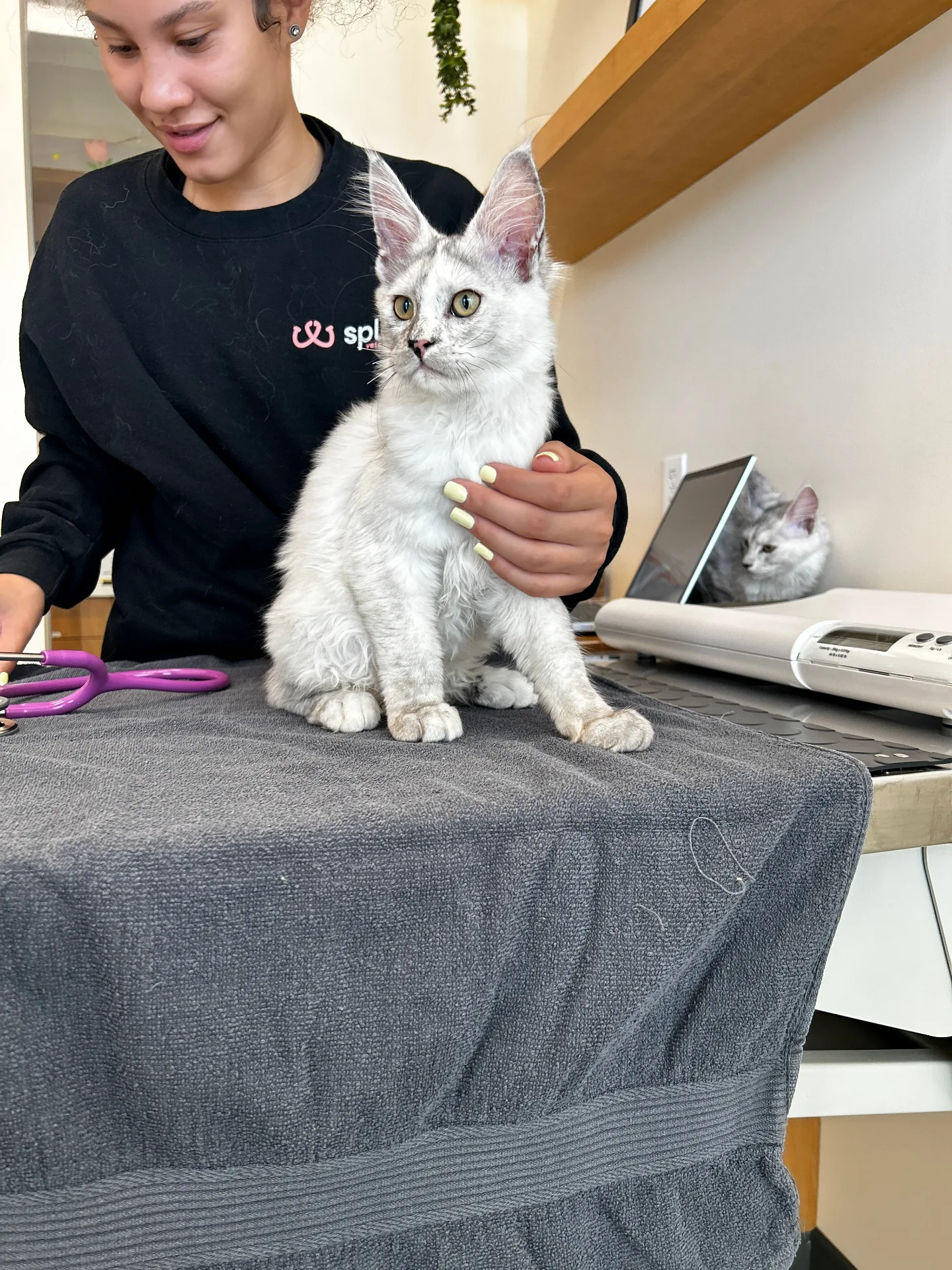
Hip dysplasia is typically associated with dogs, but Maine Coons are one of the few cat breeds with a significant incidence. Their large frame puts more stress on joints than smaller breeds, and the condition has a genetic component that responsible breeders actively work to reduce. Here's what you need to know.
What Is Hip Dysplasia?
Hip dysplasia is a developmental condition where the hip joint doesn't form properly — the ball and socket don't fit together correctly, leading to abnormal wear, inflammation, and eventually arthritis. In cats, it ranges from mild (barely noticeable) to severe (significantly impacting mobility and quality of life).
Studies suggest 18-20% of Maine Coons show some degree of hip dysplasia on X-ray, though many of these are subclinical — the cat shows no visible symptoms. Cats are remarkably good at compensating for joint issues, which means mild cases often go undiagnosed unless specifically screened.
Symptoms to Watch
🚨 Signs of Hip Dysplasia
- Reluctance to jump onto high surfaces (counters, cat trees)
- Bunny-hopping gait when running (both back legs move together)
- Stiffness after rest, especially on cold mornings
- Decreased activity level or play interest
- Sensitivity when hips are touched
- Difficulty using the litter box (especially high-sided boxes)
Screening & Diagnosis
Diagnosis requires X-rays (radiographs) of the hips under sedation for proper positioning. OFA (Orthopedic Foundation for Animals) certification for hips is available for cats, though fewer breeders pursue it compared to HCM screening. At Chatlerie, I monitor my breeding cats for any signs of joint issues and select for cats with good joint conformation.
Management Options
| Approach | When to Use | Cost |
|---|---|---|
| Weight management | All cases — most important intervention | Minimal |
| Joint supplements (glucosamine/chondroitin) | Mild to moderate cases | $15-$30/month |
| Omega-3 fatty acids | All cases — anti-inflammatory | $10-$20/month |
| Pain medication (as needed) | Moderate to severe flare-ups | $20-$50/month |
| Physical therapy/rehab | Moderate to severe cases | $50-$100/session |
| Surgery (FHO or total hip replacement) | Severe cases unresponsive to conservative care | $2,000-$7,000 |
The single most important thing you can do for a Maine Coon's joints is keep them at a healthy weight. Every extra pound amplifies joint stress. Weight management isn't optional — it's the foundation of joint health.