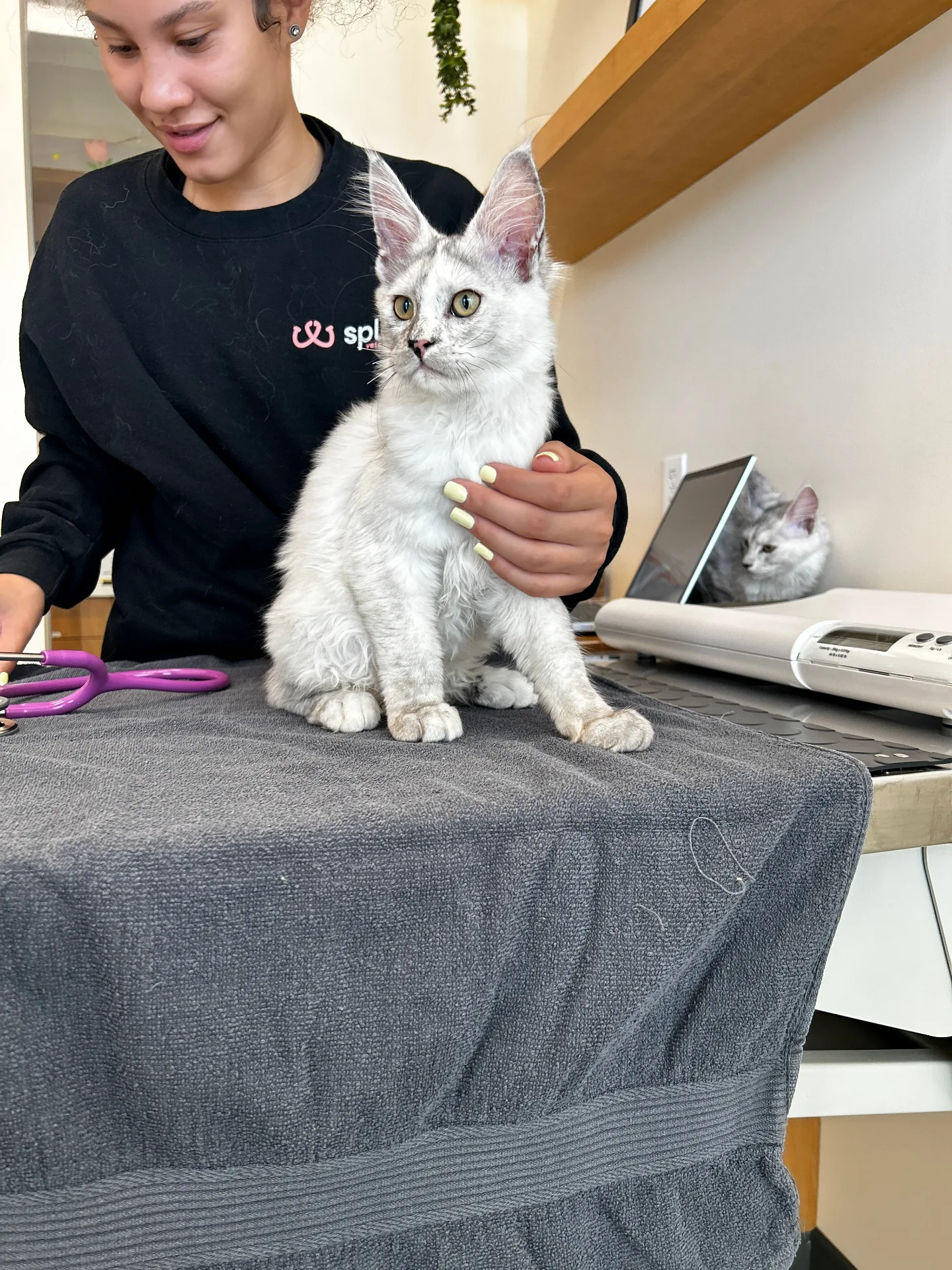
Food allergies in cats are more common than most owners realize, affecting an estimated 10–15% of all feline allergy cases. Maine Coons, with their sensitive digestive systems and large appetites, can be particularly affected. Libra developed a chicken sensitivity at around 18 months — it took us three weeks of detective work to figure out what was causing her persistent ear scratching and soft stools.
Recognizing Food Allergy Symptoms
Unlike environmental allergies that tend to be seasonal, food allergies are year-round and consistent. The most common signs in Maine Coons:
Skin symptoms: Excessive scratching (especially head and neck), over-grooming, hair loss patches, small scabs or bumps (miliary dermatitis), red or inflamed ears
Digestive symptoms: Chronic soft stools, vomiting (more than occasional hairballs), gas, decreased appetite, weight loss despite adequate feeding
Behavioral changes: Increased irritability, restlessness, face rubbing on furniture or carpet
When to See the Vet Immediately
- Difficulty breathing or swelling (rare but serious)
- Bloody stool or persistent diarrhea lasting more than 48 hours
- Rapid weight loss
- Complete refusal to eat for more than 24 hours
Common Allergy Triggers
The most frequent food allergens in cats — including Maine Coons — are proteins, not grains. This surprises many owners who've been marketed "grain-free" diets as a solution.
| Allergen | Frequency | Notes |
|---|---|---|
| Chicken | Most common | Present in the majority of commercial cat foods |
| Fish | Very common | Especially salmon and tuna-based foods |
| Beef | Common | Often a hidden ingredient in "meat by-products" |
| Dairy | Moderate | Cats are naturally lactose intolerant as adults |
| Egg | Less common | Sometimes used as a binder in kibble |
| Wheat/Corn | Uncommon | Grain allergies exist but are overstated in marketing |
The Elimination Diet: Gold Standard
The only reliable way to diagnose a food allergy is an elimination diet. Blood tests and skin prick tests for food allergies in cats are unreliable — don't waste your money. Here's the process:
Elimination Diet Steps
- Choose a novel protein your cat has never eaten (duck, venison, rabbit)
- Feed ONLY that protein for 8–12 weeks — no treats, no table scraps, nothing else
- Monitor symptoms daily — keep a written log
- If symptoms resolve, reintroduce old foods one at a time (2 weeks each)
- When symptoms return, you've found the trigger
- Work with your vet throughout the process
I know what you're thinking: 8–12 weeks of a single protein sounds extreme. It is. But it's the only approach that actually works. When we did this with Libra, we used a hydrolyzed protein diet prescribed by our vet for the first 8 weeks, then systematically reintroduced proteins. Chicken was the culprit. She's been chicken-free for two years now and her coat has never looked better.
Long-Term Management
Read every label. Chicken and chicken derivatives hide under names like "poultry meal," "animal digest," "natural flavoring," and "meat by-products." If you can't identify the protein source, don't feed it.
Rotate carefully. Some cats with one allergy develop others over time. Rotating between 2–3 safe proteins can help prevent new sensitivities from developing.
Consider limited-ingredient diets (LID). Brands that specialize in single-protein, limited-ingredient formulas make management much easier.
Food allergies aren't a death sentence for your Maine Coon's quality of life. They're a puzzle — and once you solve it, your cat will thank you with the shiniest coat and the most enthusiastic dinner-time chirps you've ever heard.