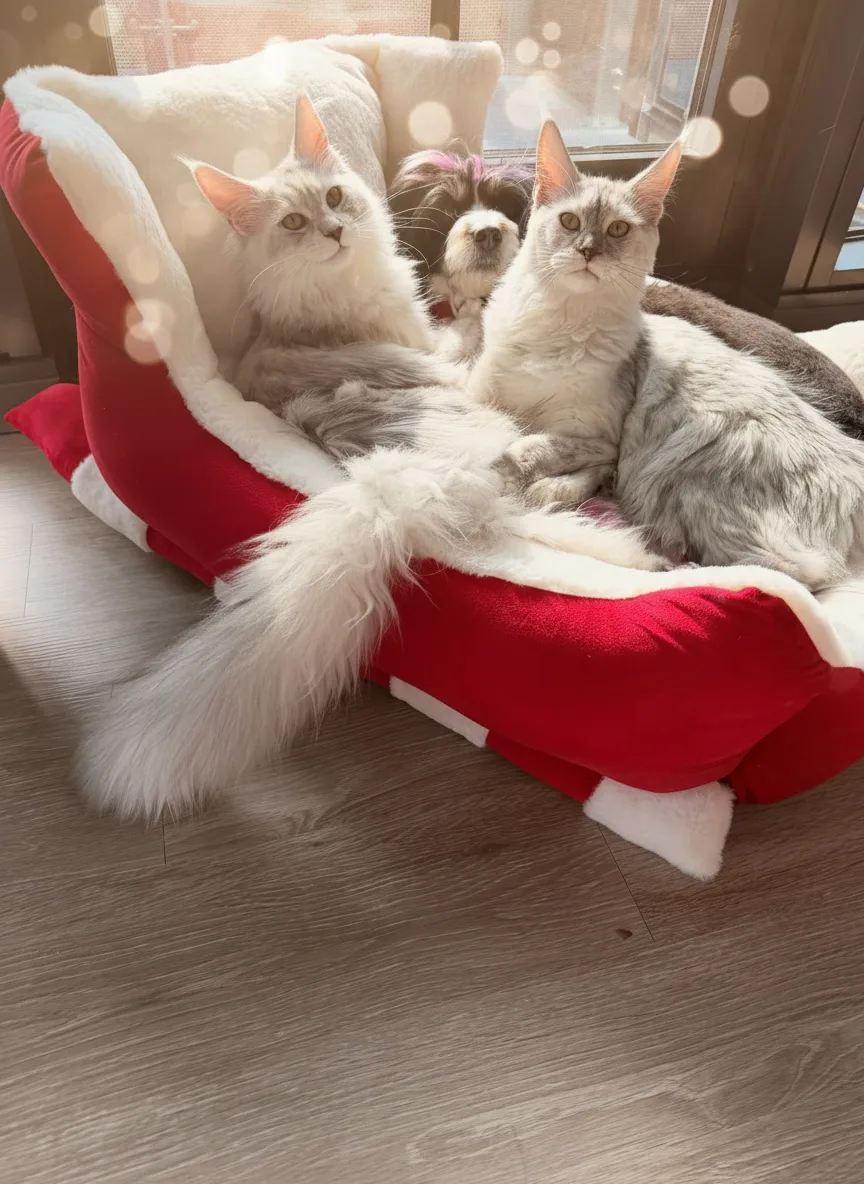
Most cats hate water. Maine Coons are… curious about it. Euro will stick his entire head under a running faucet and emerge looking confused about why he's wet. Coco dips her paws in water bowls like she's testing the temperature at a spa. Libra supervises bath time with the intensity of a quality control inspector. This natural water tolerance makes bathing a Maine Coon significantly easier than bathing most cats — but "easier" is relative.
I've bathed hundreds of Maine Coons over the years — show prep, kitten first baths, messy situations that require immediate intervention. Here's everything I've learned about getting a Maine Coon clean without turning your bathroom into a war zone.
How Often Should You Bathe?
Most pet Maine Coons need a bath every 4-8 weeks. Show cats get bathed more frequently — sometimes every 1-2 weeks during show season. If your cat stays strictly indoors and you brush regularly, you can stretch it longer. Some families go 2-3 months between baths with no issues.
But Maine Coons have dense, water-resistant coats that can develop oil buildup — you'll notice the fur looking greasy or clumping near the tail base. The coat might feel sticky rather than silky. That's your signal that bath time is overdue.
Signs Your Maine Coon Needs a Bath
- Greasy or clumpy fur, especially near the tail base
- Dull, flat-looking coat lacking shine
- Visible dandruff or flaking
- Unpleasant odor (healthy cats shouldn't smell)
- Matting that won't brush out
- Sticky or tacky texture when you touch the fur
Euro tends to get oily faster than my other cats — he's a big boy with a lot of coat, and he's not exactly fastidious about grooming himself. Coco, on the other hand, keeps herself immaculate and only needs baths every 6-8 weeks.
Preparation: Set Up for Success
The secret to a smooth bath is having everything ready before you bring the cat anywhere near water. Once that cat is wet, you're committed — and you don't want to be scrambling for supplies while holding a damp, increasingly unhappy Maine Coon.
Bath Supply Checklist
- Degreasing shampoo (first wash)
- Conditioning shampoo (second wash)
- 3-4 large absorbent towels
- Detachable shower head or large cup for rinsing
- Non-slip mat for sink or tub
- Cotton balls for ears (optional)
- High-value treats for bribery
- Blow dryer (pet-safe, or human dryer on cool/low)
- Grooming stand or helper for drying (optional but helpful)
Location matters. I use a large utility sink for most baths — it's waist-height (saving my back), deep enough to contain splashing, and has a sprayer attachment. A bathtub works fine, but you'll be kneeling the entire time. Kitchen sinks work for kittens but most adult Maine Coons are too large.
Close the bathroom door. Trust me on this one. A wet, panicked Maine Coon running through your house is a recipe for chaos. Close the door, remove anything fragile, and accept that you're probably going to get wet too.
Recommended Products
Not all cat shampoos are created equal. For Maine Coons, you need products designed for long-haired cats with dense coats. Here's what works:
| Product Type | What It Does | When to Use |
|---|---|---|
| Degreasing Shampoo | Cuts through oil buildup in dense coat | First wash, always |
| Conditioning Shampoo | Restores moisture, reduces static, adds shine | Second wash |
| Waterless Shampoo | Spot cleaning between full baths | Messy paws, minor dirt |
| Medicated Shampoo | Treats skin conditions | Only if vet-recommended |
I use Chris Christensen products for show prep — they're professional-grade and work beautifully on Maine Coon coats. For everyday bathing, Earthbath or TropiClean are excellent, affordable options. Avoid human shampoo — even baby shampoo — as the pH is wrong for cat skin.
⚠️ Products to Avoid
Never use essential oil-based shampoos, tea tree oil products, or anything containing permethrin (found in some flea treatments). These are toxic to cats. Always check ingredients and choose cat-specific formulas.
The Bathing Process: Step by Step
Step 1: Brush First
Always brush thoroughly before bathing. Remove loose fur, work out minor tangles, and check for mats. Wet tangles become cement — they tighten and become nearly impossible to remove without cutting. If you find mats, work them out before the bath or accept that you'll need to shave them out afterward.
Step 2: Wet the Coat Completely
Maine Coon coats are water-resistant. The outer guard hairs repel water, which is great in nature but annoying at bath time. You need to really saturate the coat — this takes longer than you'd expect. Work the water through with your fingers, making sure you're getting down to the skin. Don't rush this step.
Use lukewarm water — comfortable on your inner wrist. Too hot can burn; too cold is stressful and makes them shiver.
Step 3: Apply Degreasing Shampoo
Start with a degreasing shampoo, applying it from neck to tail. Work it through the entire coat, paying special attention to the problem areas:
- Base of the tail: This is where oil accumulates most heavily. Really work the shampoo in.
- Behind the ears: Another oil-prone spot, especially in intact males.
- Chest ruff: Food particles and drool collect here.
- Belly and "pants": Where litter and debris stick.
- Paws: Litter and dirt between the toes.
Avoid getting shampoo in the eyes and ears. If you're worried about water in the ears, place cotton balls loosely in the ear canals (remove immediately after).
Step 4: Rinse, Then Rinse Again
Rinsing is the most important step and the one most people rush. Shampoo residue in a long coat causes itching, flaking, and dull fur. Rinse until you think you're done, then rinse again. The water should run completely clear with no bubbles.
Lift the coat and rinse from underneath. Check the armpits, behind the ears, and the chest ruff — shampoo loves to hide in these areas.
Step 5: Conditioning Shampoo (Optional but Recommended)
For Maine Coons, I always do a second wash with a conditioning shampoo. It restores moisture, reduces static, and makes the coat incredibly silky. Apply, work through, and rinse thoroughly.
Some groomers use a leave-in conditioner or detangling spray after the bath. I find this makes Maine Coon coats too slippery and can attract dirt faster. Your mileage may vary.
Step 6: Remove Excess Water
Before you reach for a towel, squeeze (don't rub) excess water from the coat. Work from head to tail, gently pressing the fur to push water out. This significantly reduces drying time.
Drying: The Hard Part
A Maine Coon's coat takes hours to air dry. Hours during which they'll sit on your furniture, your bed, and your lap, leaving everything damp. They'll shake, spraying water across the room. They'll groom themselves and ingest all that loose wet fur. Air drying is not ideal.
Towel Drying
Wrap your cat in a large, absorbent towel and gently press to absorb water. Don't rub vigorously — this causes tangles. Use multiple towels, switching to a dry one when the first is saturated. A microfiber towel designed for pets absorbs significantly more water than a regular cotton towel.
Blow Drying
I use a pet-safe blow dryer on low heat for most of my cats. Professional groomers use high-velocity dryers, but these are loud and require training to tolerate. A regular human dryer on the cool or low-heat setting works fine — just keep it moving and never hold it in one spot.
Most of my cats tolerate blow drying because I introduced it during kittenhood. The first time you try this with an adult cat who's never experienced it, expect resistance. Go slowly, use treats liberally, and don't force it. Some cats will never tolerate dryers, and that's okay.
⚠️ Never Let a Wet Cat Get Cold
Wet cats lose body heat rapidly. If your cat won't tolerate blow drying, towel dry as thoroughly as possible and keep them in a warm room until completely dry. Don't let them outside or in drafty areas while still damp.
Post-Bath Brushing
Once the coat is about 80% dry, brush through to prevent the fur from drying in tangles. This is especially important for the areas prone to matting — behind the ears, armpits, and the "pants" on the back legs. Finish with a full brush-out once completely dry.
Handling Difficult Cats
Not every Maine Coon is cooperative at bath time. Here's how to handle common challenges:
The Escape Artist: Some cats will try to climb out of the sink repeatedly. Use a grooming loop attachment if your sink has one, or enlist a helper to gently restrain while you wash. Stay calm — your stress transfers to them.
The Vocalist: Maine Coons are already talkative, and many become extremely vocal during baths. This is complaining, not pain. Talk to them calmly, work efficiently, and ignore the operatic protests.
The Aggressive Cat: If your cat becomes truly aggressive (biting, scratching with intent), stop. Some cats need to be sedated for bathing — talk to your vet. It's not worth injury to either of you. Professional groomers also have techniques and equipment for handling difficult cats.
The secret to easy bath time is starting young. Every Chatlerie kitten gets at least one bath before going home — so they arrive already knowing that water isn't the end of the world.
Bathing Kittens
Kittens can be bathed starting around 8 weeks old, but they chill easily and need extra care:
- Use warmer water (test carefully — still comfortable, but warmer than for adults)
- Work quickly to minimize time wet
- Dry thoroughly and keep warm for an hour after
- Make the experience positive with treats and praise
- Keep first baths short — just getting wet and rinsed is enough for training
The goal with kitten baths isn't really cleanliness — it's conditioning them to accept bathing as a normal part of life. A few positive early experiences make adult bath time dramatically easier.
Troubleshooting Common Issues
| Problem | Cause | Solution |
|---|---|---|
| Coat still looks greasy after bath | Didn't degrease enough or didn't rinse fully | Repeat bath with degreasing shampoo, double rinse time |
| Dandruff appears after bath | Shampoo residue or over-bathing | Rinse more thoroughly; reduce bath frequency |
| Mats formed during drying | Didn't brush while drying or let coat dry tangled | Brush every 15 min during drying process |
| Coat is dull or straw-like | Wrong shampoo or no conditioner | Use conditioning shampoo; consider diet changes |
| Skin irritation after bath | Allergic reaction to product | Switch to hypoallergenic formula; consult vet if severe |
Key Takeaways
- Bathe every 4-8 weeks or when coat becomes greasy
- Brush thoroughly before wetting
- Use degreasing shampoo first, conditioning shampoo second
- Rinse until water runs completely clear — then rinse more
- Blow dry on low heat or towel dry completely
- Start kittens young for lifelong bath tolerance