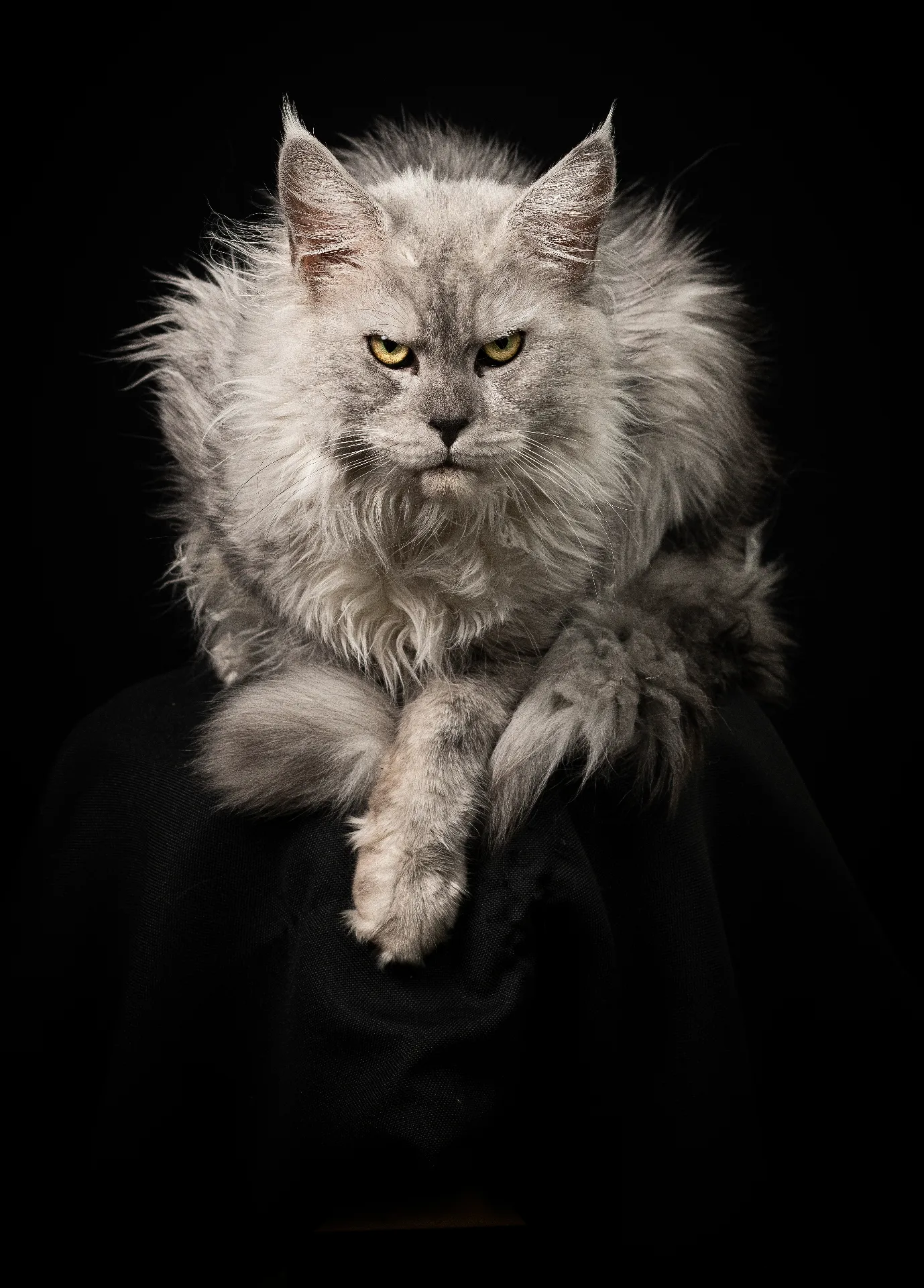
Every Chatlerie kitten is raised with dogs, children, and household chaos from day one. They're bathed, handled, and socialized before they ever leave my home. Euro lets toddlers grab his tail. Coco plays alongside our dog. When families tell me "our kitten adjusted in two days," it's not magic — it's preparation. Here's the honest picture of Maine Coons with kids and other pets.
Maine Coons and Children: The Honest Picture
Maine Coons are widely and accurately described as one of the best cat breeds for families with children. This reputation is earned. The reasons are specific:
- They are physically robust: At 15–25 lbs as adults, they aren't easily hurt by rough handling. This matters with young children who haven't yet learned to be gentle.
- Their temperament is unusually patient: Well-bred Maine Coons (emphasis: well-bred, from stable bloodlines) have an exceptionally high tolerance for chaos, noise, and the kind of unpredictable energy that children generate constantly.
- They engage rather than retreat: Most cats hide when things get overwhelming. Maine Coons tend to insert themselves into the middle of household activity. A child's play session is often a Maine Coon's invitation to join.
- They signal clearly before they escalate: When a Maine Coon is done being petted or handled, they give obvious body language signals — tail flicking, skin twitching, breaking contact — before resorting to scratching or biting. These signals are easy to teach children to read.
Age-Specific Guidance
| Child's Age | What to Expect | Your Role |
|---|---|---|
| Under 3 | Unable to reliably read cat body language or control handling force | Supervised contact only. Never leave toddler and kitten unsupervised. Teach "gentle hands" actively. |
| 3–6 years | Can learn rules but will forget in excitement. Still developing impulse control. | Consistent rules: no picking up without permission, no chasing, always let the cat leave. Reinforce daily. |
| 7–12 years | Can become genuine cat companions. Old enough to understand and apply body language reading. | Teach cat communication signals. Involve them in feeding and gentle grooming. Responsibility builds relationship. |
| Teenagers | Often excellent cat companions — slower, calmer energy than young children | Minimal supervision needed. Maine Coons often seek out teenager spaces for companionship. |
A note on kittens with very young children: A 12-week-old Maine Coon kitten is a fragile animal in a body that's built for growth, not for rough handling. We generally recommend waiting until children are at least 4–5 years old, or adopting an older kitten (6+ months) who is more physically robust and has a more established temperament. We discuss this in our matching process — it's a significant factor.
Maine Coons and Dogs: Better Than You'd Think
Maine Coons are arguably the most dog-compatible cat breed in existence. Their large size means they're not easily intimidated, their sociability means they're curious about dogs rather than automatically fearful, and their dog-like personality means they often relate to dogs in a way that most cats simply don't.
That said, the introduction matters enormously. A Maine Coon who is introduced to a dog thoughtfully will often become that dog's closest companion. A Maine Coon who is rushed into a meeting with an excited dog may develop a lifelong aversion to that dog.
Dog Compatibility by Breed Type
| Dog Type | Compatibility | Notes |
|---|---|---|
| Retrievers (Golden, Lab) | Excellent | Friendly, non-predatory energy. Often become genuine friends with Maine Coons. |
| Spaniels, Setters | Very good | Social energy. Generally cat-tolerant with proper intro. |
| Herding breeds (Border Collie, Aussie) | Good with management | May attempt to herd the cat. Maine Coon often gives it right back. Respect usually established quickly. |
| Terriers | Good with proper intro | High prey drive but Maine Coon's size and confidence often neutralizes this. Supervision initially. |
| Sighthounds (Greyhound, Whippet) | Variable | Strong prey drive for moving cats. Needs very careful introduction. Never unsupervised initially. |
| Poorly trained dogs of any breed | Poor | Breed matters less than training. An untrained golden retriever can be worse than a trained terrier. |
The Two-Week Introduction Protocol
We provide this protocol in our kitten guide and it bears repeating here: the single biggest predictor of a successful cat-dog relationship is the introduction. Slow is fast. Rushing costs months.
The Two-Week Introduction Protocol
- Days 1–3: Complete separation. Swap bedding between animals daily so they learn each other's scent without pressure.
- Days 4–7: Feed on opposite sides of a closed door. Scent + positive experience (eating) creates association.
- Days 7–10: 10-minute supervised visual meetings. Leash on the dog. High-value treats for calm behavior from both animals. End before anyone gets stressed.
- Days 10–14: Gradually increase supervised time together. Separate whenever you leave the room until you're fully confident.
- After 14 days: Continue supervision but begin building toward unsupervised time in stages. Some pairs take 6 weeks; some take 6 days. Follow the animals, not the calendar.
Maine Coons and Other Cats
Maine Coons generally coexist well with other cats, with some important nuances. Their sociable temperament makes them more open to feline companionship than most breeds. However, they are still territorial animals who need proper introductions, adequate resources, and enough space to establish their own zones.
Resources to Prevent Conflict
Multi-cat households fail at resources, not personality. The formula: one litter box per cat plus one extra. Multiple feeding stations placed apart (cats don't share feeding zones comfortably). Multiple elevated perches so no one cat controls the "top tier" of the house. Multiple water sources.
Introducing a Second Maine Coon
Many Chatlerie families eventually ask us about getting a second Maine Coon. Our experience is that same-litter pairs bond deeply and have the easiest introduction (no formal protocol needed). Adult Maine Coons introducing a new kitten do well with the full two-week protocol. Two adult Maine Coons being introduced require patience — expect 3–6 weeks before relaxed cohabitation, occasionally longer.
Setting the Household Up for Success
Regardless of the other animals or children in your home, the following principles apply universally:
- The cat always has an exit. Every space the cat occupies should have multiple escape routes that children and dogs cannot follow. Baby gates work well — cats jump them, dogs don't.
- Feed cats separately from dogs. Resource guarding over food causes more multi-pet conflict than anything else.
- Never punish the cat for hissing or growling. These are communication, not aggression. Punishing them teaches the cat to skip the warning and go straight to scratching.
- Give children consistent language for cat body language. "The tail is flicking fast — that means stop petting now" is a teachable moment, not a threat.
Tell us about your family — we'll find the kitten that fits.
Start Your Lifestyle Application →