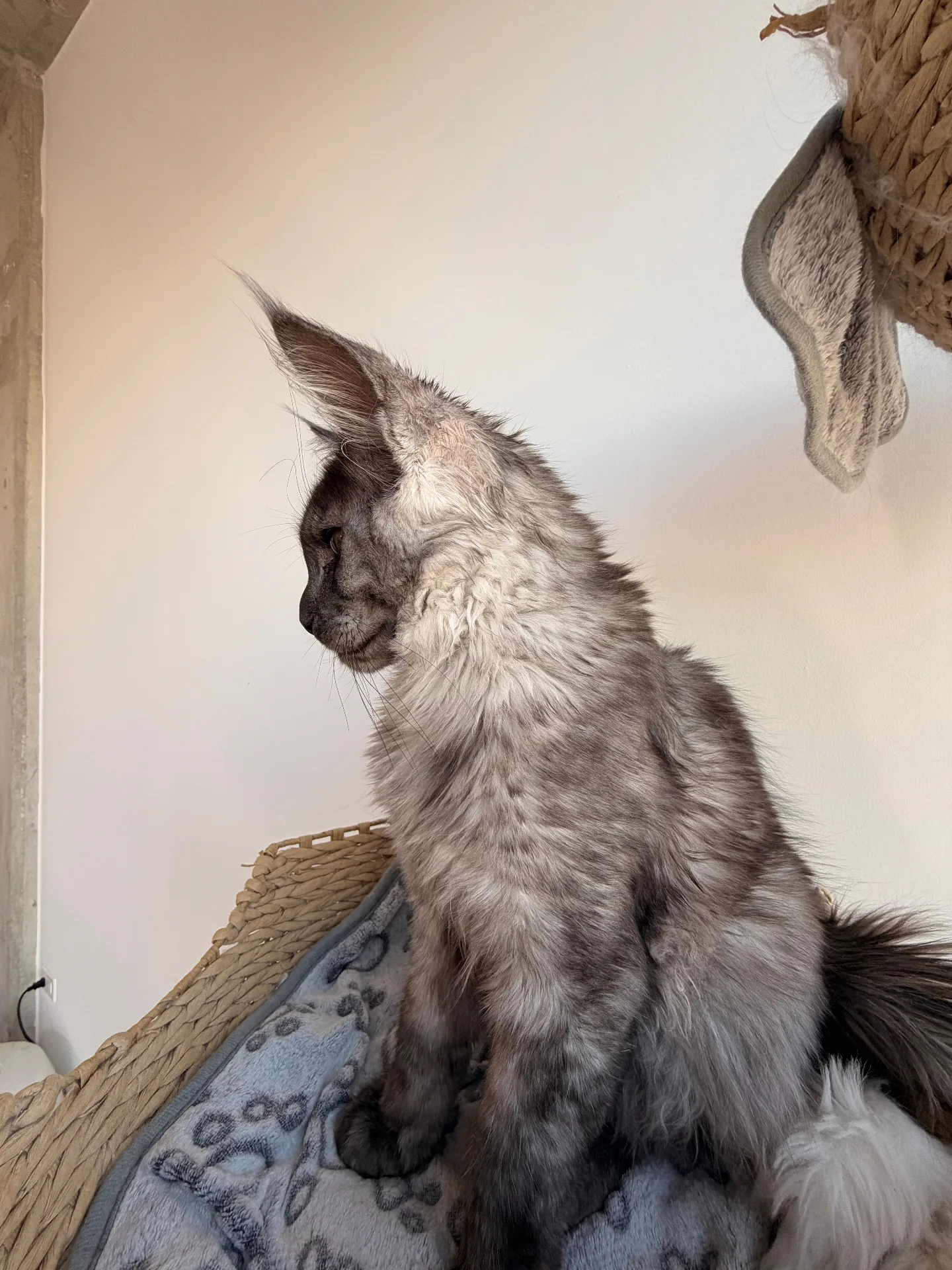
Maine Coons were literally built for cold weather. Their name comes from the state of Maine, and their physical traits — water-resistant fur, tufted paws that act as snowshoes, bushy tails they wrap around their bodies for warmth — are all cold-weather adaptations. But "built for cold" doesn't mean "immune to winter problems." Indoor Maine Coons face unique challenges during winter months that have nothing to do with temperature.
Winter Coat Management
Maine Coons grow a significantly thicker undercoat in fall. This winter coat is denser, more prone to matting, and sheds more when heated indoor air dries it out. During winter months, expect to brush 3–4 times per week minimum — daily during the heaviest coat growth periods.
The real enemy isn't cold — it's dry indoor heat. Forced-air heating systems strip moisture from the air, which dries out your cat's skin and coat. This leads to increased static (which causes more tangling), dandruff, and itching.
Winter Coat Essentials
- Increase brushing frequency to 3–4x per week
- Run a humidifier — aim for 40–50% humidity indoors
- Add omega-3 fatty acids to diet (fish oil supplement or sardine-based food)
- Check for mats weekly in armpits, belly, and behind ears
- Consider a leave-in conditioning spray for dry-coat days
Winter Hydration
Cats drink less in winter because they're less active and their thirst drive decreases. But heated indoor air increases water loss through respiration. It's a dangerous combination that can stress kidneys over time.
Keep water fountains running, increase wet food portions during winter months, and consider adding warm (not hot) water to dry kibble to increase moisture intake.
Indoor Enrichment During Short Days
Winter means less sunlight, shorter days, and a Maine Coon with a lot of pent-up energy. Boredom-related behavioral problems spike in winter — increased furniture scratching, middle-of-the-night zoomies, and attention-demanding vocalization.
Rotation system: Keep 3–4 sets of toys and rotate them weekly. Cats lose interest in toys they see every day. "New" toys (actually just rested ones) spark renewed interest.
Puzzle feeders: Make every meal mentally stimulating. Scatter kibble in muffin tins, use treat balls, or hide food around the house for "hunting."
Play sessions: Two 15-minute high-intensity play sessions per day. Use wand toys that mimic bird flight — this satisfies the hunting drive that can't be expressed when birds aren't visiting the window.
An Illinois winter lasts roughly five months. That's five months of a 20-pound, highly intelligent cat being stuck indoors with nothing to do unless you plan for it. Plan for it.
Cold Weather Safety
Even indoor cats face winter dangers:
Space heaters: Maine Coons love warmth and will get dangerously close to space heaters. Use protective barriers or choose radiator-style heaters that don't have exposed hot surfaces.
Antifreeze: If you park in a garage attached to your home, be aware that antifreeze is extremely toxic to cats and has a sweet taste they're attracted to. Clean spills immediately.
Holiday hazards: Tinsel is a surgical emergency waiting to happen. Poinsettias cause GI upset. Holiday candles and Maine Coon tails are a bad combination.