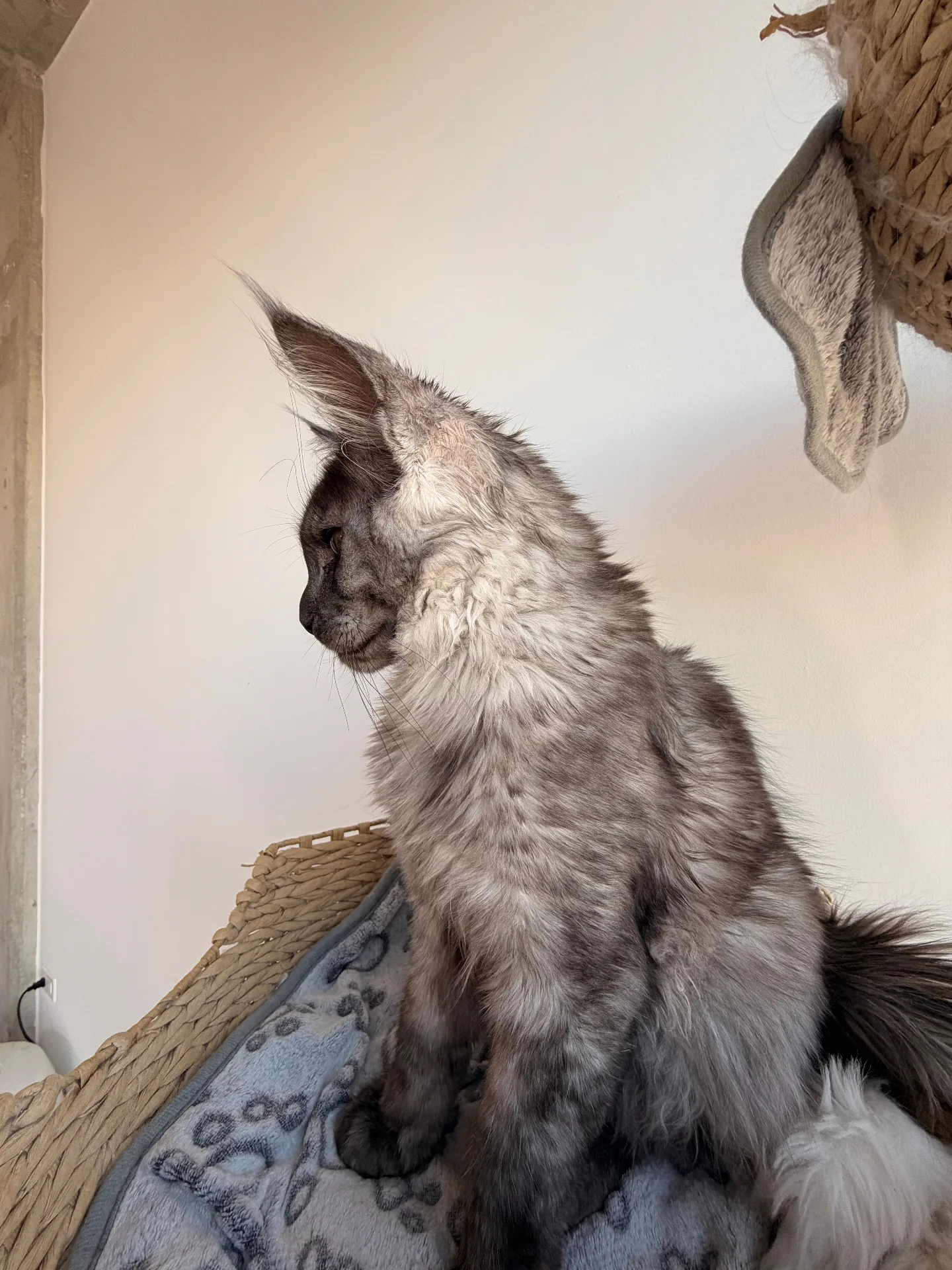
Living in Chicago with five Maine Coons means I experience the full extremes — brutal winters where it doesn't break 10°F for weeks, and humid summers where the heat index hits 105°F. These cats were literally built for cold weather, which makes summer the season that requires the most attention and the most deliberate management.
Summer: Managing Heat (The Real Challenge)
Maine Coons have triple-layer coats designed for Maine winters. Chicago's 90°F humid summers are not what evolution had in mind. Signs of heat stress include excessive panting, lethargy, seeking cool tile floors, and spreading out flat on the ground with legs extended to maximize surface area contact with cool surfaces.
What works: Keep your home air-conditioned — below 78°F is ideal, and below 75°F is what mine are kept at during heat waves. Provide multiple water sources — my cats have a water fountain in the kitchen and water bowls in three other rooms. I add ice cubes to the fountain on the hottest days, which Euro finds endlessly fascinating. Cooling mats are hit-or-miss; Euro ignores his while Coco sleeps on hers religiously. Consider trimming the belly and leg furnishings if your cat tolerates grooming — I don't do full shaves, but a summer sanitary clip helps with thermoregulation.
🚨 Heat Stroke Emergency Signs
If your Maine Coon is panting heavily, drooling excessively, has bright red gums, seems disoriented, or collapses — this is a medical emergency. Move them to a cool area immediately, apply cool (not ice cold) water to their paw pads and ears, and get to an emergency vet. Cats don't pant like dogs as a normal cooling mechanism. Panting in a cat means their body temperature regulation is failing.
Summer Care Checklist
☀️ Beat the Heat
- Keep home below 78°F (75°F preferred during heat waves)
- Multiple water sources — fountain plus bowls in several rooms
- Ice cubes in water for enrichment and cooling
- Cooling mats in their favorite sleeping spots
- Close blinds on sun-facing windows during peak heat (10am-4pm)
- Trim belly/leg furnishings (not a full shave — that removes UV protection)
- Increase grooming frequency to remove loose undercoat
- Never leave cats in unventilated rooms, cars, or enclosed porches
Winter: In Their Element
Maine Coons were made for this. Their thick undercoat, tufted paws (which act as natural snowshoes), and bushy tail (which they wrap around their face when sleeping) all serve as insulation against extreme cold. In winter, my cats are noticeably more energetic and playful. Euro parks himself by the window and watches snow fall for hours — it might be the only time he's genuinely still. Libra's coat reaches its fullest, most magnificent state around February.
Watch for: Dry air from heating systems can cause skin issues — flaking, dandruff, and increased static in their coats. A humidifier in the main living area helps significantly. I keep humidity between 40-50% year-round. Static electricity in their long coats can be genuinely annoying for both you and the cat — a light mist of water on your hands before petting, or an anti-static pet spray, reduces this.
If your cat has access to a catio or enclosed porch, ensure it's insulated enough for extended time in winter. While Maine Coons tolerate cold well, they're still domestic cats — extended exposure below 32°F without a heated shelter is not safe. My enclosed porch has a heated cat bed that activates when temperature drops below 50°F.
Spring: The Shedding Explosion
If you own a Maine Coon, you know spring by the tumbleweeds of undercoat rolling across your hardwood floors. Maine Coons shed their dense winter undercoat heavily in spring — and I mean heavily. Libra alone produces enough loose fur in April to build an entirely new cat.
During the spring shed (roughly March through May), daily brushing is non-negotiable. Without it, the loose undercoat tangles with the guard hairs and creates mats — especially in the armpits, behind the ears, and the "pants" area around the hind legs. Mats pull on the skin, cause pain, and can develop skin infections underneath.
| Season | Grooming Frequency | Primary Focus | Watch For |
|---|---|---|---|
| Spring (Mar-May) | Daily brushing | Undercoat removal, mat prevention | Mats in armpits, pants, behind ears |
| Summer (Jun-Aug) | 3x weekly | Maintaining ventilation through coat | Heat stress, greasy tail base |
| Fall (Sep-Nov) | 3-4x weekly | Moderate shedding as winter coat grows | New coat coming in — less dramatic than spring |
| Winter (Dec-Feb) | 2-3x weekly | Maintaining coat condition, preventing dryness | Static, dry skin, reduced oil production |
Fall: Preparing for Winter Coat
As daylight hours decrease, Maine Coons' coats respond by growing denser. You'll notice the ruff (neck mane) filling out, the belly coat thickening, and the tail becoming its most magnificent, bushy self. This is also when I increase omega-3 supplementation — fish oil supports coat health and helps produce a rich, dense winter coat rather than a dry, brittle one.
Fall is also when flea and tick activity can spike before winter kills them off. Don't let your guard down on preventatives just because summer is over. In Illinois, fleas can persist into November in warmer years.
Seasonal Grooming Tools I Actually Use
🪮 My Grooming Kit
- Slicker brush — daily use during shedding, primary mat-prevention tool
- Wide-tooth steel comb — follows the brush; catches developing mats the brush misses
- Undercoat rake — spring and fall only; reaches deep undercoat that surface tools can't
- Greyhound comb — finishing comb for face and ears; fine-tooth for delicate areas
- Mat splitter — emergency only; for mats that have progressed past comb intervention
- Nail clippers — every 2-3 weeks year-round
I invest in quality lint rollers and a good vacuum — that's just the price of admission with this breed. During spring shedding, I go through a lint roller every 3-4 days. My Dyson Animal has earned its price several times over. If you're considering a Maine Coon, factor in a quality vacuum and lint rollers by the case. This is not a cat for people who can't tolerate fur on black pants.
If your Maine Coon is panting, they're too hot. Cats don't pant like dogs as a normal cooling mechanism. Panting in a cat means immediate action — cool water, air conditioning, and a vet call if it doesn't resolve within 10 minutes.