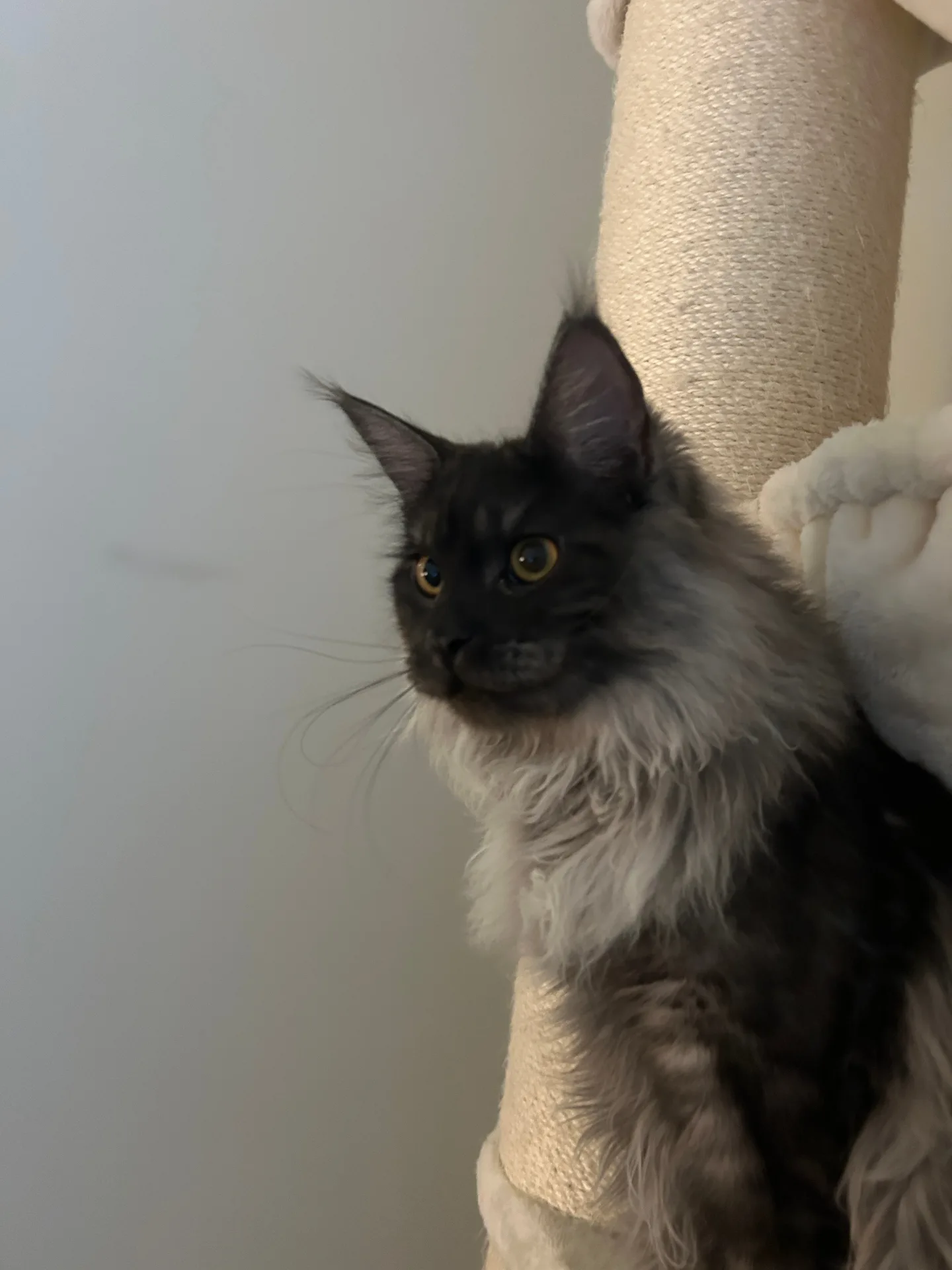
The #1 mistake new Maine Coon owners make isn't about food or grooming — it's buying a standard-sized litter box. A 20-pound cat in a regular litter box is like you using a child-sized toilet. It doesn't work, and the cat will let you know.
Size Requirements
The litter box should be at least 1.5 times the length of your cat from nose to base of tail. For an adult Maine Coon, that means a box that's at minimum 24 inches long, though 28–32 inches is better.
Most "large" litter boxes sold in pet stores are designed for large domestic cats, not Maine Coons. You often need to look at extra-large options, or get creative: a large under-bed storage container with a cutout entrance works beautifully and costs a fraction of designer litter boxes.
Covered vs. Open
Open boxes are generally preferred for Maine Coons. Covered boxes trap odor (which cats dislike more than you do), restrict movement for a large cat, and can make a Maine Coon feel claustrophobic. An open box with high sides (to prevent litter scatter) is the ideal compromise.
If you prefer covered: Make sure the entrance is large enough for your cat to enter and turn around comfortably. Many covered boxes have entrances designed for 10-pound cats — your 20-pound Maine Coon will get stuck or avoid the box entirely.
How Many Boxes?
The standard rule is one box per cat plus one extra. For one Maine Coon: two boxes. For two Maine Coons: three boxes. Place them in different locations — cats don't like to eat and eliminate in the same area, and some cats prefer separate boxes for different functions.
Best Litter Types
What Works for Maine Coons
- Unscented clumping clay — most cats prefer it, easy to maintain
- Walnut or corn-based — natural, good clumping, less tracking
- Avoid heavily scented litter — cats have sensitive noses; what smells good to you may repel them
- Avoid crystal/silica litter — uncomfortable on large paws, poor clumping
- Depth: 3–4 inches — enough for digging without being wasteful
Placement Tips
Quiet, accessible locations. Not next to the washing machine, not in a high-traffic hallway, not behind a door that might swing shut and trap the cat. Maine Coons need space to maneuver, and they need to feel safe while using the box.
One per floor in multi-story homes. A senior Maine Coon with hip issues should not have to climb stairs to use the bathroom.
Away from food and water. Cats instinctively avoid eliminating near food sources. If the litter box is next to the food bowl, expect problems with one or both.
Litter box problems are almost never about the cat being difficult. They're about the box being wrong — wrong size, wrong litter, wrong location. Fix the setup, and the "behavior problem" disappears.