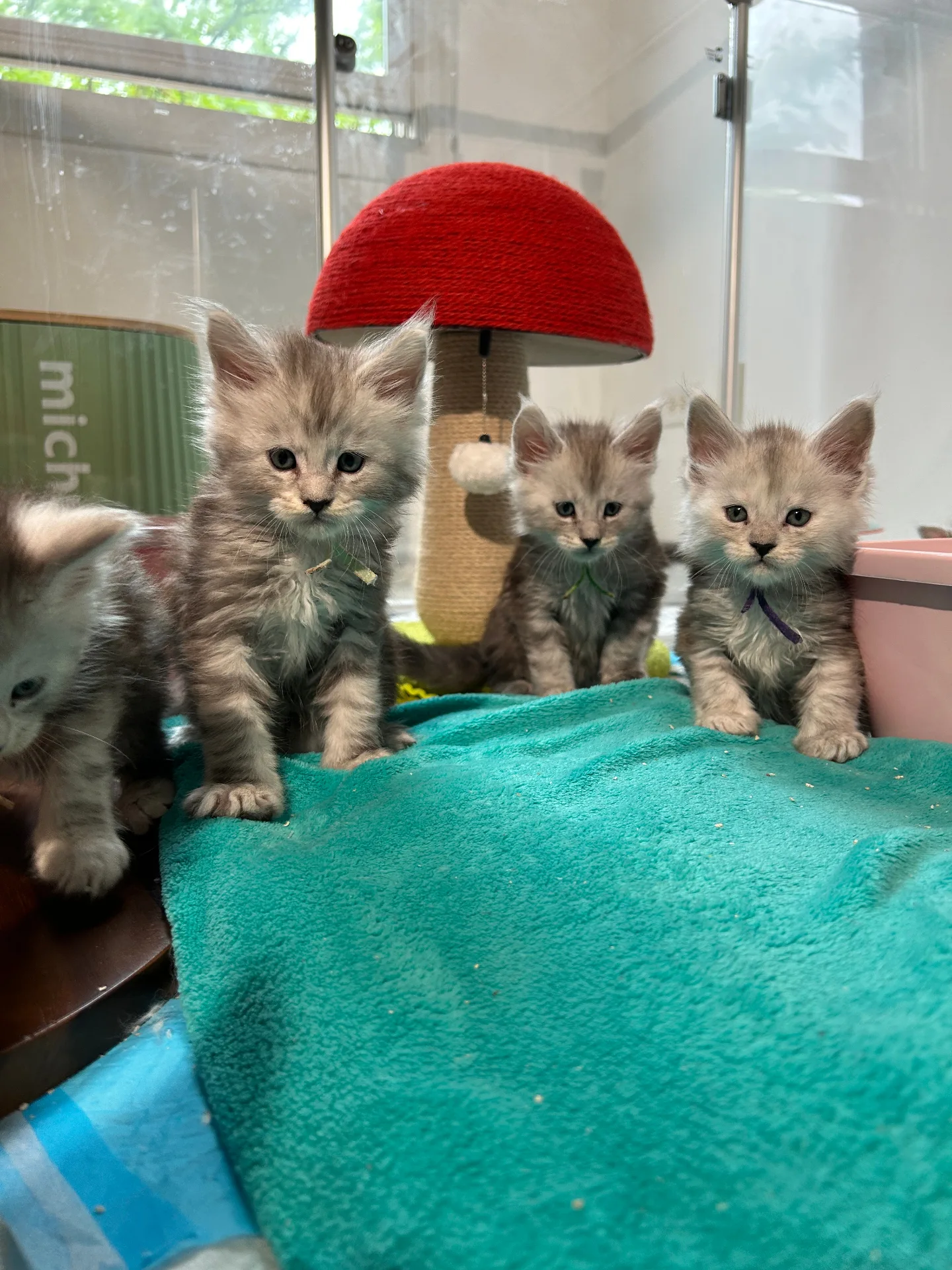
Maine Coon kittens grow faster and longer than any other domestic cat breed, reaching full size around age 3–5. That extended growth window means their nutritional needs are dramatically different from an average kitten. Getting the feeding schedule right in the first year sets the foundation for everything — bone density, coat quality, immune strength, and temperament. When Euro came home at 13 weeks, I had his feeding schedule mapped out like a project plan. Obsessive? Maybe. Worth it? Absolutely.
8–12 Weeks: The Transition Period
Your kitten has just left their mother and littermates. This is a period of enormous change, and consistency matters more than anything else. Keep feeding whatever the breeder was using — even if you plan to switch foods later. Every Chatlerie kitten goes home with a detailed feeding guide and a bag of their current food.
Frequency: 4 meals per day, evenly spaced
Portions: About 1/4 cup of high-quality kitten kibble per meal, plus 1–2 tablespoons of wet food at two of those meals
Key nutrients: At least 35% protein, 20% fat, DHA for brain development, calcium-to-phosphorus ratio of 1.2:1
Week 8–12 Quick Reference
- 4 meals per day (6am, 11am, 4pm, 9pm works well)
- Keep the breeder's food for at least 2 weeks
- Always have fresh water available (wide, shallow bowl)
- Monitor stool — loose stool means slow down any transitions
- Weigh weekly on a kitchen scale to track growth
3–6 Months: Rapid Growth Phase
This is when Maine Coons really start to differentiate from other breeds. While a domestic shorthair kitten might plateau around 6 months, your Maine Coon is just getting started. They're building the bone structure that will support 15–25 pounds of adult cat.
Frequency: 3–4 meals per day
Portions: Increase to 1/3 cup kibble per meal. Add wet food at least twice daily — about 3 ounces per serving. Maine Coon kittens at this age may consume 250–350 calories per day.
Coco was a voracious eater at 4 months. She'd finish her bowl and sit next to it, looking at me with what I can only describe as polite outrage. I learned to spread meals out rather than increase portion sizes — it keeps blood sugar stable and prevents the gorge-and-vomit cycle that some kittens develop.
6–9 Months: Steady Growth
Frequency: 3 meals per day
Portions: 1/3 to 1/2 cup kibble per meal, plus 3 ounces of wet food twice daily. Total daily intake around 300–400 calories.
This is a good time to introduce variety if you haven't already. Rotating between 2–3 high-quality brands prevents your kitten from becoming a single-food-only cat (trust me, you don't want a Maine Coon who only eats one brand — what happens when it's discontinued?).
9–12 Months: Approaching Adolescence
Frequency: 2–3 meals per day
Portions: Transition gradually. By 12 months, most Maine Coons can move to 2 substantial meals plus an optional midday snack.
Important: Do NOT switch to adult food at 12 months. Maine Coons continue growing until 3–5 years. Many breeders and veterinarians recommend staying on kitten food (or an all-life-stages formula) until at least 18–24 months.
A Maine Coon kitten isn't a regular kitten on a regular timeline. They're building a body that takes years to complete. Feed the timeline, not the calendar.
Wet vs Dry vs Raw: What Works
Wet food is essential for hydration. Maine Coons are prone to urinary issues, and wet food is the easiest way to increase water intake. Aim for at least 50% of their diet from wet food.
Dry food is convenient and helps with dental health (marginally). Choose grain-free or limited-ingredient formulas with real meat as the first ingredient.
Raw food can be excellent but requires careful balancing. If you're interested, start with a commercially prepared raw diet rather than DIY — the calcium-phosphorus ratio is too critical to guess at.
| Age Range | Meals/Day | Calories/Day | Key Focus |
|---|---|---|---|
| 8–12 weeks | 4 | 200–250 | Consistency, transition support |
| 3–6 months | 3–4 | 250–350 | Bone growth, DHA, high protein |
| 6–9 months | 3 | 300–400 | Variety introduction, steady growth |
| 9–12 months | 2–3 | 350–450 | Portion control, maintain kitten formula |
Common Feeding Mistakes
Avoid These Errors
- Switching to adult food at 12 months — Maine Coons need kitten nutrition until 18–24 months
- Free-feeding dry kibble — leads to overeating and doesn't teach meal discipline
- Ignoring water intake — wet food + water fountain is essential for kidney health
- Cheap food with corn/wheat fillers — you'll pay more in vet bills than you save on food
- Sudden food changes — always transition over 7–10 days minimum
Do Kittens Need Supplements?
If you're feeding a high-quality kitten food, most kittens don't need a long list of additional supplements — but we do recommend one: Cat Nutrition by NuVet. It's a veterinarian-formulated daily supplement that provides comprehensive immune, digestive, skin & coat, and cardiovascular support. At less than $20/month, it's the most impactful addition you can make to your kitten's nutrition.
Cat Nutrition by NuVet is especially valuable during the transition home, when immune stress is highest. Many of our families report visibly healthier coats and more consistent energy within the first month.
🛡️ Order Cat Nutrition by NuVet
Visit www.nuvet.com/878529 · Order Code: 878529
Some breeders also recommend a joint supplement containing glucosamine starting around 6 months — given the breed's predisposition to hip dysplasia, this is reasonable insurance. Ask your vet.