How to Introduce a Maine Coon to Your Existing Cat: The 2-Week Protocol
The number one mistake I see new Maine Coon owners make: they bring their kitten home, open the carrier in the living room, and let their existing cat figure it out. This can set back a relationship by months. Cat introductions are a process, not an event. Done right, they take 1-3 weeks. Done wrong, they create lasting tension that never fully resolves.
In This Article
Before You Bring the Kitten Home
Preparation starts before your kitten arrives:
Week 1: Scent Introduction (Days 1-7)
Cats live in a world of scent. Before they see each other, they need to know each other's smell. This phase is boring for you but critical for them.
Days 1-2: Total separation. Keep the new kitten in the safe room with the door closed. Let your existing cat sniff under the door. Both cats will be curious — that's good. Don't rush it.
Days 3-4: Scent swapping. Take a cloth and rub it on the new kitten's cheeks, then place it near your existing cat's food bowl (and vice versa). This lets them associate each other's scent with positive experiences (eating). If either cat hisses at the cloth, that's normal — it means they need more time at this step.
Days 5-7: Space swapping. Let the new kitten explore the main house while your existing cat visits the safe room (swap them, don't let them meet). This lets each cat explore the other's scent in a rich, three-dimensional environment. Watch for reactions — relaxed exploration is great; frantic hiding or spraying means slow down.
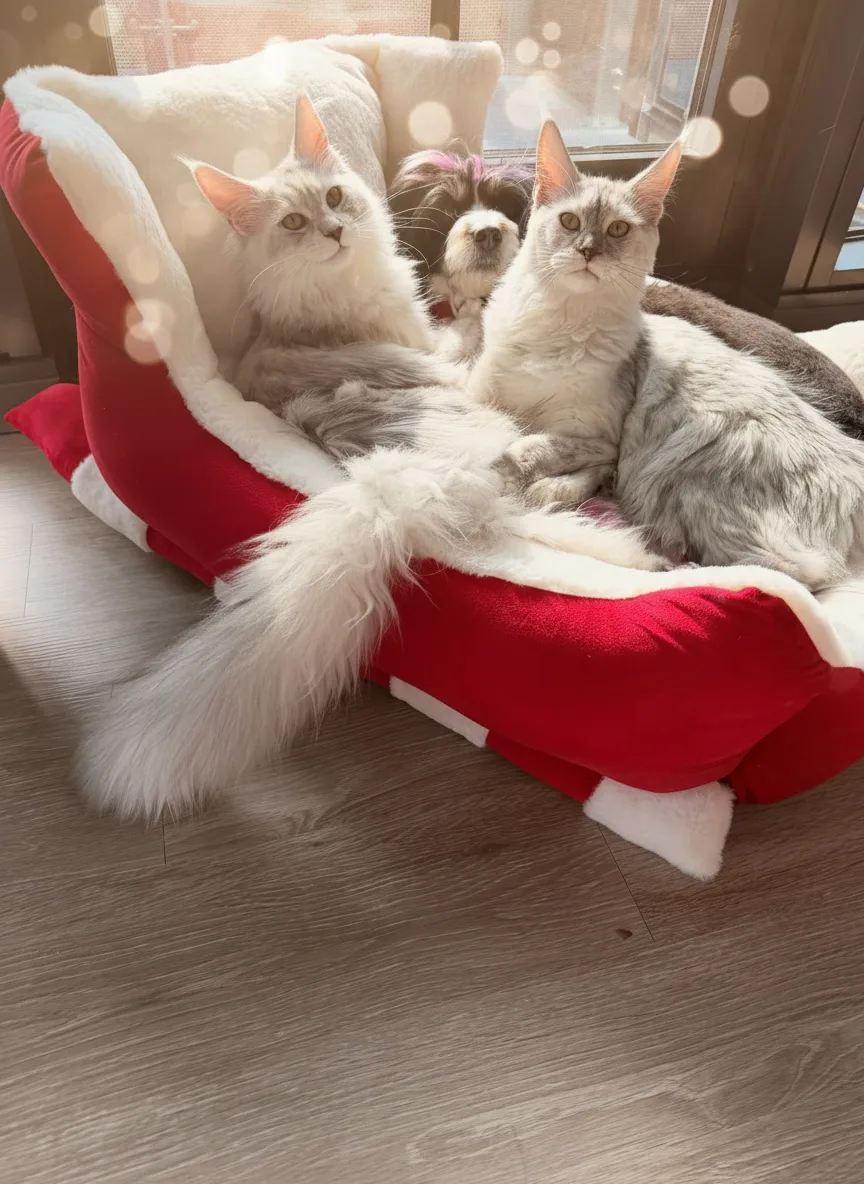
When Libra came home to a house with Euro and Coco already established, the scent-swapping phase took the full week. Euro was immediately curious — he'd camp by the safe room door and chirp. Coco was suspicious — she hissed at Libra's scent cloth for three days. By day 7, Coco was only mildly interested in the cloth. That was good enough to move forward.
Week 2: Visual Introduction (Days 8-14)
Days 8-10: Cracked door or baby gate. Open the safe room door just enough for visual contact but not physical access (a baby gate works perfectly). Feed both cats on their respective sides of the barrier, gradually moving bowls closer to the gate each meal. The goal: positive associations (food) while seeing each other.
Days 11-14: Extended visual contact. Allow longer periods of gate-separated interaction. Play with both cats near the barrier simultaneously. Watch for:
Supervised Face-to-Face Meetings
When both cats are consistently calm during visual contact (eating near the gate, relaxed body language), it's time for supervised meetings.
Some hissing during first meetings is normal and expected. Brief hisses followed by retreat are fine — that's cats establishing boundaries. Sustained hissing, growling, or physical aggression means you moved too fast. Go back to gate-separated interactions for a few more days.
Full Integration
When supervised meetings consistently go well (multiple sessions with no aggression), start leaving them together for gradually longer unsupervised periods. Keep the safe room available as a retreat option for several more weeks.
Full integration doesn't mean they'll be best friends immediately. The progression usually goes: tolerance → coexistence → occasional play → mutual grooming → actual friendship. With Maine Coons, the process often completes faster because the breed is naturally social, but expect 1-3 months for a truly settled dynamic.
Troubleshooting Common Problems
"My existing cat won't stop hissing." You moved too fast. Go back two steps. Increase scent swapping. Use more Feliway. Some cats need 3-4 weeks of scent-only introduction before visual contact.
"They play too rough." Rough play between cats is normal — wrestling, chasing, batting. It's only a problem if one cat is consistently trying to escape, vocalizing in distress, or showing injuries. Maine Coon play can look alarming to new owners but is usually within normal bounds.
"My existing cat stopped eating." This is a stress response. Separate the cats, return to the previous comfortable stage, and consult your vet if appetite doesn't return within 48 hours.
"The kitten is fearless but my existing cat is terrified." This is common — Maine Coon kittens from good breeders are extremely well-socialized and may be more confident than the resident cat. Protect the shy cat's space and let them set the pace. Don't let the kitten overwhelm them.
Realistic Timeline
The Takeaway
Cat introductions require patience, not force. The time you invest in weeks 1-2 saves you months of managing conflict later. Maine Coons are naturally social, which helps — but even the friendliest kitten needs a proper introduction protocol to earn trust from an existing cat. Follow the steps, read the body language, and let the cats set the pace.
For more on multi-cat dynamics, see our multi-cat household guide and why two Maine Coons may be better than one.