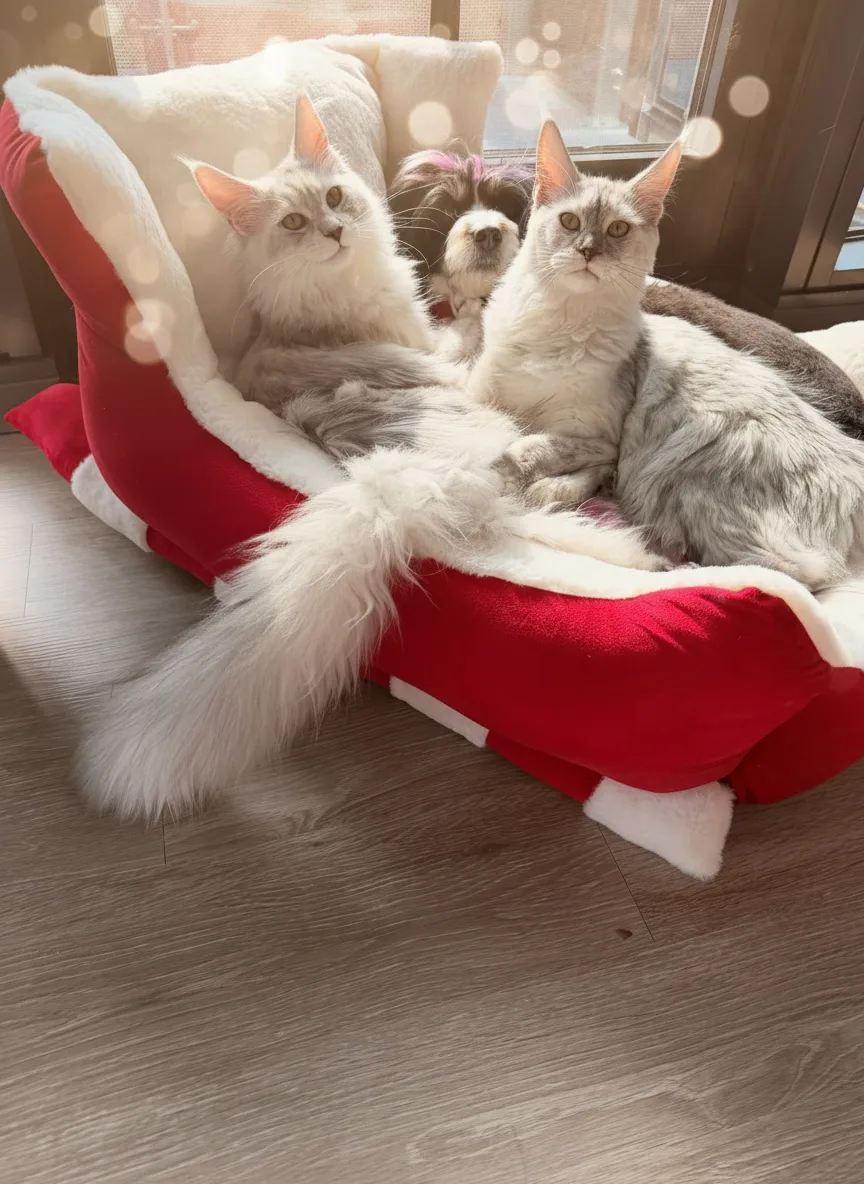
Maine Coon Behavior Problems: 10 Common Issues & How to Fix Them
Maine Coons are one of the best-tempered breeds in the world. But "best-tempered" doesn't mean "problem-free." Their intelligence, size, and strong personalities mean that when problems arise, they tend to be creative problems. Here are the 10 most common behavioral issues I see Maine Coon families deal with — and the solutions that actually work.
In This Article
1. Counter Surfing
Maine Coons are large enough to reach counters without even jumping. And they're smart enough to wait until you leave the room to investigate what's up there.
Why they do it: Curiosity, food motivation, and because elevated surfaces are instinctively appealing. Maine Coons are drawn to high ground.
How to fix it:
Coco was our most persistent counter surfer. What finally worked wasn't deterrents — it was giving her a bar stool at the kitchen island. She sits at "her spot," watches me cook from an appropriate distance, and the counter raids stopped. Sometimes the solution is negotiation, not enforcement.
2. Play Biting
Kitten play biting is normal. Adult play biting that breaks skin is a problem. Maine Coons have strong jaws and what starts as gentle mouthing at 12 weeks can become painful at 18 months if not addressed early.
How to fix it:
3. Knocking Things Off Surfaces
This is almost always an attention-seeking behavior, and Maine Coons are masterful at it. They'll make eye contact, slowly extend a paw toward your water glass, and wait to see your reaction before following through.
How to fix it: Don't react. The moment you jump up and say "No!" you've given them exactly what they wanted — your attention. Instead, silently pick up the item later, secure valuables, and ensure you're providing enough daily interaction.
Euro once knocked my coffee mug off the nightstand, watched it shatter, looked at me, and started purring. It wasn't malice — it was a performance. The audience (me, horrified at 6 AM) was the reward.
4. Furniture Scratching
Maine Coons need to scratch. It's non-negotiable — it maintains claw health, stretches muscles, and marks territory. The goal isn't to stop scratching; it's to redirect it.
5. Demanding Vocalization
Maine Coons are vocal, and some learn that persistent meowing, chirping, or trilling gets results. This is especially common around feeding time.
How to fix it: Feed on a schedule, not on demand. If they start vocalizing 30 minutes before dinner, don't feed early — wait until the scheduled time. Rewarding early vocalization trains them to start earlier and louder.
6. 3 AM Zoomies
The midnight sprint through the house, complete with sliding on hardwood floors and launching off furniture. It's entertaining the first time. Less so on night 47.
How to fix it: An intensive play session 30-60 minutes before your bedtime, followed by a meal. This mimics the natural hunt → catch → eat → sleep cycle. The "Zoomie Prevention Protocol" at our cattery is 20 minutes of wand play, then dinner, then bed. Works 90% of the time.
7. Food Obsession
Some Maine Coons develop food-obsessed behavior — counter diving, stealing food from plates, demanding feeding constantly.
How to fix it:
8. Inter-Cat Aggression
Maine Coons are generally excellent with other cats, but introductions done wrong or territorial disputes can cause aggression.
How to fix it: Slow introductions (see our multi-cat guide), ensure adequate resources (one litter box per cat plus one, separate feeding stations), and provide enough vertical territory so cats can establish hierarchy without conflict.
9. Spraying or Marking
Intact males will spray. Neutered males occasionally spray due to stress, territorial anxiety, or medical issues.
How to fix it: Spay/neuter first. If already altered, consult your vet to rule out urinary issues, then address environmental stressors (new cat, new home, schedule changes). Enzymatic cleaners are essential — if they can still smell it, they'll mark again.
10. Litter Box Avoidance
If your Maine Coon stops using the litter box, the first step is always a vet visit. Urinary issues, pain, and illness frequently manifest as litter box avoidance. Once medical causes are ruled out, evaluate the box itself — see our complete litter box guide.
The Takeaway
Maine Coon behavior "problems" are almost always communication. They're telling you something — they need more stimulation, more space, different resources, or attention to a health issue. The goal isn't to suppress behavior; it's to understand the underlying need and address it. When you do, you don't just fix the problem — you deepen your bond.