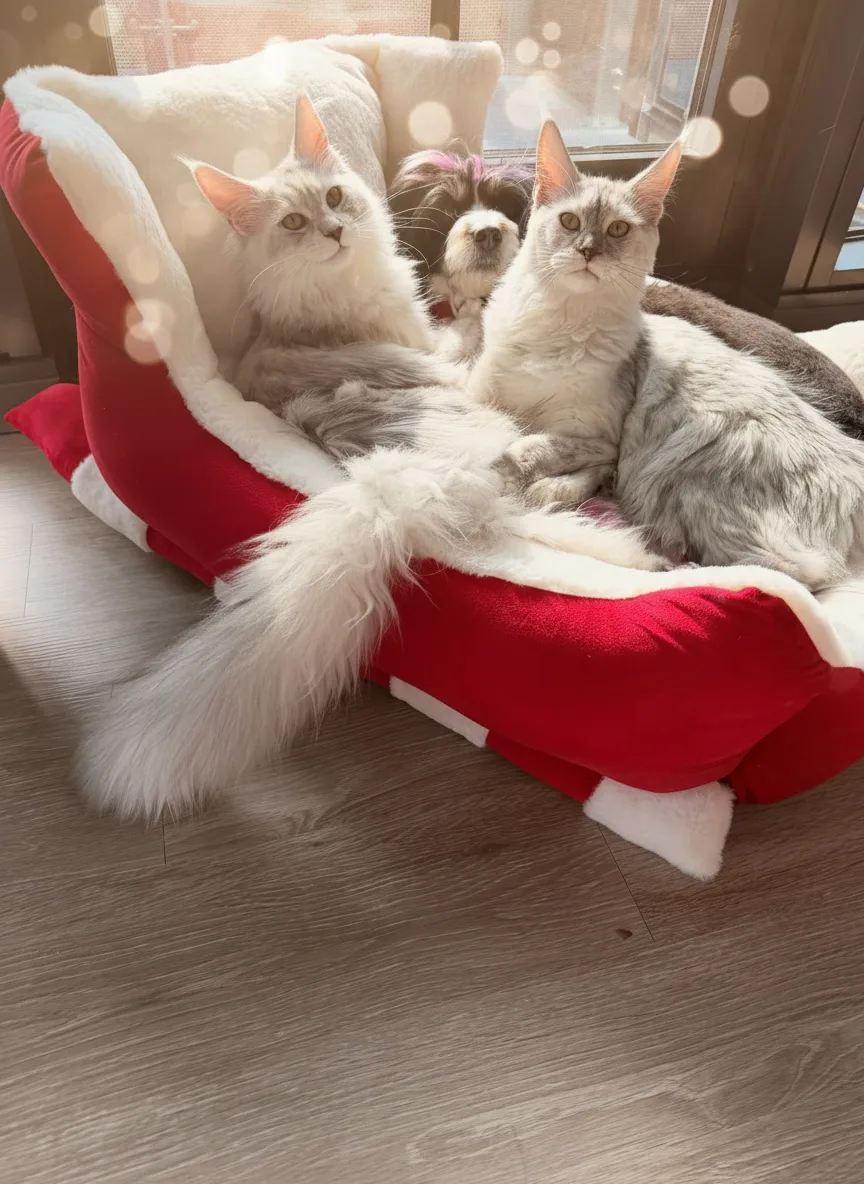
Maine Coon Sleeping Habits: Where, When & Why They Sleep Like That
If you've ever walked into a room and found your 18-pound Maine Coon sleeping upside down with all four legs in the air, draped across a surface that seems physically impossible to be comfortable — congratulations, you have a normal Maine Coon. Their sleeping habits are one of the breed's most endearing (and photogenic) traits.
In This Article
How Much Do Maine Coons Sleep?
Adult Maine Coons sleep 12-16 hours per day. Kittens and seniors can push 18-20 hours. This isn't laziness — it's biology. Cats are crepuscular, meaning they're most active at dawn and dusk. The rest of the time, their bodies are conserving energy.
What surprised me when I started breeding was the quality of Maine Coon sleep. They don't just nap — they cycle between light sleep (where ears still rotate to track sounds) and deep REM sleep (where paws twitch and whiskers move, suggesting dreams). Euro spends roughly 30% of his sleep in deep REM, which is higher than the average domestic cat. I've watched him dream-run so vigorously that he woke himself up.
Classic Maine Coon Sleep Positions
Maine Coons are famous for sleeping in positions that would require a chiropractor for any other species:
The Superman: Stretched completely flat on their belly, legs splayed front and back, chin on the floor. This is a deep trust position — they're exposing their belly and can't spring up quickly. Coco sleeps like this on the kitchen tile every summer.
The Loaf: All four paws tucked underneath, tail wrapped around. This is the "comfortable but alert" position. Maine Coons loaf when they're content but still want to monitor the room.
The Belly-Up: Full belly exposure, legs in the air, looking like they've been defeated by gravity. This is the ultimate trust signal. A Maine Coon who sleeps belly-up in your presence has zero fear.
The Contortionist: Head twisted backward, body curved in a C-shape, one leg behind the ear. You'll genuinely wonder if they're okay. They are.
The Spoon: Pressed against you or another cat, body curved to maximize contact surface area. Euro does this every night — not just touching, but actively pressing into my side like he's trying to merge our bodies into one entity.
Where They Prefer to Sleep
Unlike smaller cats who seek enclosed, hidden spaces, Maine Coons often prefer elevated, open surfaces where they can see the room. Their size means they need more surface area, and their confidence means they don't feel the need to hide.
Popular Maine Coon sleeping spots in our cattery:
I've learned that providing at least 3-4 sleeping options at different heights and temperatures lets them self-regulate. Libra migrates seasonally: cat tree top in winter (warm air rises), bathroom tile in summer (cool surface), my bed year-round between midnight and 6 AM.
Should You Let Them Sleep in Your Bed?
This is the question every Maine Coon owner eventually faces. The honest answer: it's a personal choice, but know what you're signing up for.
Pros:
Cons:
Euro has slept in my bed since day one. I have never once regretted this decision, even on the mornings I wake up clinging to 6 inches of mattress while he sprawls across the remaining 90%.
Kitten vs Adult Sleep Patterns
Maine Coon kittens are chaos machines punctuated by sudden, catastrophic naps. A kitten will be sprinting at full speed, launching off furniture, attacking invisible prey — and then collapse mid-stride into instant sleep. It's like someone unplugged them.
This is completely normal. Kittens need enormous amounts of sleep for growth. Maine Coons grow until 3-5 years old, which is why even "adult" Maine Coons sleep more than the average domestic cat.
As they mature, sleep becomes more predictable. Adults develop routines — napping at the same time, in the same spots, with the same pre-sleep rituals (grooming, kneading, circling three times).
When Sleep Changes Signal Problems
The most important thing about understanding your Maine Coon's sleep habits is knowing when they change. Sleep pattern shifts are often the first sign that something is wrong.
- Suddenly sleeping more than usual (could indicate pain, illness, or depression)
- Sleeping in new, hidden locations (cats hide when they feel vulnerable)
- Sleeping less and seeming restless (possible hyperthyroidism in older cats)
- Changes in sleep position — avoiding lying on one side could indicate pain
- Excessive vocalization during sleep
When Coco had a mild URI last year, the first sign wasn't sneezing — it was that she stopped sleeping on her back. She shifted to loaf position exclusively for three days before any respiratory symptoms appeared. If I hadn't known her normal habits, I might not have caught it early.
The Takeaway
Maine Coon sleeping habits aren't just cute content for Instagram — they're a window into your cat's physical health, emotional security, and personality. Learn your cat's normal patterns, provide multiple sleeping options at different heights and temperatures, and pay attention when those patterns change. A well-rested Maine Coon is a happy, healthy Maine Coon.