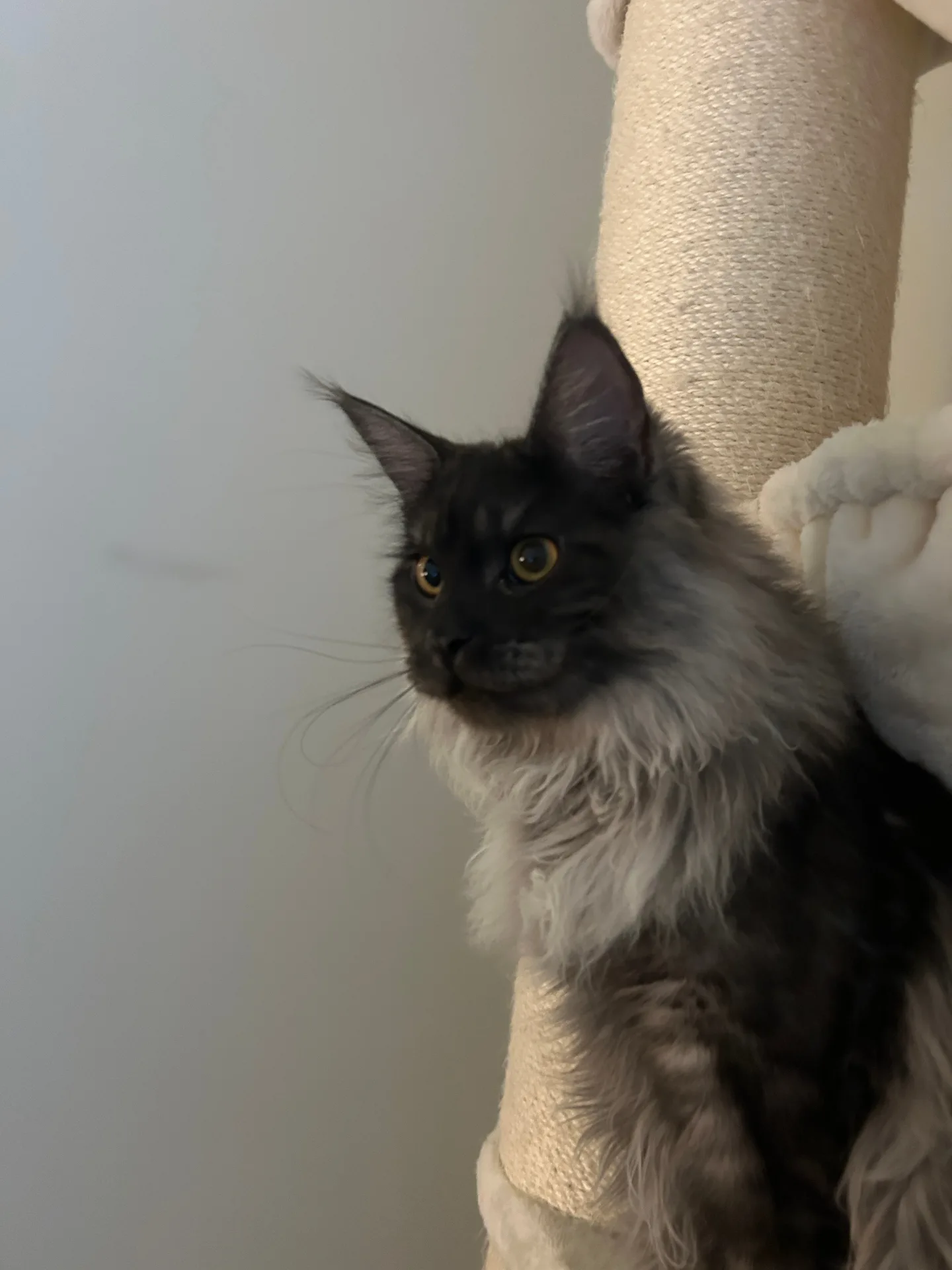
I intentionally keep Chatlerie small — two to three litters per year, maximum. I've been asked a hundred times why I don't scale up, and the answer is always the same: the moment I have more kittens than I can personally hold, bathe, socialize, and name, I've become the thing I'm writing this article about. Kitten mills exist for Maine Coons in Illinois, and in 2026, they've gotten disturbingly good at looking legitimate. This is how to see through the polish.
What Is a Kitten Mill, Exactly?
A kitten mill is any breeding operation that prioritizes volume and profit over the health, socialization, and welfare of cats. This exists on a spectrum — from obvious backyard operations producing dozens of litters per year with no veterinary care, to sophisticated-looking operations with professional marketing who simply skip the expensive testing protocols that make a real difference to long-term kitten health.
For Maine Coons, the problem is compounded by the breed's desirability and high price point. A Maine Coon kitten sells for $1,500–$4,500. A breeding female can produce two litters annually. The financial incentive to cut corners on health testing, socialization, and veterinary care is significant — and many operations in Illinois do exactly that while presenting a polished face to buyers.
The most dangerous kitten mills aren't the obvious ones. They're the operations with beautiful websites who simply skip the expensive parts — the HCM echos, the genetic panels, the socialization hours that can't be photographed.
How Mill Operations Typically Work
Mills keep multiple queens cycling through pregnancies with minimal recovery time. Ethical standards call for no more than 4–5 litters per female lifetime. Mills routinely exceed this, burning through breeding cats in 3–4 years.
Modern mills invest in website design to appear legitimate. Photos are taken when kittens are briefly clean and posed. Some use professional photographers for hero shots while conditions in the cattery are far from what's shown.
An annual HCM echo by a board-certified cardiologist costs $300–$500 per cat. A genetic panel runs $100–$150. These are the tests that matter most for Maine Coon health — and they're the first things mills eliminate to improve margins.
Kittens may be released at 8 weeks (the Illinois legal minimum, but far below the ethical 12-week standard). Less time in the cattery means lower costs. Buyers often don't discover behavioral or health problems until weeks after the sale is final.
10 Warning Signs You're Looking at a Mill
1. Multiple breeds available simultaneously
Legitimate specialty breeders typically focus on one breed. If a breeder is offering Maine Coons, Ragdolls, and Siberians simultaneously, they're almost certainly prioritizing volume over quality. Mastering the genetics and health protocols for one breed takes years of dedicated focus.
2. Always-available kittens
Reputable breeders frequently have waiting lists of 6–18 months. If you inquire and kittens are immediately available in multiple colors and genders, this is a significant red flag. High-volume operations are designed to always have product on hand.
3. Vague health testing documentation
Ask for the cardiologist's name, date of the most recent HCM echo, and genetic panel results for both parents. A legitimate breeder sends you PDFs immediately. A mill operation offers verbal assurances or references a "vet check" — which is not the same as specialist cardiac screening.
4. Kittens released before 12 weeks
Illinois law sets 8 weeks as minimum, but ethical Maine Coon breeders hold until at least 12 weeks. The 8–12 week period is critical for feline socialization, immune development, and litter training. A breeder releasing at 8 or 9 weeks is optimizing for turnover, not kitten welfare.
5. No live video or in-person visit option
If a breeder won't Zoom call with the kitten visible in real-time, or won't allow cattery visits, ask why. Legitimate breeders are proud of their facilities. Operations that rely on photos and promises have something to conceal.
6. Pressure to decide quickly
"I have another family interested" is a classic high-pressure tactic. Reputable breeders don't pressure buyers. Their application process is thorough and involves both parties deciding if the match is right.
7. No meaningful contract
A legitimate breeder's contract specifies health guarantees, spay/neuter requirements, right of first return, and what happens if a genetic condition develops. A mill's contract, if one exists, is designed to protect the seller, not the buyer or the animal.
8. Unverifiable social proof
Look for real families with real photos in real-time. Facebook groups, Instagram with genuine engagement, detailed Google reviews — these are harder to fake. Generic testimonials on a website with no external verification are easy to fabricate.
9. Price too low for claimed health testing
When you understand what legitimate health testing actually costs — annual HCM echos, genetic panels, quality nutrition, veterinary care, TICA registration — it becomes clear that a responsibly bred Maine Coon kitten cannot be produced for under $1,500. If a breeder claims full testing and sells for $800, something is being omitted.
10. Parents being offered for sale
Asking about a breeding female and being told she's available for purchase often indicates a retired breeding cat being offloaded after her productive years — sometimes with no health history provided. Legitimate breeders carefully place retired queens with full transparency.
Illinois Law and Your Rights
The Illinois Humane Care for Animals Act covers minimum standards for commercial breeders. The Illinois Pet Lemon Law (510 ILCS 92/) provides recourse if a kitten develops a serious health condition within a specified period of purchase. If your kitten develops a serious illness within 21 days of purchase, or a congenital condition is discovered within one year, document everything: veterinary reports, breeder communications, receipts.
Report suspected mill operations: Illinois Department of Agriculture (217-782-4944) · ASPCA Animal Cruelty Hotline · Local humane societies. Detailed documentation of conditions and communications strengthens any report significantly.
What Happens to Mill Kittens
Kittens from mill environments frequently present with upper respiratory infections from overcrowded conditions, intestinal parasites from inadequate sanitation, behavioral problems from insufficient socialization during the critical 2–12 week window, HCM discovered at their first cardiac screening from parents who were never screened, and anxiety-based behaviors requiring extensive rehabilitation. All of this is preventable. None of it is cheap to treat.
What Responsible Breeders Do Differently
- Annual HCM echocardiogram on all breeding cats by board-certified cardiologist
- Full genetic panel (Wisdom Panel or Optimal Selection) on all breeding cats
- Maximum 2 litters per female per year with adequate recovery
- Minimum 12-week hold before kitten placement
- Documented socialization program from week 2
- Live video consultations and cattery visits welcome
- Written health guarantee with specific, enforceable terms
- Lifetime breeder support for every placed kitten