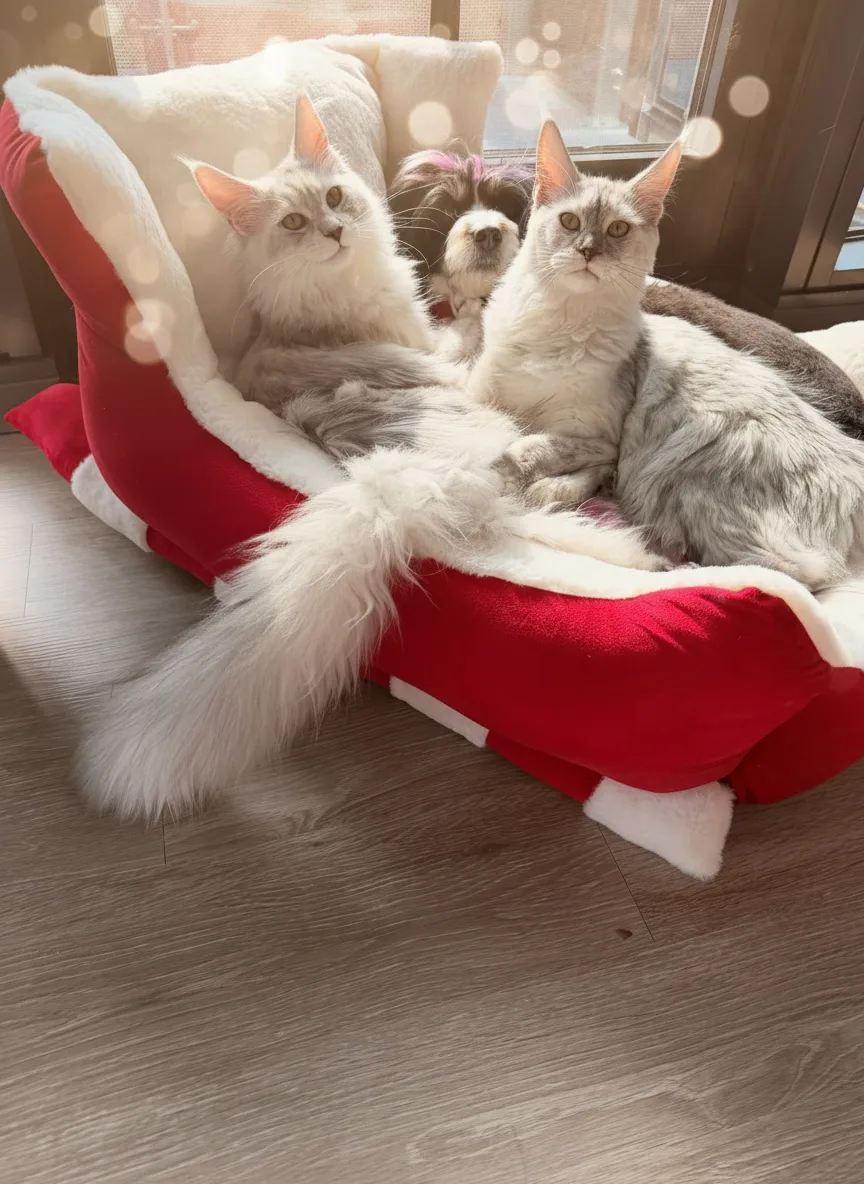
How to Bond with Your Maine Coon: 12 Proven Techniques
Maine Coons are arguably the most bondable cat breed on the planet. But "bondable" doesn't mean "automatic." The deepest Maine Coon relationships are built through specific interactions that speak their language. After years of breeding European Maine Coons and watching families build incredible bonds with their kittens, I've identified the 12 techniques that consistently create the strongest connections.
In This Article
1. Master the Slow Blink
The slow blink is cat language for "I trust you completely." When your Maine Coon looks at you and slowly closes and opens their eyes, they're telling you they feel safe enough to temporarily lose sight of you. When you do it back, you're speaking their language.
How to do it right: Make eye contact, then slowly close your eyes for 2-3 seconds, then slowly open them. Don't stare — staring is a threat in cat language. The slow blink should feel languid, relaxed, unhurried.
Euro and I have slow blink conversations across rooms. He'll be on his cat tree, I'll be on the couch, and we'll exchange slow blinks like two people waving across a crowded room. It sounds ridiculous until you experience the warmth of it.
2. Practice Parallel Activities
This is the most underrated bonding technique. Instead of always directing attention at your Maine Coon, simply be near them while you do your own thing. Read a book while they nap beside you. Work on your laptop while they lounge on the same couch. The key is proximity without demands.
Maine Coons are social creatures who value companionship even when no active interaction is happening. Coco will choose to sit in my office every day while I work — not on my lap, not demanding attention, just present. This quiet togetherness builds trust deeper than any play session.
3. Talk to Them Constantly
Maine Coons are one of the most vocal cat breeds, and they thrive on verbal interaction. Talk to your Maine Coon like you'd talk to a roommate. Narrate your activities: "Okay, I'm going to make coffee now." "What do you think, should we have chicken tonight?" "You look very handsome on that cat tree."
I know it sounds absurd. I know. But Maine Coons respond to verbal communication in a way that has to be experienced to be believed. Libra has different chirps for different words she recognizes. She knows "dinner," "treat," "brush," and "Euro" (she runs to find him when I say his name).
4. Play Their Way
Not every Maine Coon plays the same way. Some are air hunters (they jump for feather wands). Some are ground hunters (they stalk and pounce on dragged toys). Some are water players. Some prefer puzzle-solving. Watch your cat and play to their instincts rather than forcing a play style on them.
5. Grooming as Bonding
Regular brushing isn't just maintenance — it's one of the most powerful bonding activities available. In cat colonies, mutual grooming (allogrooming) is reserved for cats in close social bonds. When you brush your Maine Coon, you're performing this same social ritual.
Start with 5-minute sessions in areas they enjoy (usually cheeks, chin, and the base of the tail). Gradually work up to full-body grooming. The goal isn't efficiency — it's the experience. Make it slow, gentle, and accompanied by your voice.
6. Build Sacred Routines
Maine Coons are creatures of routine, and shared routines become bonding anchors. Maybe it's a morning greeting ritual, an evening play session, or a bedtime grooming routine. The predictability creates security, and the consistency creates trust.
Our nightly routine: Dinner at 7. Play session at 8. Grooming at 9. Bed at 10, with Euro on my left, Coco at my feet, and Libra on the pillow above my head. This has been the same for years. The cats anticipate each step, and the routine itself has become a form of communication.
7. Respect Their "No"
This might be the most important technique on this list. When your Maine Coon turns away, flattens their ears, swishes their tail, or simply walks away — respect it. Every time you honor their boundary, you deposit trust. Every time you override it, you withdraw trust.
Maine Coons who know their "no" will be respected become more generous with their "yes." Libra was initially hesitant about being held. I never forced it. By month six, she was voluntarily climbing into my arms. By year one, she demanded to be held during specific activities (cooking, specifically — she needs to supervise from above).
8. Teach Fetch
Many Maine Coons will learn fetch naturally. Start by tossing a small toy or crinkle ball a short distance. If they pick it up and carry it (even partially back toward you), praise them enthusiastically. Most Maine Coons figure out the game within a week.
Fetch is exceptional bonding because it's cooperative play — you're working together toward a shared activity, which is exactly how Maine Coons prefer to interact.
9. Hand-Feed Treats
Occasionally hand-feeding treats creates positive physical associations. Your Maine Coon learns that your hands are a source of good things. This is especially important in the first few weeks with a new kitten — it builds the foundation of trust that everything else is built on.
10. Explore Together
Whether it's harness walks, catio time, or simply carrying them around the house to look at things from your height — shared exploration creates bonding through novelty. New experiences processed with a trusted person create strong memory associations.
11. Share Sleep Space
Sleep is a vulnerability state. When a cat sleeps with you, they're saying "I trust you with my life during my most defenseless moments." Allowing — or better yet, inviting — your Maine Coon to share your sleep space accelerates bonding dramatically.
12. Use Their Name with Purpose
Use your Maine Coon's name consistently before positive interactions. "Euro, treat time." "Euro, let's play." "Euro, come here." Over time, their name becomes a positive trigger — they associate hearing it with good things happening. This is conditioning, yes, but it's also communication.
The Takeaway
Bonding with a Maine Coon isn't about grand gestures — it's about consistent, small acts that speak their language. Slow blinks, parallel presence, verbal communication, and above all, respecting their autonomy. The cats I've seen form the deepest bonds are the ones whose owners understand that trust is earned through patience, not demanded through persistence.
Ready to start this journey? Apply for a Chatlerie kitten and we'll help you build a bond that lasts a lifetime.